
Emergency roof tarping, stopped fast.
When wind, hail, or a fallen limb tears open your roof, water doesn't wait for business hours. We tarp the damage and get the leak stopped for homes and businesses across the DFW Metroplex.
- Licensed & insured
- No obligation
Tap the spot that's giving you trouble.

How it works
- 01Free Estimate same daySchedule your free inspection and estimate online or by calling 24/7.
- 02Assessment & Plan 1-2 hrsOur team evaluates your roof and discusses the best solution with clear communication.
- 03Installation variesProfessional installation using durable materials and proven methods for lasting protection.
- 04Follow-Up same dayWe ensure your satisfaction and answer any questions about your new or repaired roof.
What a repair usually runs
- How far the water got (shingles only, or decking too)
- Where it is: flashing, valley, chimney, skylight
- Roof material and how many storeys
- Whether it is leaking right now
Why a small leak never stays small
Water follows the decking. A flashing or pipe-boot fix caught this month is a few hundred dollars; the same leak left through a season soaks the deck and insulation underneath it, and that becomes a section replacement. If you are seeing a stain, it has already been leaking a while.
Renovacore Builders LLC handles emergency roof tarping and follow-up repair for homes and businesses across the DFW Metroplex. When a storm rips off shingles or a tree limb punches a hole in your roof, we get out to stop the water first and sort out the permanent fix once the property is dry and safe. We're available 24/7 for these calls, because a hole in a roof doesn't wait for a convenient time. This page covers what an emergency tarp job looks like and what happens after.
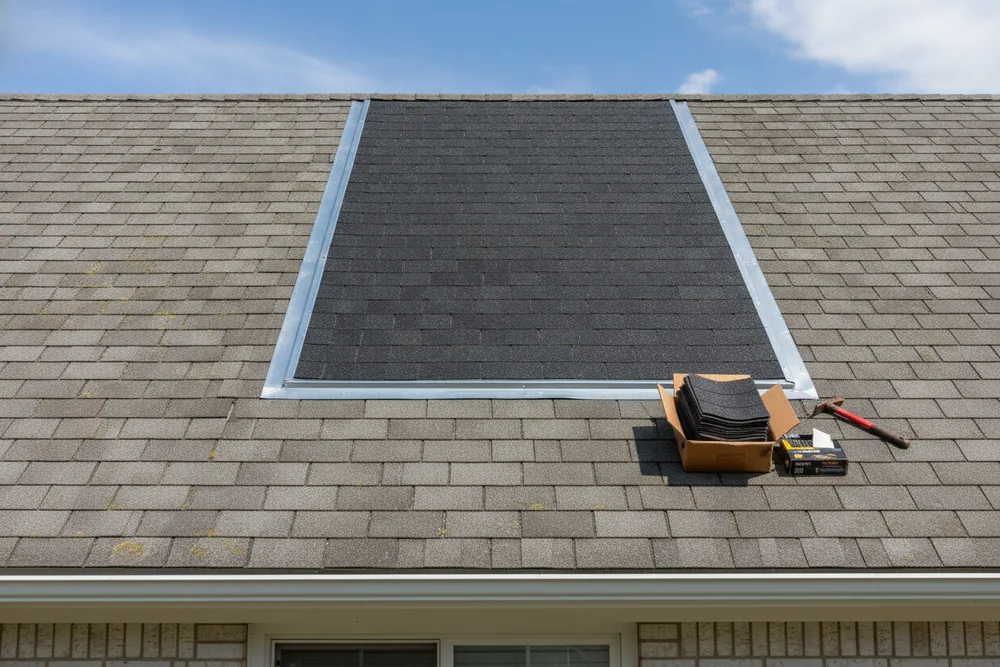
Is water actively coming into your home right now?
If water is dripping from your ceiling or running down a wall, the priority is stopping it from getting worse, not diagnosing every detail on the spot. A tarp over the damaged section keeps rain out while the roof dries enough for a real inspection. Inside, move furniture and electronics out from under the drip and set a bucket or towel to catch what's coming through. Once the emergency is handled, we trace the water back to its source, because the spot on your ceiling is rarely straight under the hole in the roof. From there we tell you plainly whether it's a repair or something bigger.
What you'll notice when it's time to call
Active dripping during or right after a storm
Water coming through the ceiling mid-storm usually means a shingle lifted, a flashing seal failed, or debris opened a direct hole. The drip inside is often several feet from the actual entry point because water runs along the decking before it finds a way down.
A brown stain that keeps spreading
A slow leak at a pipe boot, chimney flashing, or a worn valley shows up as a growing ring on the drywall rather than a sudden drip. It's been getting in for a while, and it usually gets worse with the next hard rain.
Leaking only during wind-driven rain
If the roof only leaks when rain is coming in sideways, the shingle seals along an edge or ridge have likely let go, or a low-slope section is backing water up. It tends to spread to more of the roof with every storm that hits it that way.
A visible hole or torn section after a storm
A fallen limb or wind can punch straight through shingles and the decking underneath. Even if the shingles around it look fine, the decking and framing below need a look before anyone puts a new roof surface over it.
What's behind the damage
A lifted, torn, or missing shingle
Wind gets under the edge of a shingle, breaks the seal, and either creases it or tears it loose completely. A creased shingle won't reseal on its own and will leak again in the next rain.
Failed flashing at a chimney, vent, or wall
Flashing works itself loose over years of expansion and contraction, and once the seal breaks, water finds the gap every time it rains. This is one of the most common places a roof actually fails.
Impact damage from a falling limb
A branch coming down in a storm can crack the decking as well as the shingles, and a cracked board will sag and let more water through over time.
Widespread wear that a patch won't fix
If the seals have failed across a large part of the roof rather than in one isolated spot, tarping stops the immediate leak but the underlying roof needs a full look before another storm rolls through.
What to expect during the visit
We start by getting the leak stopped, tarping or sealing the entry point so no more water gets in while the roof dries out. From there we trace the path from the ceiling stain or attic staining back up to the roof, checking flashing, penetrations, and the decking underneath for damage. If a limb or debris punched through, we inspect the framing from the attic side to see how far the damage goes and remove and replace any section that's compromised. Once we know the full extent, we give you a straight answer on whether this is a targeted repair or something that points toward a full replacement, and we can help document the damage if you're filing an insurance claim.
Related services you may need
Some emergency calls turn into a bigger project once we're up on the roof. If the damage traces back to storm impact, our Storm Damage & Insurance Claims team can walk the claim with you, and if the roof is older or the damage is widespread, Roof Replacement may make more sense than another round of patches. Routine Roof Inspections & Maintenance can also catch the next weak spot before it becomes an emergency.
The cost of waiting
A tarp buys time, but it isn't a permanent fix. Every rainstorm that hits an unrepaired opening pushes more water into the decking, the insulation, and eventually the framing underneath. What starts as a single water stain can turn into rotted decking, mold in the attic, and drywall that needs to be torn out and replaced. The longer a damaged section sits open, the more of the surrounding roof gets pulled into the repair. Getting the tarp up fast and the permanent repair scheduled soon after keeps a bad afternoon from turning into a much bigger project.
How fast can you get a tarp on my roof after storm damage?
We're available 24/7 for these calls and treat active leaks as a priority, since water damage compounds the longer it sits. Call us and we'll walk through what's happening and get a plan moving.
Will a tarp damage my roof further?
No, a properly installed tarp protects the roof rather than adding to the damage. We secure it to avoid additional penetrations where possible and remove it as soon as the permanent repair is done.
How do I know if I need a repair or a full roof replacement after emergency damage?
It depends on how much of the roof was affected and how the rest of the roofing system is holding up. A single impact spot on an otherwise healthy roof is usually a repair, while widespread seal failure or an aging roof underneath the damage often points toward replacement, and we'll walk you through which situation you're in during the inspection.
If you've got water coming in right now, call Renovacore Builders LLC at 254-589-4798 and we'll help you get it stopped. For anything less urgent, reach out anytime to schedule a free estimate across the DFW Metroplex.
Ready when you are.
Tell us what you are seeing and we will tell you what it usually runs. No pressure, no commitment.
- Stop leaks quickly with dependable roof repair services, backed by fast response times and an honest assessment of what your roof actually needs.