
Why a Texas Roof Needs a Seasonal Routine
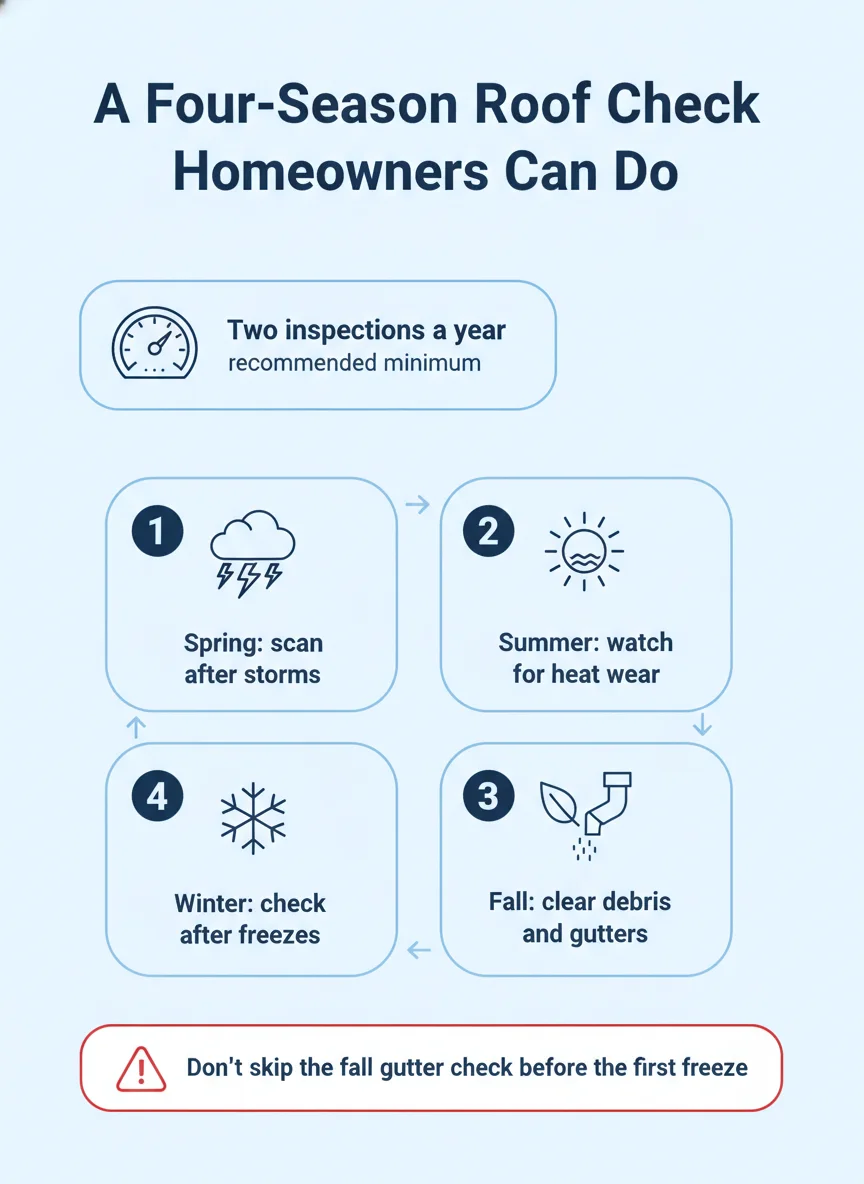
North Texas doesn't get one predictable climate, it gets four or five of them packed into a single year. Spring brings fast-moving storm systems with hail and high wind. Summer stretches on with triple-digit heat and relentless UV exposure. Fall drops leaves and debris right as the first cold fronts start rolling through, and winter can swing from mild to a hard freeze within days. Every one of those swings puts a different kind of stress on a roofing system.
A roof that looks fine in March can be hiding wind-lifted shingles that only show up as a leak in July, once summer rain finds the gap. A seasonal routine isn't about babying the roof, it's about catching the small stuff while it's still small. Homeowners across Dallas, Fort Worth, and the surrounding DFW Metroplex deal with the same weather pattern every year, so the checklist below is built around that cycle rather than a generic national list.
What's Actually Happening to Your Roof Each Season
Roofing materials expand and contract with temperature, dry out under UV light, and take direct physical impact during storms. Understanding which force is dominant in a given season tells you exactly what to look for.
Spring: Wind and Hail Impact
Spring is storm season across the DFW Metroplex, and it's the season most likely to cause sudden, visible damage. High wind can lift or tear shingles, and hail can bruise or crack them, loosen granules, or dent soft metal components like vents and flashing. The damage isn't always obvious from the ground, which is part of why insurance adjusters and roofers both recommend a look after any notable storm rather than waiting for a leak to announce itself.
Summer: Heat and UV Breakdown
Once storm season quiets down, Texas summer takes over with sustained heat and intense UV exposure. This is a slower, cumulative kind of wear rather than a sudden event. Asphalt materials dry out, granules shed faster, and sealants around flashing and penetrations can start to crack. Attic ventilation matters a lot here too, since trapped heat under the deck accelerates aging from underneath the roofing material, not just from the sun hitting the surface.
| Season | Main stress on the roof | What to check |
|---|---|---|
| Spring | Wind and hail impact | Missing or lifted shingles, dented metal, debris |
| Summer | Heat and UV exposure | Granule loss, brittle or curling edges, attic heat |
| Fall | Leaf and debris buildup | Clogged gutters, standing water, overhanging limbs |
| Winter | Cold snaps and temperature swings | Cracked sealant, loose flashing, interior stains |
The Roofing System That's Actually Under Stress
When people say "the roof," they usually mean the shingles or metal panels visible from the street, but the system doing the real work includes the decking underneath, the underlayment, flashing around chimneys and vents, and the gutter system managing water runoff. Each of these components ages at a different rate and responds differently to seasonal stress.
Flashing and sealant, for example, are often the first things to fail because they're asked to flex with temperature swings while staying watertight around an edge or penetration. Gutters take the brunt of fall debris. Decking and attic ventilation absorb the slow damage from summer heat. A seasonal check that only looks at shingles misses most of where water actually gets in.
Step-by-Step: A Basic Seasonal Roof Check You Can Do From the Ground
You don't need to get on the roof to catch most warning signs. A pair of binoculars, a ladder for the gutter line, and a flashlight for the attic will cover the majority of what a seasonal check calls for.
- Walk the perimeter: Look up at the roofline from several angles and note anything that looks displaced, discolored, or missing compared to the last check.
- Check the gutters: Clear out leaves and debris, and look for sagging sections or water marks that suggest an overflow has been happening.
- Scan for granules: Check the bottom of downspouts and the ground near the foundation for a buildup of dark granules, which signals shingle wear.
- Inspect flashing points: Look at chimneys, vents, and skylights for gaps, rust, or lifted edges where sealant may have failed.
- Check the attic: Look for daylight coming through the decking, damp insulation, or stains on the underside of the roof deck.
- Note interior ceilings: Walk through the house and check ceilings and upper walls for new discoloration or soft spots.
- Log what you find: Keep a simple record with photos and dates so you can track changes from one season to the next.
What Your Findings Usually Mean
Once you've done a seasonal walk-through, the results generally fall into a few categories. Some are cosmetic and can wait for your next scheduled check. Others mean it's time to call someone out before the next weather event makes things worse.
Signs That Can Usually Wait
Light granule loss in the gutters, minor streaking on north-facing slopes, and small amounts of algae growth are common and don't usually require urgent action. These are cosmetic or early-stage wear patterns that are worth noting but rarely call for an emergency visit.
Similarly, a few leaves in the gutter after a windy day isn't a problem on its own. It's an ongoing buildup across a full season, or debris packed against a downspout outlet, that actually starts to cause standing water and backup issues.
Signs That Call for a Closer Look Soon
Missing shingles, exposed nail heads, dented or displaced flashing, and any daylight visible through the attic decking are signs that water intrusion is either happening already or close to it. These findings move a seasonal check from "note it and move on" to "get a professional opinion soon."
The same goes for any new ceiling stain, no matter how small. A roof leak doesn't usually show up as a dramatic drip right away. It often starts as a faint discoloration that spreads slowly, which is exactly why those interior checks matter as much as the ones from outside.
What You Can Check Yourself vs. What Needs a Licensed Roofer
Ground-level visual checks, gutter cleaning from a stable ladder, and attic walk-throughs with a flashlight are all reasonable for a homeowner to handle a couple times a year. These don't require climbing onto a sloped surface and give you a good baseline of what's changing season to season.
Getting onto the roof itself is a different matter. Slopes, wet materials, and unfamiliar footing make this a job better suited to someone with the right equipment and experience, especially on a two-story home or anything with a steep pitch. There's also the matter of diagnosis. Knowing the difference between a cosmetic issue and an active leak path often comes down to experience spotting patterns that aren't obvious to an untrained eye.
This is where a professional roof inspection and maintenance visit earns its keep. A trained eye can catch a lifted shingle tab or a cracked sealant joint that looks minor from the ground but is actually the start of a bigger problem, and can tell you honestly whether it's a watch-and-wait item or something to fix now.
Building the Habit Into Your Year
The easiest way to actually stick with a seasonal roof routine is to tie it to something you already do. Check the roof when you change your air filters, or schedule it around the two times of year most homeowners in Dallas and the surrounding area already think about their homes, spring cleanup and fall prep before the holidays. A quick look after any major storm, on top of those two anchor checks, covers the rest.
If you'd rather have a professional handle the seasonal walk-through, Renovacore Builders LLC offers free estimates and is available for roof checks across the DFW Metroplex whenever you want a second set of eyes on what the season left behind.
Frequently asked questions
How often should I have my roof inspected in Texas?
Most roofing professionals recommend two inspections a year, typically in spring and fall, plus a follow-up check any time your area sees a significant hailstorm or windstorm. Catching small issues during these windows is a lot cheaper than finding them after a leak starts.
Does Texas heat actually damage a roof?
Yes, sustained summer heat and UV exposure gradually dry out and break down roofing materials over time, which is a normal part of how roofs age in this climate. It shows up as granule loss, brittleness, or curling at the edges of shingles.
Do North Texas roofs need winterizing?
North Texas doesn't see the sustained freezes that cause major ice dam problems further north, but sudden cold snaps can still stress materials and expose weak flashing or sealant. A quick check before winter and another after a hard freeze is worth the time.
What should I look for after a spring storm?
Start with a ground-level visual scan for missing or displaced shingles, dented vents or flashing, and debris on the roof or in the yard. If you see dents in soft metal like gutters or vents, it's worth having the roof itself checked too.
Can I do these seasonal checks myself?
You can handle a lot of it from the ground with binoculars, checking gutters from a ladder, and watching for stains on interior ceilings. Getting on the roof itself, or diagnosing anything unclear from below, is where it makes sense to call a professional.