
Two Warranties Live on Every New Roof
When a home or business in the DFW Metroplex gets a new roof, two separate warranties come with it, and homeowners often assume it's just one document. The first is the manufacturer warranty, issued by the company that made the shingles, membrane, or metal panels. The second is the workmanship warranty, issued by whoever installed the system. They sound similar but they cover completely different failure points, and knowing which one applies when something goes wrong can save a lot of frustration down the road.
This matters more right now than it used to, because materials have gotten more complex and claims have gotten more scrutinized. A shingle that cracks prematurely might be a product defect, or it might be the result of an install mistake that has nothing to do with the shingle itself. Reading both warranties before a project starts, not after a leak shows up, is the only way to know what protection you actually have.
Why the Split Exists
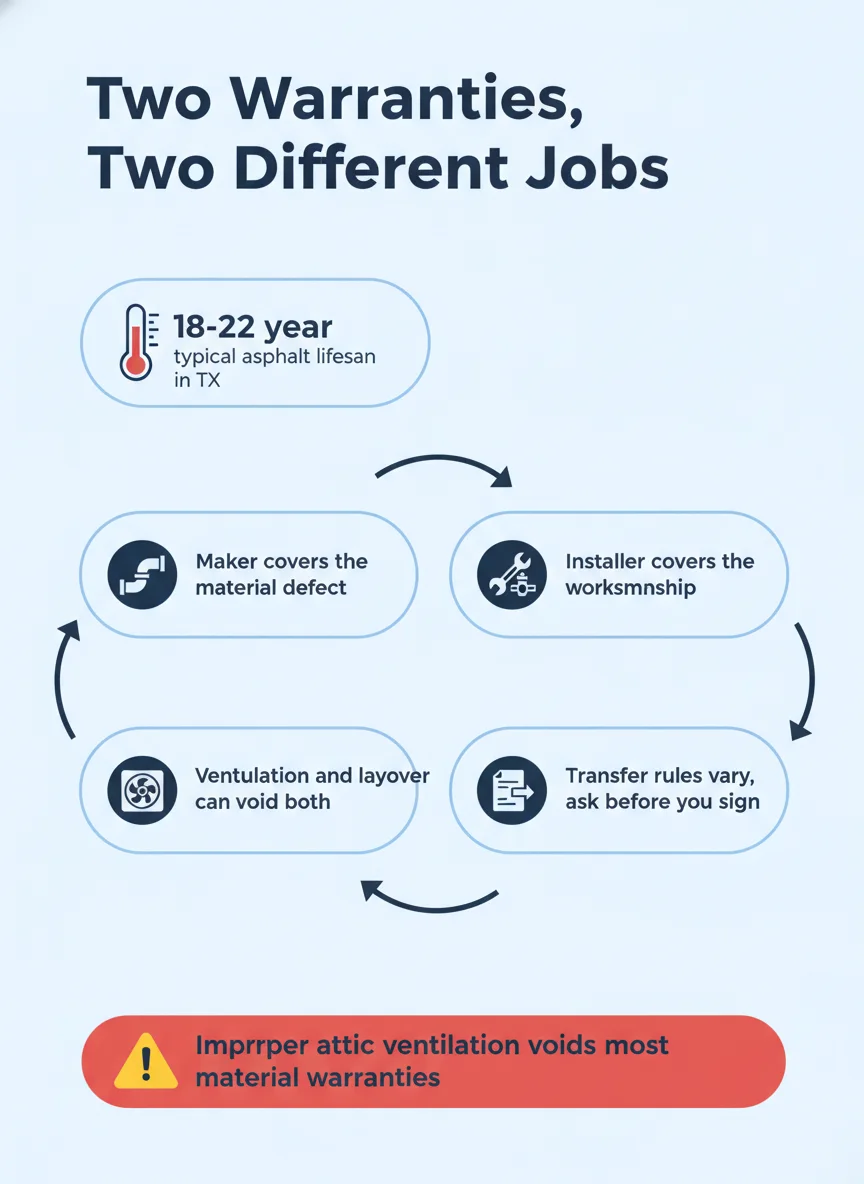
The split exists because two different companies are taking on two different kinds of risk. The manufacturer only controls what happens in its factory, so it only promises the product won't fail due to a defect in materials. It has no way to guarantee how well a crew nails it down three states away, so workmanship is excluded from day one.
What the manufacturer actually promises
A manufacturer warranty promises the shingle, membrane, or panel will perform as designed, free of granule loss, cracking, or material failure within the stated term. It typically does not cover how the product was installed, and it usually requires the installer to be registered or certified with that manufacturer for extended coverage tiers to apply.
Most material warranties also carry conditions buried in the fine print, proper attic ventilation, correct underlayment, and installation over a clean deck rather than an old layer. Skip any of those and a manufacturer can deny a claim even if the shingle genuinely failed, because the installation conditions invalidated the warranty's terms.
What the workmanship warranty actually promises
A workmanship warranty is the installer's promise that the labor itself was done correctly, flashing sealed, fasteners set at the right pattern and depth, valleys and penetrations detailed properly. If a leak traces back to a flashing detail or a missed nail line, that's a workmanship issue, not a material one, and it's the installer who's on the hook.
Workmanship warranty terms vary widely by contractor since there's no manufacturer setting the baseline. Some installers offer a labor warranty that runs well beyond the standard, and we go over the exact term during the estimate so there's no confusion about what's covered and for how long. It's worth asking any contractor to put the term in writing before signing anything.
| Situation | Manufacturer Warranty | Workmanship Warranty |
|---|---|---|
| Shingle granules wearing unevenly with no install issue | Typically covers | Not applicable |
| Leak at a flashing detail around a chimney or vent | Typically excluded | Typically covers |
| Attic ventilation installed below manufacturer spec | Can void the claim | May still apply to labor defects |
| New system installed over an old layer (layover) | Often voided entirely | Depends on installer's terms |
What's Actually Covered Under Each Document
Reading a warranty document line by line is tedious, but a few sections matter more than the rest: the term length, the transferability clause, and the list of exclusions. Material warranties often advertise a long headline number, but a shorter window of full coverage before the terms shift to prorated reimbursement is common, so the number on the brochure isn't always the number that applies years down the road.
Workmanship documents are usually shorter and more direct since there's one party making one promise, but they still need to spell out what triggers a covered repair versus what counts as normal wear. A vague one-paragraph workmanship warranty is a red flag worth asking about before signing a contract, regardless of who's doing the installing.
Step-by-Step: How to Check Your Warranty Coverage Before You Need It
You don't have to wait for a leak to find out what's covered. Running through these steps after installation, while the paperwork is fresh, puts you ahead if something does go wrong years later.
- Locate both documents: Confirm you received a separate manufacturer warranty certificate and a separate workmanship warranty from your installer, not just one combined sheet.
- Check the term length: Note the full-coverage period versus any prorated period on the manufacturer document, and the stated years on the workmanship warranty.
- Read the exclusions list: Look specifically for ventilation requirements, deck condition clauses, and layover restrictions that could void material coverage.
- Confirm registration status: Ask whether your installer registered the job with the manufacturer, since some enhanced warranty tiers require this step within a set window after completion.
- Ask about transferability: Find out if either warranty transfers to a new owner if you sell, and what paperwork is needed to make that transfer valid.
- Store both documents together: Keep physical or digital copies of both warranties with your home records so they're easy to produce if a claim comes up later.
What You'll Find When a Claim Actually Gets Filed
When something goes wrong, the first step is almost always an inspection to determine which category the problem falls into. That distinction decides who gets contacted first, and it's not always obvious from the outside, a cracked shingle could be a product defect or the result of a nailing pattern that left it exposed to wind.
If the inspection points to the material
If the damage looks like a product issue, granule loss in a pattern that doesn't match wear, cracking unrelated to any install detail, the claim goes to the manufacturer. This usually requires documentation of the original installation, proof of registration if applicable, and photos of the current condition.
Manufacturer claims can take time to process since they often want their own representative to review the issue before approving a repair or replacement. Having your paperwork organized ahead of time speeds this along considerably.
If the inspection points to the install
If the issue traces back to flashing, fastening, or detailing, that's a workmanship claim and it goes back to whoever installed the system. A contractor with a solid workmanship warranty should handle this directly and schedule the fix without routing you through a manufacturer process at all.
This is one reason the reputation and longevity of the installing contractor matters as much as the material brand. A manufacturer warranty is only as useful as the documentation behind it, and a workmanship warranty is only as good as the company standing behind it years later.
What a Homeowner Can Handle vs What Needs a Licensed Pro
A homeowner can absolutely read both warranty documents, ask the right questions before signing a contract, and keep records organized for future reference. That part takes no special skill, just attention and a willingness to ask a contractor to clarify fine print before work begins.
What a homeowner shouldn't do is attempt to diagnose whether a failure is material or workmanship on their own, since that determination affects which warranty applies and who pays for the fix. Climbing up to inspect flashing or ventilation without training also risks personal injury and can disturb evidence an inspector would otherwise use to determine fault.
A licensed contractor can inspect the system, document the failure point clearly, and route the claim to the correct party, whether that's the manufacturer or the installer's own workmanship coverage. If you're dealing with a leak and aren't sure which warranty applies, a roof repair inspection is the fastest way to get a clear answer before anyone files anything.
Reading the Fine Print Pays Off Later
A new roof is a long-term investment, and the warranty paperwork that comes with it is just as important as the materials themselves. Knowing the difference between what the manufacturer promises and what the installer promises means you won't be caught guessing who to call when something eventually needs attention, whether that's years one or year fifteen.
If you're weighing a roof replacement and want the warranty terms explained plainly before you sign anything, or you're dealing with storm damage and aren't sure which warranty covers the repair, Renovacore Builders LLC walks through both documents with you so there are no surprises once the crew leaves.
Frequently asked questions
What's the difference between a manufacturer warranty and a workmanship warranty?
The manufacturer warranty covers defects in the shingles, membrane, or metal panels themselves, while the workmanship warranty covers mistakes made during the install, like flashing set wrong or fasteners missed. They come from two different parties and you may need to file with each one separately depending on the problem.
Does a roof warranty transfer if I sell my house?
Some manufacturer warranties transfer to a new owner within a limited window after closing, but terms vary by product line and are rarely automatic. Workmanship warranties depend entirely on what the installing contractor's paperwork states, so check both documents before listing the house.
Can poor attic ventilation really void my roof warranty?
Yes, inadequate intake or exhaust ventilation is one of the most common reasons a manufacturer denies a material claim, since trapped heat and moisture accelerate shingle breakdown in ways the material wasn't designed to handle. This is a documented install detail, not a minor technicality, so it's worth confirming before the crew leaves.
What does a workmanship warranty actually cover if my roof leaks?
A workmanship warranty covers leaks and failures traced back to how the roof was installed, things like flashing, nailing pattern, or underlayment overlap, rather than a flaw in the shingle or membrane itself. If an inspection shows the material failed on its own, that claim usually routes to the manufacturer instead.
Is it a problem if my new roof was installed over the old layer instead of a full tear-off?
A layover, installing new shingles directly over an existing layer, can void a manufacturer's material warranty entirely because most products are only warrantied for installation over a clean deck. It can also hide structural issues underneath, which is why a full tear-off is usually the safer route.