
Why a Pre-Storm Routine Matters in the DFW Metroplex
North Texas weather doesn't always give much notice. A clear afternoon in Dallas, Fort Worth, Arlington, or Plano can turn into a line of severe storms within an hour, and by the time the warning sirens go off, there often isn't time for a full property walk. That's exactly why a short, repeatable checklist matters more than a long one you'll never actually run through when the sky darkens.
The goal isn't to storm-proof your roof in five minutes, nobody can do that. The goal is to document what's there now, clear the obvious water and wind hazards, and make sure anything loose around your property isn't about to become a problem for your roof or your neighbor's. Homeowners across the Metroplex who build this into their forecast-watching habit tend to have a much easier time afterward, whether that means a quick repair call or a full storm damage assessment.
Why Documentation and Prep Actually Reduce Storm Damage Risk
Most storm-related roofing problems trace back to one of two things: water that had nowhere to go, or material that was already loose or aging before the weather arrived. A five-minute routine attacks both. Clearing gutters solves the water problem. Photographing the roof solves the documentation problem, which matters just as much once a claim is involved.
Water Management Before the Storm
Gutters and downspouts that are packed with leaves and debris can't move water fast enough during a heavy downpour, which means water backs up under the edge of the roofing material instead of running off. This is one of the most preventable causes of interior leaks after a storm, and it takes only a few minutes to check with a garden hose or a quick visual look from a ladder.
While you're up there, glance at the downspout outlets for loose granules or debris that shouldn't be there. It's a small detail, but it tells you whether your roofing material is shedding normally or showing early wear that a storm could make worse.
Documentation Before the Storm
A dated set of photos from your phone, taken from the ground at each corner of the house plus a few close-ups of visible roof sections, is enough. You're not trying to produce a professional inspection report, you're creating a timestamped before picture that an adjuster or a roofer can compare against after the fact.
Store these photos somewhere you'll actually find them later, a dedicated phone album or a cloud folder works fine. If a storm does cause damage, having that before set ready to go alongside after photos speeds up insurance claims support considerably.
| Task | Before the Storm | After the Storm |
|---|---|---|
| Photos | Wide shots of each roof side, close-ups of any existing wear | Same angles repeated, plus any visible debris or damage |
| Gutters | Clear of leaves and debris, downspouts flowing freely | Check for new sagging, detached sections, or granule buildup |
| Yard | Furniture, decor, and loose items secured or brought inside | Walk the yard for debris that may have struck the roof |
| Trees | Overhanging limbs trimmed back from the roofline | Look for new cracked or hanging limbs near the house |
The Parts of Your Property That Matter Most in a Storm
Four things drive most of the storm-related calls roofers get across North Texas: gutters and downspouts, overhanging tree limbs, loose yard items, and the attic access point. Each one plays a specific role, and each one takes under a minute to check once you know what you're looking for.
Overhanging limbs are an easy one to overlook because they look harmless on a calm day. In high wind, a branch that brushes the roof becomes a branch that strikes it repeatedly, and repeated impact is what turns a minor cosmetic issue into a real one. Trimming anything that hangs directly over the roofline is one of the higher-value five minutes you can spend before a forecast turns severe.
Step-by-Step: The 5-Minute Pre-Storm Walk-Around
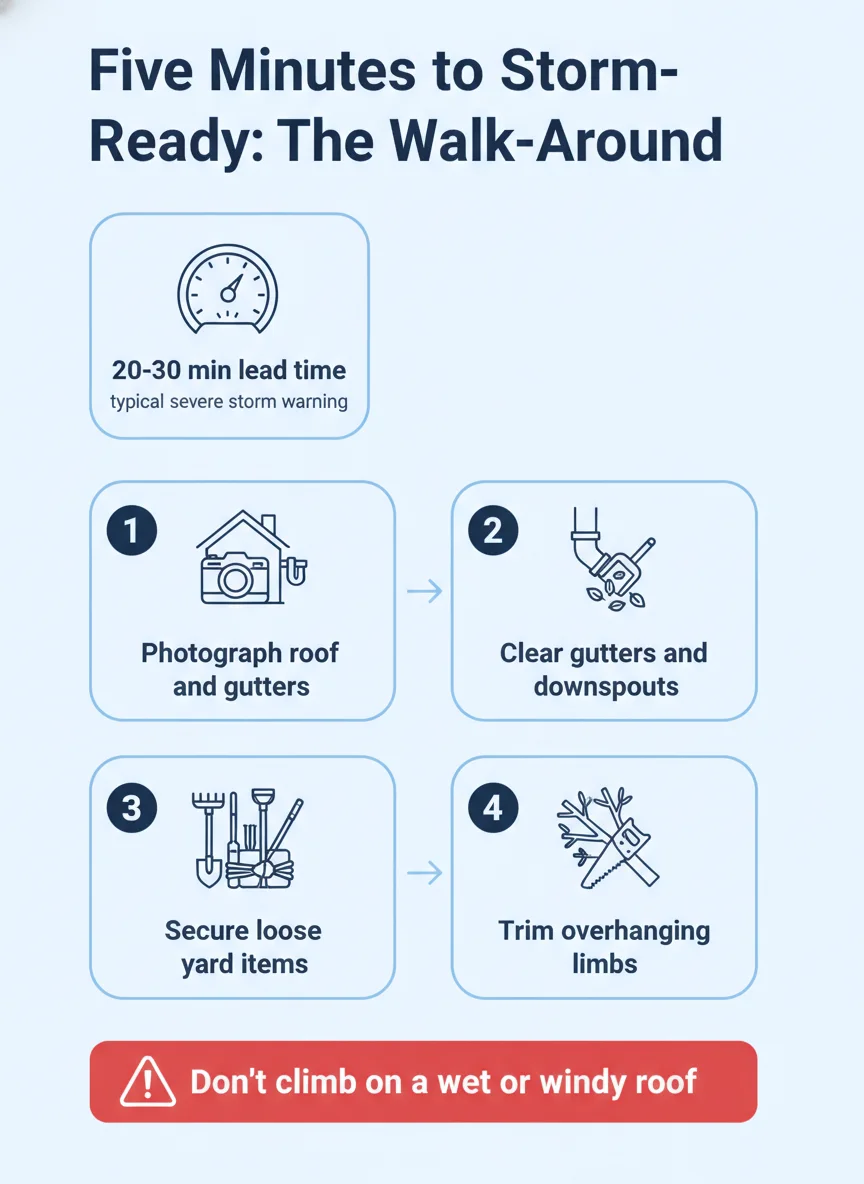
Run through these in order and you'll cover the highest-impact items first. None of this requires getting on the roof itself, everything can be done from the ground or a step ladder at the gutter line.
- Photograph the exterior: Walk each side of the house and take wide shots of the roofline plus close-ups of any existing wear or repairs you already know about.
- Clear gutters and downspouts: Pull out visible leaves and debris so water has a clear path off the roof during heavy rain.
- Trim overhanging limbs: Cut back anything brushing or hanging directly over the roof, since wind turns light contact into repeated impact.
- Secure loose yard items: Bring in or tie down furniture, decor, trash cans, and anything else that could become airborne.
- Locate your attic access: Know where it is and keep a flashlight nearby in case you need to check for water intrusion after the storm passes.
- Note your water shutoff: Confirm where the main shutoff is located in case a leak causes interior water damage you need to stop quickly.
- Check the morning after: Walk the yard and look at the roofline from the ground for displaced material, debris, or anything that looks different from your before photos.
What You'll Find the Morning After a Storm
Most storm damage shows itself in a handful of predictable ways, and knowing what to look for from the ground helps you decide how urgent the next step is. The goal the morning after isn't a full inspection, it's a quick scan to catch anything that needs attention right away.
Signs That Need a Same-Day Look
Visible holes, large sections of material missing, water actively coming through a ceiling, or debris lodged on the roof all call for a prompt visit. These are the situations where waiting a few days can turn a contained problem into a much larger one, especially if more rain is in the forecast.
If you see any of these, call a roofer rather than attempting to get up there yourself, particularly if the roof is still wet. A wet or windy roof is one of the more common places for a fall injury, and it's simply not worth the risk when a professional visit can happen quickly.
Signs That Can Wait for a Scheduled Inspection
Granule buildup at the downspouts, a few displaced pieces of material, or minor cosmetic marks usually aren't urgent. These are worth noting and photographing, then following up with a roof inspection within the next week or two rather than treating it as an emergency.
The distinction matters because not every storm mark needs an emergency response, but it does need to be looked at. Letting smaller issues sit unaddressed for months is usually how they turn into bigger repairs.
What You Can Check Yourself vs. When to Call a Pro
Everything in the five-minute checklist above is safe and reasonable for a homeowner to handle: photographing the exterior, clearing visible gutter debris from ground level or a stable ladder, trimming limbs, and securing yard items. These are preventive tasks, not repairs, and they don't require special equipment or training.
Where it makes sense to call a roofer is anything involving getting onto the roof itself, assessing hidden damage, or making a repair. Climbing onto a sloped surface to check for loose material, especially after a storm when conditions are unpredictable, is where professional experience and the right safety gear matter.
It's also worth calling a pro before you assume a problem is minor. What looks like a small cosmetic issue from the ground can sometimes point to something underneath that needs attention, and a trained eye catches details a homeowner walk-around won't. If you're ever unsure after a storm passes through Dallas, Fort Worth, or anywhere in between, it costs nothing to have it looked at.
Make the Checklist a Habit, Not a Scramble
The homeowners who come out of storm season with the least stress are usually the ones who treat this five-minute routine as automatic, something they run through the moment a severe weather watch pops up on their phone, not something they try to remember mid-storm. Keep a copy of this checklist somewhere handy, whether that's a note on your phone or a printed card by the door, so it's there when you need it.
If a storm does leave something behind, whether that's a slow leak, missing material, or damage you're not sure how to read, Renovacore Builders LLC is available around the clock across the DFW Metroplex to take a look and walk you through what comes next.
Frequently asked questions
What should I do to my roof before a storm hits?
Start with a quick photo walk-around of your roof and gutters so you have a clear before picture, then clear debris from the gutters and downspouts so water has somewhere to go. After that, secure anything in the yard that could become a projectile and check that overhanging limbs are trimmed back from the roofline.
How much warning do I usually get before severe weather in North Texas?
Severe storm warnings in North Texas often give only twenty to thirty minutes of lead time, which is why a fast checklist matters more than a long one. Keeping a short routine memorized means you're not improvising when the sky turns green.
Why should I photograph my roof before a storm?
Before photos give you a documented baseline condition, which makes it much easier to show an insurance adjuster what changed after the weather passes. Without a before picture, it's your word against a visual inspection weeks later, and details get harder to prove.
What should I check on my roof the morning after a storm?
Look for obvious signs from the ground first: displaced material, dented metal, debris in the yard, or granules collecting at downspout outlets. Avoid walking the roof yourself, especially if it's still wet, and instead call a roofer to assess it safely.
Do I need to clear my gutters before every storm?
Yes, clogged gutters and downspouts are one of the most common causes of water backing up under roofing material during heavy rain. A five-minute clear-out before a forecasted storm reduces the chance that ponding water finds its way into your attic or walls.