
Why Dark Streaks Show Up on Texas Roofs
If you've looked up at a shingle roof anywhere in the DFW Metroplex and noticed dark, almost sooty-looking streaks running down from the ridge, you're not imagining things, and it's probably not actual dirt. The humid stretches that roll through North Texas in spring and summer create exactly the conditions that algae needs to take hold: warm temperatures, moisture that lingers, and shingle surfaces that don't dry out quickly between rains.
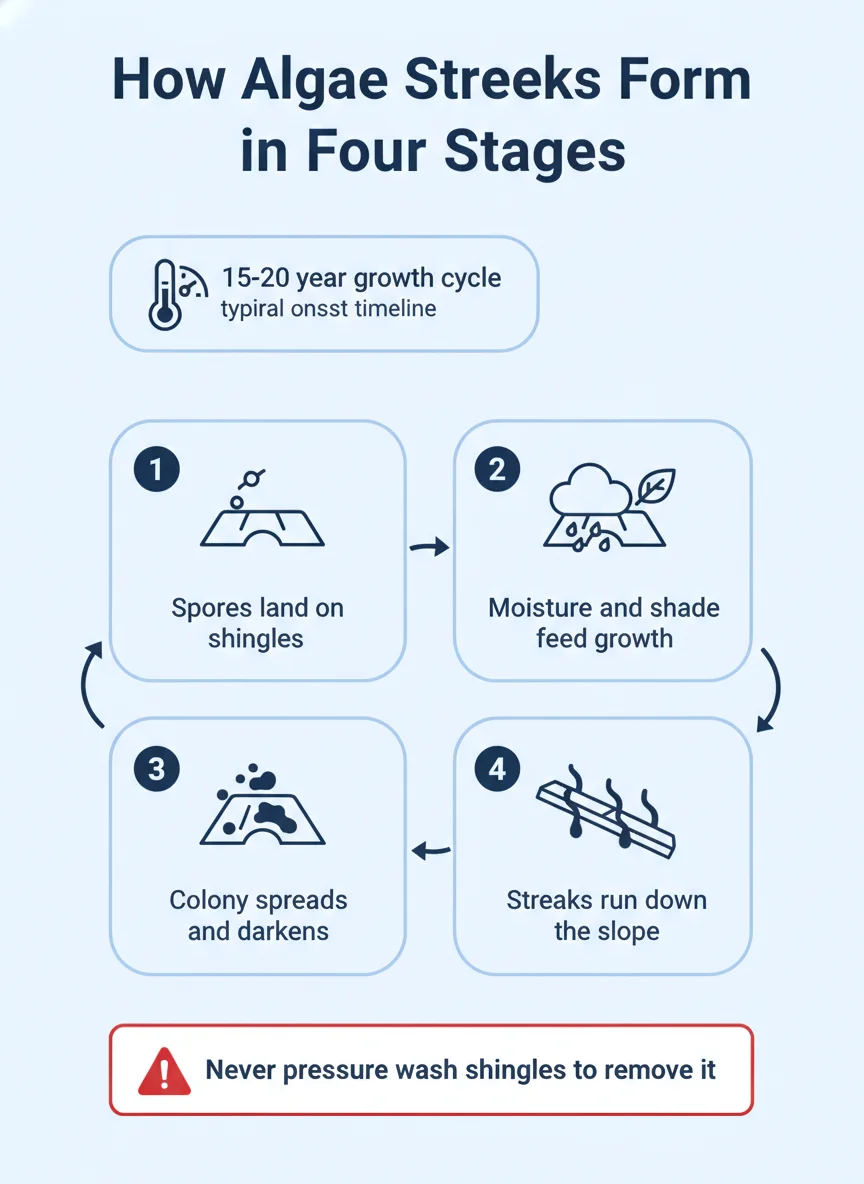
It tends to show up first on north-facing slopes or sections shaded by trees, because those areas hold moisture the longest after a storm rolls through. A roof that gets full sun most of the day dries out fast and rarely develops the same streaking. Once you know what to look for, you'll start noticing it on a lot of roofs in your neighborhood, because it's an extremely common issue rather than a sign that something was installed wrong.
What Is Actually Growing Up There?
The organism responsible for those streaks is a type of algae, most commonly identified as Gloeocapsa magna. It isn't mold and it isn't a fungus, it's a blue-green algae that happens to produce a dark, protective pigment as it matures, which is what gives the streaks their black or brown appearance rather than green.
How It Spreads
Algae spores travel easily by wind and by birds that land on one roof and then another. Once spores settle on a shingle surface that offers moisture and a food source, they begin forming small colonies that are barely visible at first. Over the following months or years, those colonies expand and connect, which is why streaking often appears gradually rather than overnight.
The limestone filler used in many shingle products acts as a food source for the algae, which is part of why this has become more common industry-wide as shingle manufacturing has evolved. It's not a defect specific to any one roof, it's simply a byproduct of how modern shingles are made.
Why It Looks Worse Than It Is
Because the streaks run in long vertical lines down the slope, they can make a roof look far more damaged than it actually is from the street or from a drone photo. Homeowners often assume it's a sign of leaking or rot, when in most cases it's a surface-level organism that hasn't compromised the shingle underneath at all.
That said, a heavily colonized roof does hold more moisture at the surface than a clean one, and moisture sitting against asphalt shingles for years at a time isn't doing them any favors. It's worth treating for that reason, even when the roof itself is still structurally sound.
| Factor | Algae Streaking | Shingle Aging/Wear |
|---|---|---|
| Pattern | Follows water flow, often from ridge or vents down | Spreads evenly or shows up at edges and valleys |
| Texture | Stays flat against the shingle surface | Often paired with curling, cupping, or lifting |
| Granule loss nearby | Minimal unless colony is very old | Noticeable, often visible in gutters |
| Fix | Cleaning or algae-resistant shingles on replacement | Usually points toward repair or replacement |
What Actually Removes Algae Safely
The instinct a lot of homeowners have is to rent a pressure washer and blast the streaks off, and that's exactly the wrong move. High-pressure water strips the protective granules right along with the algae, and once those granules are gone, the shingle underneath is exposed to UV damage it was never designed to handle bare. That kind of damage isn't cosmetic, it shortens the life of the shingle for good.
A soft wash approach using a low-pressure sprayer and a cleaning solution formulated for roofs is the standard safe method across the industry. It's applied, allowed to sit, and rinsed gently, which kills the algae without disturbing the shingle surface. Bleach-based solutions work but need to be diluted correctly and kept away from landscaping, gutters, and metal fixtures, which is part of why a lot of homeowners choose to have this done rather than mixing it themselves.
Step-by-Step: Addressing Algae Streaks the Right Way
Treating algae streaks correctly is less about scrubbing harder and more about using the right process in the right order. Here's roughly how it goes when it's done properly.
- Confirm it's algae: Look for the vertical streak pattern running down from the ridge or vent areas, which is the signature sign of algae rather than general wear.
- Protect plants and fixtures: Cover landscaping, soffit vents, and anything metal nearby before any cleaning solution goes on the roof.
- Apply a soft wash solution: Use a low-pressure sprayer with a cleaner designed for asphalt shingles, never a high-pressure wand.
- Let it dwell: Give the solution time to work on the algae colony before rinsing, following the product's recommended wait time.
- Rinse gently: Rinse from the top down using low water pressure so granules stay put on the shingle surface.
- Check gutters and downspouts: Flush out any runoff and granule debris so it doesn't clog drainage after the cleaning is done.
- Plan ahead for next time: If algae has been a recurring problem, ask about algae-resistant shingle options the next time Roof Replacement comes up.
What You'll Find Once the Streaks Are Gone
A Clean Roof With Sound Shingles
In most cases, once the algae is cleaned off, the shingles underneath look essentially the way they did before the colony took hold. The color returns to normal, the surface is intact, and there's no further action needed beyond keeping an eye on the same shaded areas going forward since algae does tend to return to the same spots over time.
This is the outcome you're hoping for, and it's the most common one on roofs that are otherwise in decent shape. It confirms the streaking really was cosmetic and the roof's lifespan wasn't meaningfully affected.
Granule Loss or Soft Spots Underneath
Less commonly, cleaning reveals bare patches where granules have already washed away, or spots that feel soft or spongy underfoot. That combination usually means the algae had company, either age-related wear or a smaller leak that was masked by the discoloration. If you're seeing this, it's worth having Roof Inspections & Maintenance take a closer look rather than just re-treating the surface.
This is also a good moment to think about timeline. If a roof is already a couple decades old and showing wear alongside the algae, cleaning it might buy a little time, but it won't reset the clock on materials that are simply reaching the end of their service life.
DIY Cleaning vs. Calling a Pro
A homeowner with the right gear and a cautious approach can tackle light algae streaking on a single-story, easily accessible roof. A properly diluted cleaning solution, a pump sprayer, and patience to let it dwell before rinsing can handle a lot of minor cases without anyone needing to climb up at all, since most of the work happens from the ground with an extension wand.
Steep pitches, multi-story homes, or anything near power lines changes the math quickly. Working at height on wet, algae-covered shingles is genuinely slippery, and a fall risk isn't worth saving a service call. It's also easy to misjudge dwell time or dilution ratio on a first attempt, and getting it wrong can mean streaked gutters, dead landscaping, or a roof that still looks patchy afterward.
Anything beyond a basic wash, including a full assessment of whether streaking is masking wear, granule loss, or an aging roof that's better served by Roof Repair than another round of cleaning, is worth having a professional eye on. A trained look at the shingles up close tells you a lot more than a photo from the driveway ever will.
Keeping It From Coming Back
Algae streaking is one of those roofing issues that's more annoying than dangerous, but it's also one that tends to repeat itself on the same shaded slopes year after year once conditions are right for it. Trimming back overhanging branches to let more sun and airflow reach the roof surface is one of the simplest ways to slow regrowth, along with keeping gutters clear so water doesn't sit and seep back up under the shingle edges.
If algae has been a recurring headache on a roof that's getting up there in age anyway, it's worth discussing algae-resistant shingle options the next time a Roof Installation or replacement is on the table, since newer products handle this specific problem a lot better than they used to. For homeowners in Dallas dealing with streaking right now, Renovacore Builders LLC can take a look and tell you honestly whether it's a simple cleaning or something more.
Frequently asked questions
What causes black streaks on a roof?
Black streaks are almost always a type of algae called Gloeocapsa magna, not dirt or soot. The algae feeds on limestone filler in shingles and spreads in humid climates, especially on shaded, north-facing slopes that stay damp longer after rain.
Is roof algae bad for shingles?
Roof algae is mostly cosmetic in its early stages, but it does hold moisture against the shingle surface over time. Left untreated for years, heavy colonies can contribute to granule loss and a shortened shingle lifespan, so it's worth addressing rather than ignoring.
Can I pressure wash algae off my roof?
No, pressure washing is one of the fastest ways to strip protective granules and void a shingle's warranty. A soft, low-pressure rinse with an approved cleaning solution is the safer route, and many homeowners prefer to have it done professionally.
Do algae-resistant shingles actually work?
Algae-resistant shingles use copper or zinc granules woven into the shingle surface, and they do slow algae growth significantly compared to standard shingles. They don't make a roof immune forever, but they push back the timeline considerably.
How do I know if streaking is just cosmetic or a sign of a bigger problem?
Cosmetic algae streaking follows a predictable pattern down from the ridge or around vents and stays flat against the shingle surface. If you notice streaking paired with soft spots, curling edges, or granules collecting in the gutters, that points to aging shingles rather than simple algae.