
The Morning After a DFW Storm
North Texas weather doesn't ease in. A line of storms can roll through the DFW Metroplex overnight and leave a yard full of debris by sunrise, and most homeowners aren't sure what to actually look for once the wind dies down. The good news is that a careful walkaround, done from the ground, tells you most of what you need to know before anyone climbs a ladder.
This matters because small signs often point to bigger problems. A handful of granules in the gutter or a dented roof vent can be the first visible evidence of wind or hail impact, and catching it early means a simpler repair instead of a slow leak that shows up weeks later as a stain on the ceiling. A short, methodical check the morning after a storm is one of the cheapest things a homeowner can do.
Why the Ground-Level Check Matters
Most storm damage leaves clues long before it ever becomes a visible hole or a leak. Hail bruises soft materials, wind lifts edges and loosens fasteners, and both can knock debris loose that lands in predictable places around your property.
What Hail Leaves Behind
Hail tends to bruise or crack anything softer than the shingle surface itself. Look at roof vents, AC condenser fins, window screens, and any painted metal trim, since these soft materials dent and dimple more easily than asphalt shingles and often show impact before the roof does.
Granule loss is the other telltale sign. Asphalt shingles shed their protective granule coating when struck, and that grit collects in gutters, downspout outlets, and at the base of downspouts on the driveway or patio below.
What Wind Leaves Behind
Wind damage shows up differently. Look for shingles or shingle pieces in the yard, flashing that has pulled away from a chimney or wall, and any section of ridge or edge trim that looks lifted or crooked compared to the rest of the roofline.
Wind can also work gutters loose from their hangers without anything falling to the ground, so a sagging run or a downspout pulling away from the fascia board is worth noting even if nothing landed in the yard.
| Sign | Hail | Wind |
|---|---|---|
| Debris type | Granules, dented soft metal | Shingle pieces, loose flashing |
| Gutter clue | Grit buildup at outlets | Sagging sections, pulled hangers |
| Where to look first | Vents, AC fins, screens | Ridge line, roof edges, chimney flashing |
| Urgency | Can wait for daylight inspection | Check attic sooner if debris found |
Gutters and Downspouts: What They Tell You
Gutters act like a catch basin for anything shedding off the roof, which makes them one of the best places to look for clues without ever leaving the ground. Granules, small shingle fragments, and loosened nails often end up here first.
Downspouts matter just as much. A clogged downspout after a storm can mean debris from above, and a downspout that has pulled away from the house usually means the fasteners took more stress than they were built for. Both are worth noting even if the rest of the gutter run looks fine.
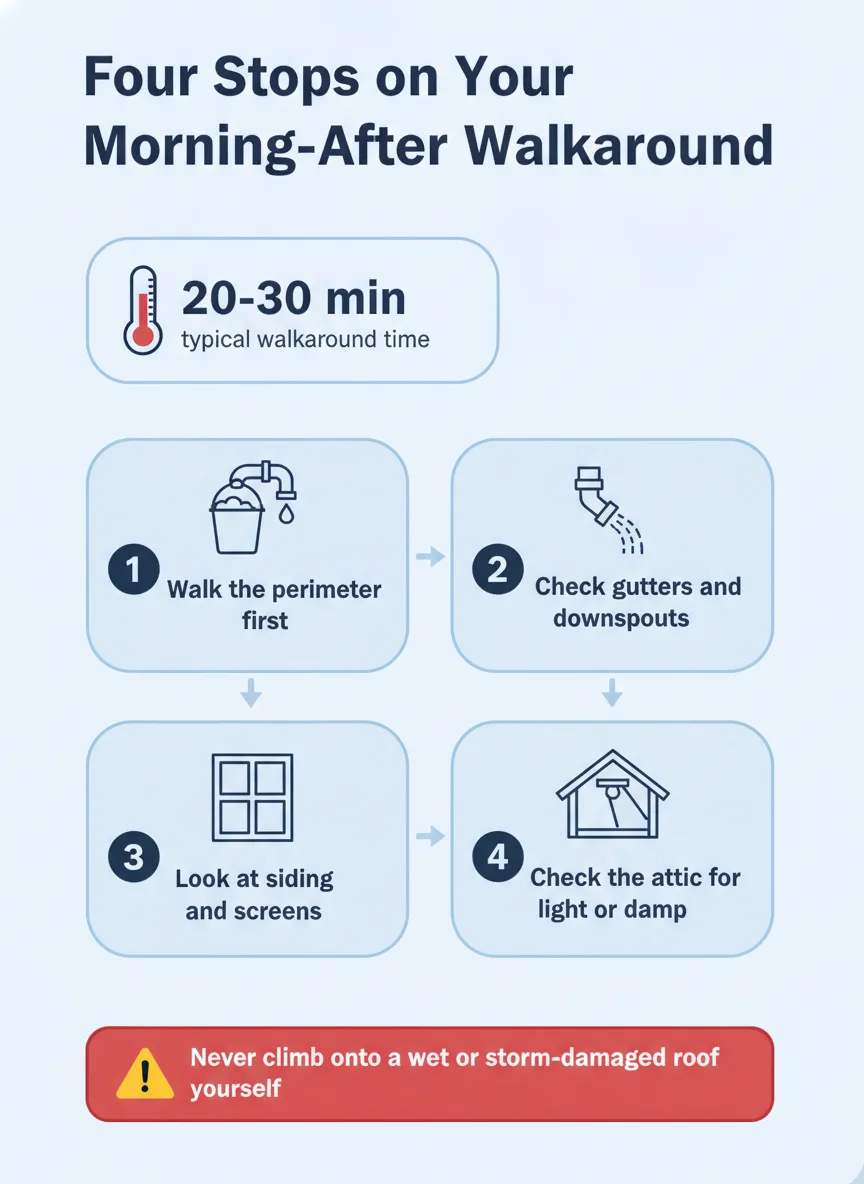
Step-by-Step: The Morning-After Walkaround
Work through the property in order, starting at ground level and only looking up once you've covered everything you can see from a safe distance. Keep your phone handy for photos as you go.
- Walk the yard: Look across the lawn, driveway, and patio for shingle pieces, granules, and any dented or bent soft metal that may have blown or washed down from the roof.
- Check the gutters: Look into the gutter trough for granule buildup, dents, or sagging sections, and check that downspouts are still attached and clear at the base.
- Inspect siding and trim: Scan exterior walls and trim for dings, cracked panels, or loosened pieces, which often show the same impact pattern as roof damage.
- Check window screens: Torn or dented screens are a quick, low-risk indicator of hail size and impact force that can help confirm what you're seeing elsewhere.
- Look at the roofline from the ground: Stand back and scan for missing shingles, lifted edges, or crooked ridge trim, rather than climbing up to check it yourself.
- Check the attic: Use a flashlight to look for daylight coming through the decking, damp insulation, or staining on the rafters and sheathing.
- Photograph everything: Take wide and close-up photos of debris, dents, and any visible roof irregularities before you clean anything up or mow it over.
What You Might Find, and What It Means
Not every piece of debris in the yard means a major problem, and not every clean-looking yard means the roof came through unscathed. It helps to know what different findings usually point to.
Minor Signs Worth Monitoring
A few granules in the gutter, one dented vent cap, or a torn screen on a single window can be isolated and minor. These are worth noting and photographing, but they don't necessarily mean water is getting in anywhere.
Keep an eye on these spots over the following weeks, especially after the next rain, since a minor dent today can be the first sign of a fastener or seal that needs attention before it becomes a bigger issue.
Signs That Need a Closer Look Soon
Shingle pieces in the yard, a sagging or detached gutter section, lifted ridge trim, or any daylight or dampness in the attic are different. These point to actual material loss or an active entry point for water.
If you find any of these, it's worth scheduling a roof inspection sooner rather than later. A professional can get on the roof safely and confirm whether what you're seeing is cosmetic or something that needs repair.
What a Homeowner Can Handle vs. What Needs a Pro
The ground-level walkaround, the attic check, and the photo documentation are all things a homeowner can reasonably do without any special equipment. These steps are about observation, not repair, and they give you a clear record of conditions before anything gets cleaned up or rained on again.
Getting onto the roof itself, clearing debris from a steep section, or making any repair to flashing, shingles, or gutters is a different matter. These tasks involve working at height on a surface that may already be compromised, and a licensed roofer has the training, harnessing, and experience to do it without creating a new problem.
If your walkaround turns up anything beyond a stray dent or a few granules, especially debris in the yard, lifted trim, or attic moisture, it's worth having that professional look sooner rather than waiting for the next storm to make it worse. An inspection costs you nothing but time, and it gives you a clear answer either way.
Keep This Checklist Handy
DFW gets its share of hard weather most years, and a quick, repeatable routine the morning after is worth more than guesswork. Walk the yard, check the gutters, scan the roofline from below, check the attic, and photograph what you find before cleanup starts.
For a broader rundown of what to watch for in the days leading up to a storm, see our storm prep checklist for Dallas homes. If your walkaround turns up something worth a second look, Renovacore Builders LLC is available to come take that closer look.
Frequently asked questions
What should I check after a hailstorm at my house?
Start on the ground, not the roof. Walk your yard and driveway for granules, soft metal dents on vents or AC fins, and any debris that fell, then check gutters, siding, and screens before looking up at the roofline from a safe distance.
Is it safe to go on my roof after a storm?
It's generally not a good idea for a homeowner to climb onto a roof right after a storm. Wet or damaged decking can hide soft spots, and a trained eye from the ground or an attic check can usually tell you enough to decide whether you need a closer look from a professional.
What does gutter damage from a storm look like?
Storm-related gutter damage usually shows up as dents, pulled fasteners, sections sagging away from the fascia, or debris clogging the downspouts. Granules collecting in the gutter trough is also a sign your shingles took an impact.
Should I take photos before cleaning up storm debris?
Yes, photograph everything before you clean up, including debris on the ground, dented metal, and any visible roof damage from a safe vantage point. These photos become useful documentation if you end up filing an insurance claim later.
How do I know if I have a roof leak after a storm?
Check your attic with a flashlight for daylight coming through the decking, damp insulation, or water staining on the rafters, and check ceilings below for new spots or soft drywall. Any of these signs means it's worth getting an inspection soon rather than waiting.