
Why the Adjuster Appointment Matters So Much
After a storm rolls through the DFW Metroplex, the insurance adjuster's visit is usually the single appointment that determines what your policy will actually pay for. Everything before that, the claim filing, the paperwork, the waiting, builds toward this one inspection. Everything after it, the estimate, the check, the repair timeline, flows from what gets documented on the roof that day.
Homeowners across Dallas, Fort Worth, Arlington, and the surrounding towns often treat the adjuster visit as something to simply show up for, when it's really something to prepare for. The adjuster works for the insurance company and is measuring damage against a specific set of criteria. Going in with the right documents and the right person standing next to you on the roof changes how thorough and accurate that measurement turns out to be.
What the Adjuster Is Actually Measuring
An adjuster isn't just looking for obvious damage. They're trained to assess density, pattern, and age of wear across the whole roofing system, then translate that into a number the insurance company uses to calculate your payout.
Visual Inspection and Photos
The adjuster will walk or inspect from a ladder, photographing the roof surface, flashing points, vents, and any visible impact marks or lifted material. They're also looking at the roof edges and valleys, where damage tends to concentrate and where water finds its way in first.
They'll typically photograph the same areas from multiple angles and distances, partly to document condition and partly to create a record the insurance company can review later if the claim is questioned. This is why it helps to have already taken your own photos before the adjuster arrives, so your documentation and theirs tell the same story.
The Test Square Method
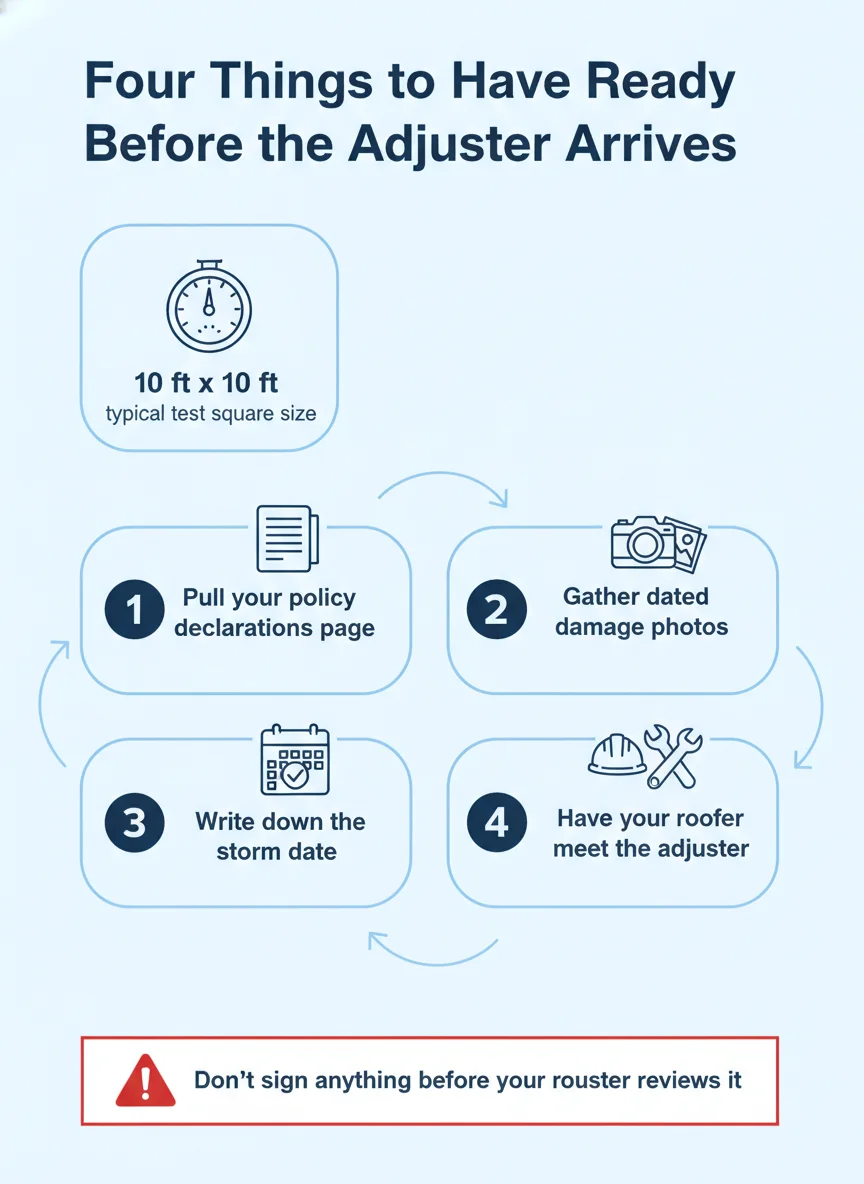
Most adjusters use a test square, a marked section of roof, often around 10 feet by 10 feet, where they count every point of damage within that area. That count gets used to estimate damage density across the entire roof surface.
Where the test square gets placed matters a lot. A square placed on a slope that took less direct impact will undercount damage compared to one placed on a harder-hit slope. This is one of the clearest reasons to have your own Storm Damage & Insurance Claims contractor present, so a representative section gets chosen rather than whichever spot is easiest to reach.
| Scenario | What the Adjuster Sees | What Your Roofer Adds |
|---|---|---|
| Homeowner alone | Surface-level visual pass, limited technical pushback | Nothing to counter an undercounted test square |
| Roofer present on-site | Same visual pass, plus a second trained set of eyes | Flags additional damage, confirms square placement |
| Reinspection requested | Second visit, often with photos already submitted | Supplemental documentation to support the gap |
The Roof System Components an Adjuster Checks
Damage assessment goes beyond just the shingles or membrane on top. An adjuster who knows what they're doing checks flashing around chimneys and vents, the condition of soft metal components like vent caps, and any soft spots underfoot that suggest deck damage underneath.
They're also comparing granule loss patterns, bruising on shingles, and dents on metal fixtures to determine whether damage is recent storm impact or simply age-related wear. This distinction matters because insurance policies generally cover sudden storm damage, not gradual wear and tear, so an experienced eye on both sides of that comparison protects your claim.
Step-by-Step: Preparing for the Adjuster Visit
A little preparation before the appointment goes a long way toward a smoother, more accurate inspection.
- Pull your policy: Have your declarations page and policy number ready so the adjuster can reference your specific coverage without delay.
- Photograph the damage: Take dated photos of any visible damage, both on the roof if it's safe to access and from the ground, before the appointment.
- Note the storm date: Write down the date you first noticed damage or the date of the storm event, since adjusters often ask for this specifically.
- Schedule your roofer: Arrange for your roofer to be on-site at the same time as the adjuster rather than inspecting separately.
- List interior signs: Note any ceiling stains, attic leaks, or other interior evidence that supports the exterior damage findings.
- Ask questions on-site: Have your roofer ask about test square placement and request to see where damage was and wasn't counted.
- Request a copy: Ask for a copy of the adjuster's estimate or scope sheet before they leave, so your roofer can review it against their own findings.
What You'll Find When Estimates Don't Match
It's common for a roofer's estimate and the adjuster's estimate to come in different, sometimes by a meaningful margin. That gap usually comes down to scope, not dishonesty on either side.
Common Reasons for a Gap
Differences often trace back to test square placement, missed flashing or ventilation damage, or a disagreement about whether certain wear is storm-related or simply age. Sometimes the adjuster's visit happened quickly or under poor lighting, and a second look turns up damage that was missed the first time.
Material and labor cost differences between the adjuster's internal pricing database and current local rates can also create a gap, especially on commercial roofing projects with more complex systems than a standard residential slope.
What Happens Next
When your roofer's documentation doesn't match the insurance company's number, the usual next step is a reinspection request backed by photos, measurements, and a written scope comparison. Most insurance companies will review supplemental evidence before a claim is finalized.
If the gap still can't be resolved, your policy may outline an appraisal process as a next step. That's a conversation to have directly with your insurance company and your policy documents, since appraisal terms vary from policy to policy.
What You Can Handle Yourself vs. What Needs a Roofer
You can absolutely handle some of this process on your own. Taking photos, writing down the storm date, pulling your policy number, and asking the adjuster straightforward questions about their findings are all things any homeowner can do without a contractor present.
What you generally can't do on your own is accurately assess roofing damage the way a trained eye can. Climbing onto your own roof after a storm is a safety risk, and even if you could get up there safely, most homeowners aren't trained to distinguish storm damage from ordinary wear the way a roofer or an adjuster is.
That's the real value of having a licensed roofer meet the adjuster: a second trained perspective standing in the exact spot where the number gets decided. If a gap does show up afterward, that same roofer is the one who can push back on it with documentation instead of a guess.
Getting Ready for Your Own Adjuster Appointment
Meeting the insurance adjuster doesn't have to feel like a gamble. With your policy number in hand, photos already taken, and a roofer standing next to the adjuster instead of hearing about the visit secondhand, you walk into that appointment with a much stronger position than most homeowners realize they have.
If you've got storm damage anywhere in Plano, Frisco, or elsewhere across the metro and an adjuster visit coming up, read through our roof insurance claim timeline for the bigger picture, and reach out to Renovacore Builders LLC before that appointment lands on your calendar.
Frequently asked questions
Do I need to be home when the insurance adjuster inspects my roof?
You don't have to be on the ladder, but it helps to be on the property so you can answer questions about when you first noticed damage and point out interior signs like ceiling stains. If your roofer is meeting the adjuster, they can handle most of the technical conversation on your behalf.
Should my roofer be there when the adjuster inspects the damage?
Yes, having your roofer present is one of the most useful things you can do for your claim. They can point out damage an adjuster unfamiliar with your specific roofing system might miss, and they speak the same measurement language the adjuster is using.
What is a test square and why does the adjuster use one?
A test square is a marked-off section of roof, commonly around 10 feet by 10 feet, that the adjuster uses to count damage and extrapolate a density across the rest of the roof. Where that square gets placed can swing the whole estimate, which is why having your own roofer there to flag a representative spot matters.
What happens if my roofer's estimate doesn't match the adjuster's?
A gap between estimates is common and doesn't mean your claim is denied. Your roofer can request a reinspection, submit supplemental photos or measurements, or in some cases your policy may allow for an independent appraisal process to resolve the difference.
What should I avoid saying to the insurance adjuster?
Avoid guessing at dates, causes, or costs you aren't certain about, since a wrong guess can create confusion in the claim file later. Stick to what you actually observed, like when you noticed a leak, and let your roofer address technical questions about the roofing system itself.