
When a Texas Storm Opens Up Your Roof
Texas weather doesn't give much warning. A line of thunderstorms rolls through, a limb comes down across a section of decking, or straight-line winds peel back a strip of material, and suddenly there's daylight where there shouldn't be. Across the DFW Metroplex, from Dallas to Fort Worth and the smaller towns in between, this kind of damage shows up most often in spring and early summer when severe weather is most active, but it can happen any time of year.
What you do in the first 24 hours after discovering the damage matters almost as much as the repair itself. Water that sits on ceiling drywall or soaks into insulation for a day does more harm than the original opening did. The goal in that first day isn't to fix the roof, it's to stop the bleeding, document what happened, and get a crew out to secure the area properly.
Why Tarping Matters Before the Next Rain Hits
A tarp is a stopgap, not a solution, but it's a critical one. Until a crew can get up there with the right materials for a permanent repair, an open section of roof is an open invitation for every rain event to make the damage worse. Tarping buys time and limits how much interior damage happens while you wait.
What a Tarp Actually Does
A properly installed tarp covers the damaged area and extends well past its edges, anchored down so wind can't get underneath and rip it loose. It's weighted or fastened to the roof deck or surrounding structure, not just laid over the hole, because a tarp that isn't secured is worse than no tarp at all once the wind picks back up.
Done right, it keeps rain off the exposed decking and slows moisture from reaching the attic, insulation, and ceiling below. That gap in protection is exactly what buys the time needed to schedule a real repair instead of rushing one in the middle of a storm.
What a Tarp Does Not Fix
A tarp doesn't repair the underlying structure, replace damaged material, or restore the roof's ability to shed water the way it's designed to. It's a barrier, not a repair, and it has a limited life span before sun and wind start to break it down.
If the decking underneath is soft, rotted, or sagging, a tarp won't address that either. That's structural damage that needs a crew to assess and repair before any new material goes down, which is part of why a follow-up inspection matters even after the tarp is in place.
| Approach | What It Protects | Risk Level |
|---|---|---|
| No action taken | Nothing, water keeps entering | High, interior damage spreads quickly |
| DIY tarping attempt | Partial, often loose or improperly anchored | High, fall risk and incomplete coverage |
| Professional tarping | Decking and interior from further water intrusion | Low, secured properly with safety equipment |
| Permanent repair | Full restoration of the roofing system | Lowest, addresses the root cause |
Understanding the Damage Underneath
What looks like a small hole on the surface is often bigger once you look at the decking underneath. Wind and impact damage can crack or split plywood sheathing, and once that layer is compromised, water finds every seam and nail hole to work its way through. That's part of why a visual check from the ground only tells part of the story.
Underlayment, the layer between the decking and the outer roofing material, is the next line of defense. If it's torn or missing in the damaged area, water has a much easier path down into the attic space. A crew assessing the damage will look at all three layers, decking, underlayment, and the surface material, to understand the full scope before recommending next steps.
Step-by-step: What to Do in the First 24 Hours
Once you notice water coming in or spot visible damage from the ground, here's the order of operations that limits damage and keeps the claims process straightforward.
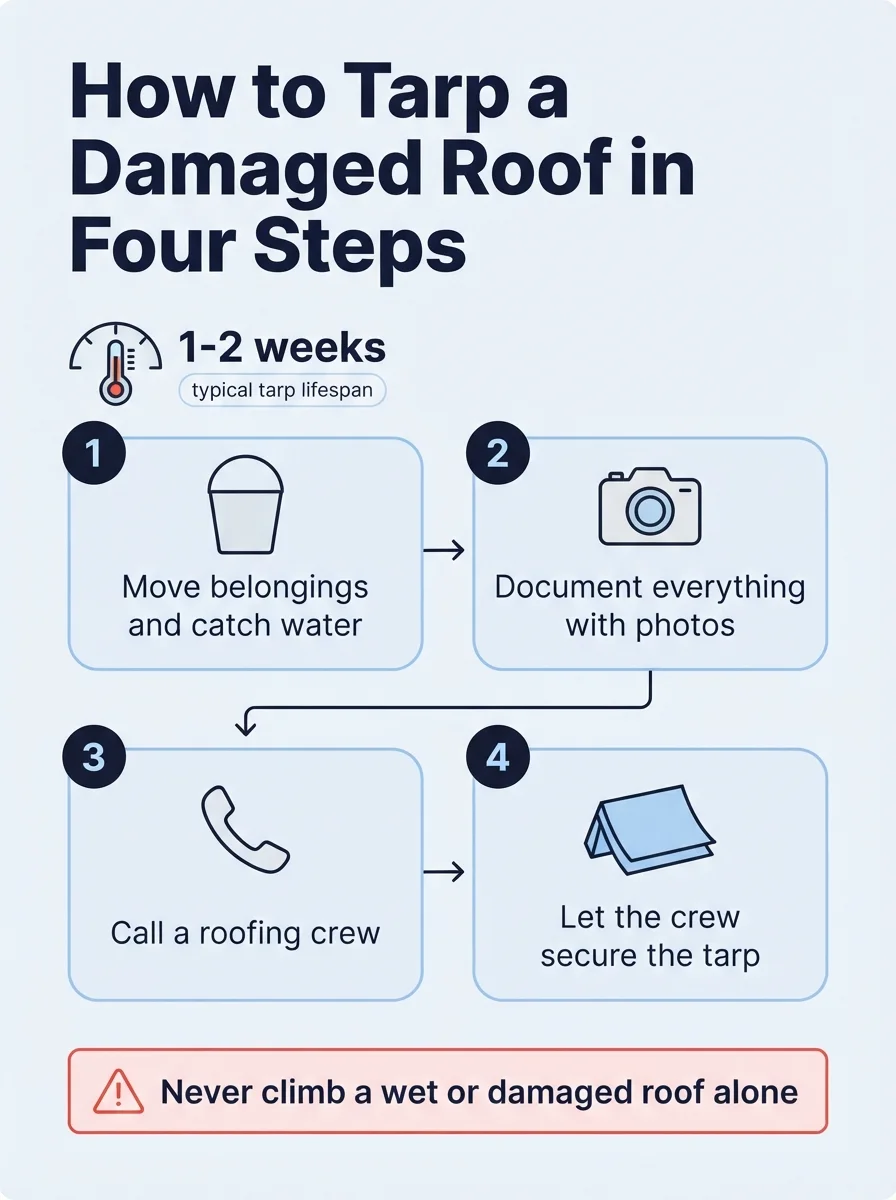
- Move belongings clear: Get furniture, electronics, and anything valuable away from the leak path. Water damage to contents is often avoidable if you act quickly.
- Catch the water: Place buckets, towels, or a tarp on the floor beneath the leak to limit damage to flooring and ceilings while you wait for help to arrive.
- Photograph everything: Take pictures of the ceiling stain, any visible exterior damage, and standing water before you clean anything up. These photos matter for insurance documentation.
- Call a roofing crew: Give us a call to get a crew scheduled for emergency tarping. Don't wait for the next rain to call, since timing matters for how much interior damage accumulates.
- Stay off the roof: Resist the urge to climb up and look or tarp it yourself, especially in wet or windy conditions. Let a trained crew handle the roof itself.
- Note the time and conditions: Write down roughly when you noticed the damage and what the weather was doing. That detail helps with both the repair plan and any insurance claim.
- Keep the area clear: Set up a barrier or keep people away from the affected room until the ceiling and structure have been checked for safety.
What You'll Find Once the Rain Stops
Once the weather clears and a crew has had a chance to look things over, the damage usually falls into one of two categories: contained or more extensive than it first appeared.
Signs the Damage Is Contained
If the opening was small and caught quickly, you'll often see a limited wet spot on the ceiling, minimal staining, and no sagging or soft spots in the drywall. The tarp held, the decking underneath is intact, and the repair is a matter of replacing a section of material rather than rebuilding structure.
In these cases, the fix is usually straightforward once materials are on site, and the interior cleanup is minor. This is the outcome everyone hopes for, and it's the most common result when a tarp goes up within the first day.
Signs You Need More Than a Tarp
Sagging ceiling drywall, a soft or spongy feel when you press on it, or water stains that keep spreading even after the rain stops are signs the damage goes deeper than the surface. These usually mean the decking or structural framing took on water and needs more than a patch.
If you notice any of these signs, it's worth getting a full roof inspection rather than assuming the tarp solved the problem. Catching structural issues early keeps a bigger repair from turning into a full section replacement.
DIY vs Calling a Pro
There's a short list of things a homeowner can reasonably do alone: move belongings, set out buckets, take photos, and clear the area underneath the leak. These steps don't require going up on the roof and they make a real difference in how much interior damage accumulates while you wait for help.
Everything above the ceiling line is a different story. Climbing a wet roof, cutting and placing a tarp, and anchoring it against wind all require equipment and experience most homeowners don't have on hand. A fall from roof height is a serious injury risk, and a tarp that isn't properly secured can tear loose and make the opening worse than before.
The honest answer is that tarping itself belongs to a professional crew almost every time. Where a homeowner adds real value is in the first few minutes: protecting belongings, documenting the scene, and making the call quickly instead of waiting to see if it gets worse.
Getting Through the First 24 Hours
Storm damage is stressful, but the first 24 hours don't have to be chaotic if you know the order of operations. Protect what's inside, document what happened, stay off the roof, and get a crew out to secure the area properly. If the damage turns out to involve wind or hail, it's worth reading up on what wind and hail damage usually means for your specific situation.
From there, the path forward is usually clear: a crew assesses what's underneath the tarp, maps out the repair, and walks you through next steps including any insurance documentation needed. Renovacore Builders LLC is available around the clock for exactly this kind of call, because the first 24 hours are the ones that matter most.
Frequently asked questions
What should I do first if my roof is leaking after a storm?
Move anything valuable out from under the leak and put a bucket or container underneath to catch the water. After that, call a roofing contractor and take photos of the damage and the water intrusion before anyone starts cleanup, since that documentation matters for insurance.
Is it safe to put a tarp on my own roof?
It's not something most homeowners should attempt, especially on a wet or storm-damaged roof where footing is unpredictable and the deck underneath may already be compromised. A roofing crew has the harnesses, ladders, and experience to tarp a roof safely, so it's worth the call even if the damage looks small.
How long can a tarp stay on a roof before it needs to come off?
A tarp is a temporary measure, generally good for a week or two before wind, sun, and rain start to wear it down. It's meant to buy time until a proper [roof repair](/services/roof-repair) or replacement can happen, not to serve as a long-term fix.
Will a tarp stop all the water from coming in?
A tarp reduces water intrusion but it doesn't guarantee a dry attic, especially in heavy or wind-driven rain. It's designed to slow the damage and protect the opening until a crew can get up there and make a real repair.
Does homeowners insurance cover emergency tarping?
Many policies do cover reasonable steps taken to prevent further damage, which is part of why documentation matters so much in the first 24 hours. Check with your insurer or ask a contractor who handles [storm damage and insurance claims](/services/storm-damage-insurance-claims) about what your specific policy covers.