
Why Roof Replacement Cost Questions Come Up So Often in DFW
Homeowners across the DFW Metroplex start asking about roof replacement cost the moment a contractor mentions the word "replacement" instead of "repair." It's a bigger decision than a patch job, and most people have never sat through the process before, so the uncertainty around price feels bigger than it needs to be.
The honest answer is that cost depends on the specifics of your property, and no two roofs price out exactly the same. What you can control is how well you understand an estimate once it's in front of you, which line items matter, and which differences between bids are worth asking about before you sign anything.
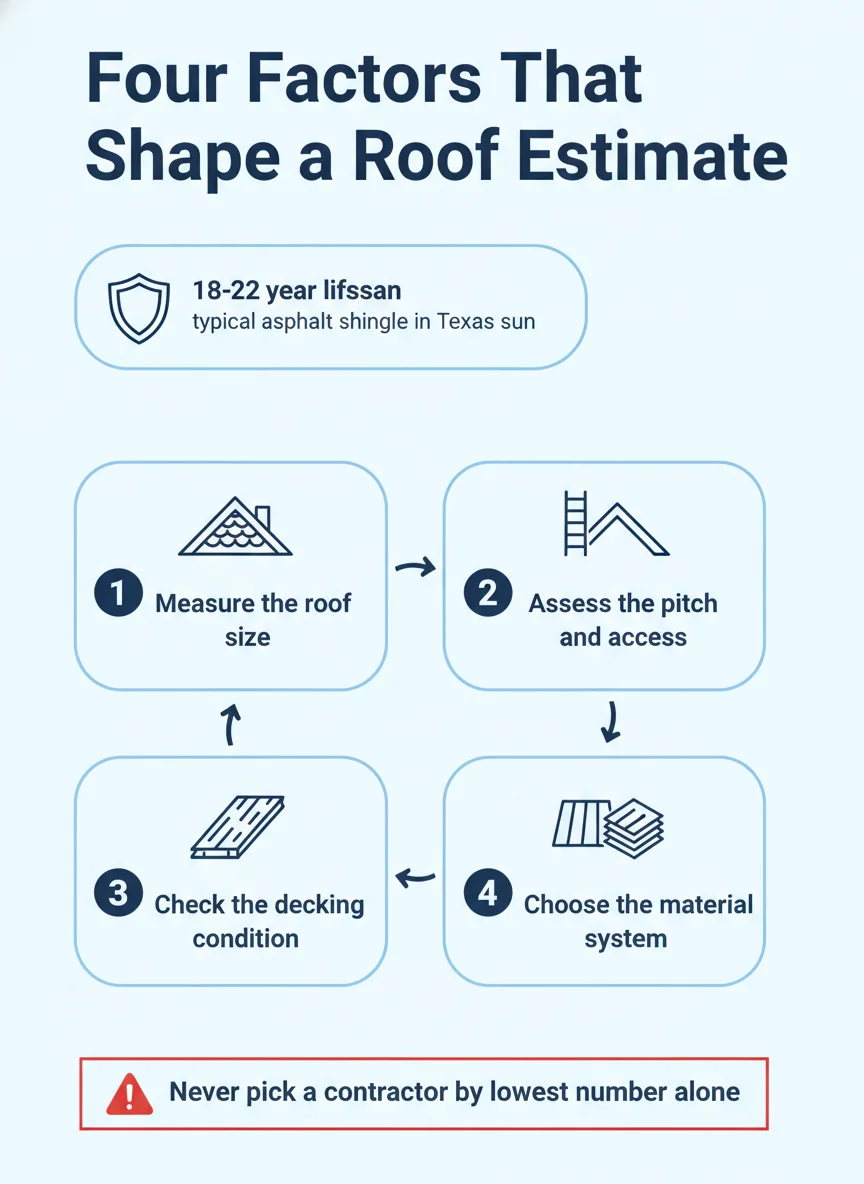
What Actually Goes Into a Roof Replacement Estimate?
A roof replacement estimate covers more than shingles and nails. It accounts for the square footage of the roof, the pitch and complexity of the structure, the condition of the decking underneath, and the labor required to remove the old system before installing the new one.
Size and Pitch
Square footage is the starting point for any estimate, but pitch changes how that square footage translates into labor hours. A steep roof requires more safety equipment, slower movement, and often more waste, all of which a contractor factors into the quote.
Complex rooflines with multiple valleys, dormers, or chimneys also add time because every transition point needs careful flashing work to stay watertight. A simple rectangular roof and a roof with a dozen angles can be the same square footage and still price very differently.
Material System
Asphalt shingles, metal panels, and other systems carry different material costs and different install times. Metal systems typically cost more upfront but can offer a longer service life, while asphalt systems remain the most common choice for Texas homes because of their balance of cost and performance.
Whatever system you choose, ask what's included in the warranty tied to it. Some differences in price reflect differences in the manufacturer backing or the workmanship guarantee that comes with the install, not just the sticker price of the shingles themselves.
| Factor | Lower Cost Scenario | Higher Cost Scenario |
|---|---|---|
| Roof pitch | Low slope, easy walking surface | Steep slope requiring harness work |
| Decking condition | Solid decking, no repairs needed | Rotted or soft decking requiring replacement |
| Roof complexity | Simple rectangular shape | Multiple valleys, dormers, and penetrations |
| Material choice | Standard asphalt shingle system | Metal or upgraded material system |
What's Actually Underneath a Roof System?
A roof is more than the visible layer. Underneath the shingles or panels sits an underlayment that acts as a second line of defense against moisture, and underneath that sits the decking, usually plywood or OSB, that holds the whole system together.
Ventilation components, like ridge vents and soffit vents, also factor into a quote because proper airflow through the attic affects how long the materials above last. A replacement that skips ventilation upgrades might look cheaper on paper but can shorten the life of the new roof.
Step-by-step: How a Roof Replacement Estimate Gets Built
Most contractors follow a similar process to arrive at a number, even if the final figures differ. Here's generally what happens between the first call and the estimate landing in your inbox.
- Schedule a visit: A contractor comes out to measure the roof and walk the property, which is why Roof Inspections & Maintenance visits often precede a formal replacement quote.
- Assess current condition: The crew checks for soft decking, existing leaks, and ventilation issues that affect scope before pricing anything.
- Measure and calculate square footage: Roof size, pitch, and complexity get translated into material quantities and labor hours.
- Select material options: You're typically shown a few material tiers so you can compare cost against expected lifespan and appearance.
- Review the written estimate: A good estimate itemizes labor, materials, disposal, and any decking repair separately so you can see where the number comes from.
- Ask about warranty terms: Workmanship and manufacturer warranty terms should be spelled out clearly before you sign anything.
What Should You Expect to Find in a Detailed Quote?
A detailed quote should separate labor from materials and call out anything discovered during the inspection that changes scope, like rotted decking. If a quote is just one lump number with no breakdown, that's worth asking about before you decide anything.
Reading the Material Line
The material line should name the system type, not just say "shingles." Ask whether it's a standard three-tab product or an architectural grade, since the grade affects both appearance and expected service life.
If metal or another upgraded system is quoted, confirm whether trim, fasteners, and flashing are included in that line or billed separately. Vague material descriptions are one of the easiest ways for a quote to look cheaper than the finished job actually is.
Reading the Labor and Disposal Line
Labor should reflect full tear-off of the old roofing system down to the decking, not a roof-over installed on top of existing layers. Disposal costs cover hauling away the old material, and some quotes bury this cost inside a general line item instead of breaking it out.
Ask directly whether tear-off and disposal are included in the number you're looking at. It's one of the more common places a quote looks lower than a competitor's simply because it's leaving a cost out rather than doing the work for less.
Can You Handle Part of This Yourself, or Does It Need a Licensed Pro?
A full roof replacement is not a do-it-yourself project for almost any homeowner, and most contractors will tell you the same thing. The work involves structural safety, code compliance, and manufacturer installation standards that affect your warranty coverage if they're not followed.
What you can do yourself is the research stage. Walking your own attic to check for daylight through the decking, watching for granule buildup in gutters, and noting any ceiling stains gives you useful information to share when a contractor comes out for an estimate.
Getting multiple estimates is also something fully within your control, and it's worth doing even when one contractor feels like the obvious fit. Comparing two or three detailed quotes side by side, line by line, is the single best way to understand whether a number reflects fair pricing or a shortcut in scope.
Getting a Number You Can Actually Trust
The most useful thing you can do before a roof replacement is ask for an itemized, written estimate and take the time to read it. A number without context tells you very little, but a breakdown of labor, material grade, decking condition, and warranty terms tells you exactly what you're paying for.
If you're weighing a repair against a full roof replacement on a property in Dallas or anywhere in the surrounding metro, a free, itemized estimate is the clearest way to see where your money goes, and reading through our commercial roofing cost guide can help if the property in question is a business. Renovacore Builders LLC walks through every line of an estimate before any work begins.
Frequently asked questions
Why do roof replacement quotes vary so much between contractors?
Quotes vary because contractors differ on labor practices, material grades, and what's actually included, like decking repair or disposal fees. A quote that looks low sometimes leaves out underlayment upgrades or code-required ventilation work that a more thorough bid includes upfront.
What drives the price of a roof replacement up the most?
Roof size, pitch, and the number of layers already on the house tend to move the price the most. Steep or complex roofs with multiple valleys and penetrations take longer to install safely, and that labor time shows up in the final number.
Is a cheaper roof replacement quote ever a red flag?
Yes, a quote well below the others usually means something is missing, whether that's proper tear-off, code-required underlayment, or adequate insurance coverage on the crew. Ask every bidder to itemize labor, materials, and disposal so you're comparing the same scope.
Does roof replacement cost change by season in Texas?
Material and labor availability can shift with demand, and contractors are often busier right after severe weather moves through a region. Scheduling outside peak demand periods sometimes gives you more flexibility on timing, though it rarely changes the scope of what the job requires.
Can financing make a roof replacement more affordable?
Many roofing contractors can walk you through financing options during the estimate visit, which spreads the project cost over time instead of requiring it all upfront. Ask about available payment structures when you schedule your estimate so you know what fits your budget.