
Why Material Choice Matters More in North Texas
If you're planning a replacement anywhere in the DFW Metroplex, the material you choose will shape how long that roof performs before you're back to square one. North Texas throws a lot at a roof over the course of a year, intense summer sun, sudden hailstorms, and humidity swings that most materials weren't originally designed around. Picking the right one up front saves you from an early repeat project.
This isn't just a cosmetic decision. Material affects how a roof handles wind uplift, how it sheds water, how it reflects heat, and how it ages visually over the years. Homeowners comparing options for a roof replacement often assume price is the only variable, but lifespan and climate fit matter just as much to the total cost of ownership over time.
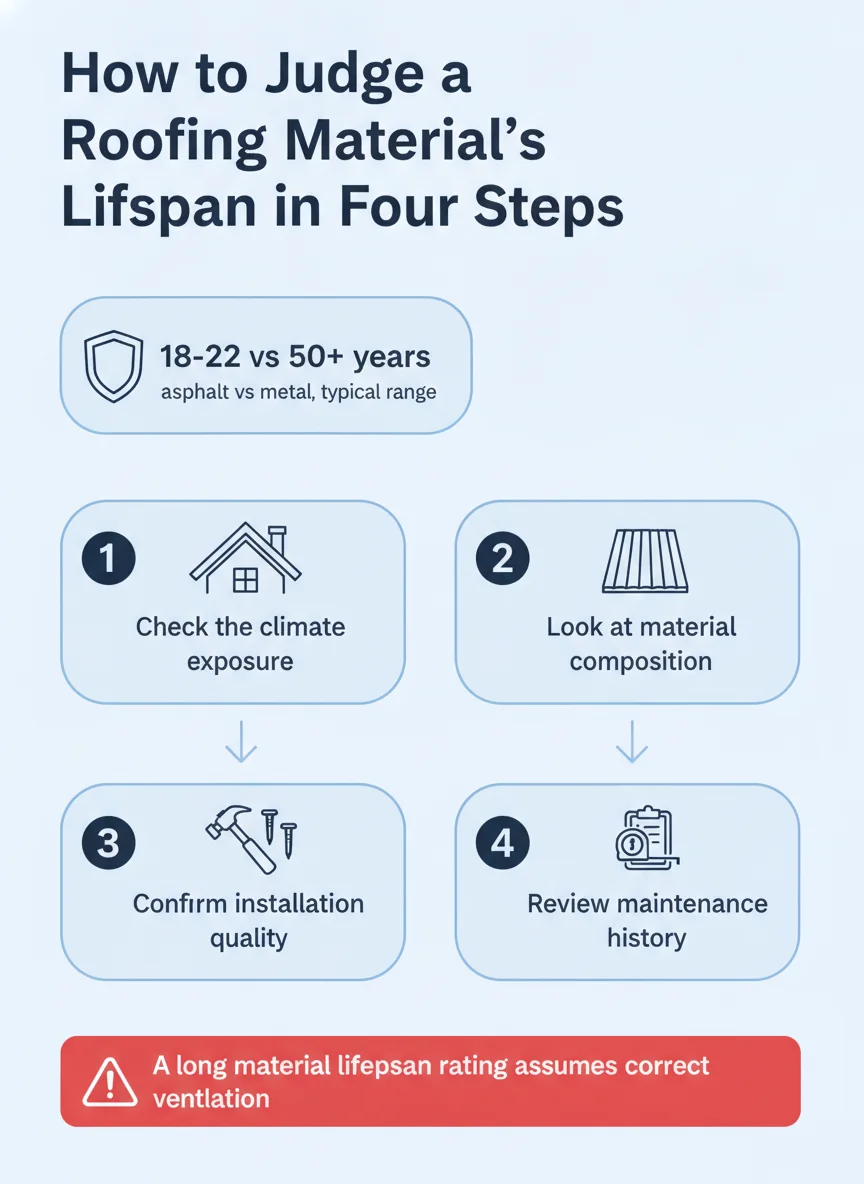
What Actually Determines How Long a Roofing Material Lasts?
Lifespan comes down to four things working together: the material's raw composition, how it's installed, how well the attic underneath is ventilated, and how consistently it gets maintained. A premium material installed poorly will underperform a mid-range material installed correctly, which is why the installer matters as much as the product itself.
Composition and Weight
Asphalt shingles are petroleum-based mats coated in mineral granules, which makes them affordable and easy to install but also more vulnerable to UV breakdown over time. Metal panels are a solid sheet material that reflects heat and sheds water fast, which is part of why they tend to outlast shingles by a wide margin.
Tile and slate are dense, heavy materials that resist UV degradation almost entirely, since they're closer to stone or fired ceramic than a manufactured composite. That density is also why they require a structure built to carry the extra weight, which isn't a given on every home.
Installation and Ventilation
Even the longest-lasting material underperforms its rating if it's installed over poor attic ventilation. Trapped heat and moisture age the underlayment and decking from below, which shortens the life of whatever is on top of it regardless of brand or type.
That's one reason a routine roof inspection and maintenance visit looks at more than just the surface material. Flashing, ventilation, and underlayment condition all factor into how many years you actually get out of what's up there.
| Material | Typical Lifespan | Best Fit |
|---|---|---|
| Asphalt shingles | 18-22 years | Most residential homes, budget-friendly |
| Standing seam metal | 40-70 years | Long-term owners, steep or low-slope roofs |
| Clay or concrete tile | 50+ years | Structures built to carry extra weight |
| Slate | 75-100+ years | Historic or high-end residential properties |
What's Actually in a Roofing System
The visible material is only one layer of a roofing system. Underneath it sits an underlayment barrier, flashing around penetrations like vents and chimneys, and decking that ties the whole assembly to the structure. Each layer has its own lifespan, and the system only performs as well as its weakest component.
For commercial properties, the comparison looks different. Flat and low-slope systems like TPO membranes are built for a completely different load and drainage profile than a residential sloped roof, which is why commercial roofing projects get evaluated on a separate set of criteria entirely.
Step-by-Step: How to Compare Materials for Your Home
If you're weighing options for an upcoming project, working through the comparison in order keeps you from getting swayed by a single sales pitch before you've looked at the full picture.
- Assess your roof's pitch: Steep slopes and low-slope roofs don't support the same materials, so pitch narrows your real options first.
- Check structural load capacity: Heavier materials like tile or slate require a structure rated to carry them, which an inspection can confirm.
- Factor in your timeline: If you plan to sell in a few years, the calculus is different than if you're staying for decades.
- Compare upfront cost to lifespan: A longer-lasting material spreads its cost over more years, which changes the real value comparison.
- Review ventilation needs: Confirm your attic ventilation is adequate for whichever material you choose, since it affects every option's actual lifespan.
- Get an in-person assessment: A roof installation quote should include a look at your specific structure, not just a generic estimate.
What You'll Notice as Each Material Ages
Different materials show their age in different ways, and knowing what to look for helps you catch a problem before it becomes a leak.
Signs Asphalt Shingles Are Nearing the End
Granule loss in the gutters, curling or cupping shingle edges, and a generally faded, uneven look are the classic signs that an asphalt roof is approaching the end of its service life. These are cosmetic at first but tend to progress toward actual water intrusion if ignored for too long.
Comparing that against a related read, how long a roof lasts in Texas walks through the climate factors that speed up or slow down that aging process specific to this region.
Signs Metal or Tile Need Attention
Metal roofs tend to show wear at seams and fasteners long before the panels themselves fail, so loose fasteners or rust at cut edges are the early warning signs. Tile and slate usually show cracked or slipped pieces individually rather than failing as a whole system, which is actually one of their long-term advantages.
In both cases, isolated damage doesn't necessarily mean a full replacement. A roof repair visit can often address individual problem areas without disturbing the rest of a system that still has years of life left.
What You Can Evaluate Yourself vs. What Needs a Pro
You can absolutely do some of this homework from the ground. Walking your attic with a flashlight to check for daylight, moisture staining, or obviously inadequate insulation gives you a sense of how well your current ventilation is working, which affects any material's performance.
What you can't safely assess yourself is structural load capacity, flashing condition at penetrations, or the actual remaining life in your decking. Those require someone on the roof with the right tools and experience to evaluate without causing damage or missing a problem hidden under the surface layer.
A licensed roofing contractor can also walk you through how local permitting and code requirements affect material choice on your specific property, something that varies enough by jurisdiction that it's worth confirming before you commit to a plan.
Making the Right Call for Your Property
There's no single material that's right for every home across the DFW Metroplex. The best choice balances your budget, your structure's capacity, how long you plan to stay, and how much maintenance you're willing to keep up with over the years.
Whatever direction you lean, getting a clear, honest comparison from someone who's walked your roof beats guessing from a brochure. Renovacore Builders LLC can walk through those options with you and help you land on a material that actually fits your home.
Frequently asked questions
What roofing material lasts the longest?
Slate and natural tile top the list, often holding up for 75 years or more, with standing seam metal not far behind. Asphalt shingles, the most common choice on Texas homes, typically run shorter because of their lighter composition and the way they react to intense sun and temperature swings.
Is metal roofing worth it over asphalt shingles?
It depends on how long you plan to own the property and what you value more, upfront cost or long-term durability. Metal systems generally outlast shingles by decades and handle wind and hail differently, but they're a different installation process and a different look, so it's a personal trade-off as much as a financial one.
Does roofing material lifespan change based on where I live in Texas?
Yes, climate exposure is one of the biggest factors in how long any material actually lasts. Intense UV exposure in North Texas summers and the freeze-thaw cycles some winters bring both accelerate wear, so the same material can perform differently just a few hundred miles apart.
Can I combine materials on one roof, like metal and shingles?
Many homes do, using one material for the main slopes and a different one for porches, dormers, or accent sections. It's a design and budget decision as much as a technical one, and a contractor can walk you through which combinations make sense for your structure.
How do I know which material is right for my home?
The right material depends on your roof's pitch, your budget, how long you plan to stay in the home, and the look you want. An in-person assessment is the only way to get a real answer, since every property has different structural and aesthetic constraints.