
What Does a 45-Degree Roof Pitch Mean for a Home in Texas?
A 45-degree roof pitch is the same thing as a 12/12 slope, and it's one of the steepest angles you'll find on a residential roof. Most homes across the DFW Metroplex sit somewhere between a 4/12 and an 8/12 pitch, so a 12/12 stands out visually and structurally. You'll usually see this steep an angle on older Tudor-style homes, chalet-inspired builds, or newer custom construction where the design calls for a dramatic roofline.
Understanding your actual pitch matters for more than curb appeal. It affects which materials are a realistic fit, how a crew accesses the roof safely, and how water and debris move off the surface. If you're planning a roof replacement or trying to figure out why your current roof looks or performs the way it does, knowing the real pitch is the starting point for almost every other decision.
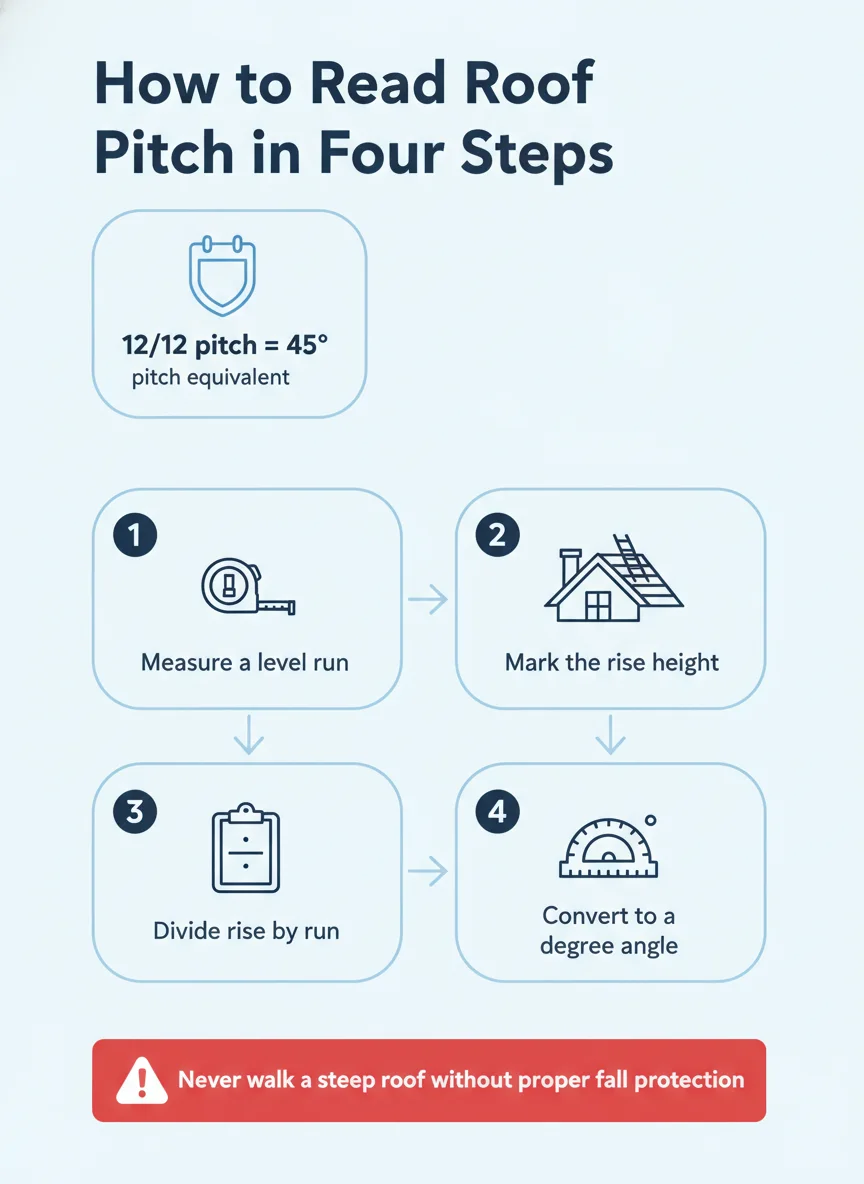
Why Roof Pitch Is Measured in Rise and Run
Roofers talk in rise-over-run instead of degrees because it's easier to measure and build from in the field. A pitch of 6/12 means the roof climbs 6 inches vertically for every 12 inches it travels horizontally. Once you have that ratio, converting to a degree angle is just basic trigonometry, and a 12/12 ratio happens to land almost exactly at 45 degrees.
Converting Pitch to Degrees
The rise-to-run ratio translates to degrees using the arctangent of rise divided by run. A 4/12 pitch works out to about 18 degrees, an 8/12 pitch to about 34 degrees, and a 12/12 pitch lands right at 45 degrees since the rise and run are equal. Anything steeper than 12/12, like an 18/12, pushes past 56 degrees and starts approaching near-vertical wall-like construction.
Where a 45-Degree Pitch Shows Up
A 12/12 pitch tends to show up in architectural styles that prioritize a steep, pointed look, including A-frame sections, dormers, and turret-style accents rather than an entire main roof deck. It's less common as the slope for a full ranch or standard suburban roof across North Texas, where lower and moderate pitches dominate for cost and practicality reasons.
| Pitch Range | Approximate Degrees | Typical Use |
|---|---|---|
| 2/12 to 4/12 | 9° to 18° | Low-slope sections, porches, some commercial roofs |
| 5/12 to 8/12 | 23° to 34° | Most standard DFW residential roofs |
| 9/12 to 12/12 | 37° to 45° | Steep architectural accents, dormers, chalet-style homes |
| Above 12/12 | Above 45° | Decorative towers, turrets, specialty designs |
The Framing and Material Differences Behind a Steep Pitch
A 12/12 pitch isn't just a design choice, it changes the framing underneath. Steeper roofs generally need more structural bracing and a different rafter layout than a low-slope roof covering the same footprint, since the rafters are longer and the angle puts different stress on the ridge and walls. That's part of why a 45-degree section often shows up as an accent rather than the whole roof, since bracing it across an entire large home adds complexity.
Material choice shifts too. Asphalt shingles, metal panels, and tile can all be installed on a 12/12 pitch, but water and debris clear a steep roof much faster than a low-slope one, which actually reduces ponding risk. The tradeoff is that fasteners, underlayment, and flashing details need to be installed correctly since gravity is working against the crew the entire time they're up there, not with them.
Step-by-step: How to Estimate Your Roof's Pitch From the Ground
You can get a rough idea of your roof's pitch without climbing up, which is the safer starting point before calling anyone out for a closer look.
- Find a gable end: Stand where you can see the triangular end of the roof clearly from the ground or a safe vantage point.
- Measure the width: Note the horizontal distance from one eave edge to the center peak, which gives you your run.
- Estimate the peak height: Compare the peak height to a known reference point like a door or window for a rough rise figure.
- Calculate the ratio: Divide your estimated rise by the run and multiply by 12 to get an approximate pitch number.
- Check against a chart: Match your ratio to a pitch-to-degree reference to see roughly where your roof falls.
- Confirm with a professional: For anything beyond a rough estimate, have a roofer verify the pitch directly from the attic or roof deck.
What Does a 45-Degree Pitch Mean for Maintenance and Safety?
A 12/12 pitch changes how a roof should be inspected and maintained compared to a standard slope. The steepness that helps shed water and debris quickly also makes the surface harder and riskier to access, which affects how often it gets looked at and what equipment that work requires.
Walkability and Inspection Access
A 12/12 pitch sits well past the point most people consider comfortably walkable. Crews working a roof this steep typically use roof jacks, harnesses, and anchor points rather than simply walking the surface the way they might on a 4/12 or 5/12 roof. That equipment adds time to any inspection or maintenance visit, which is worth knowing if you're comparing timelines or quotes.
Water and Debris Shedding
The upside of a steep pitch is drainage. Water, leaves, and small debris move off a 45-degree surface fast, which reduces the standing-water problems that plague low-slope roofs. The tradeoff is that fasteners and flashing have to be installed with extra care, since a poorly sealed point on a steep roof can funnel a surprising amount of water into one small area during a heavy North Texas downpour.
DIY Pitch Check vs. Calling a Professional
Estimating your pitch from the ground is a reasonable first step, and most homeowners can do it with a tape measure and a little patience. It won't be perfectly precise, but it's enough to know roughly which category your roof falls into before you start making decisions.
Getting an exact number, especially for anything near or above a 9/12, is best left to someone who can measure from the attic rafters or safely access the roof surface itself. A precise pitch reading matters when you're ordering materials, pulling permits, or planning structural work, since being off by even a couple inches of rise can throw off a material estimate.
Any actual work on a 12/12 or steeper section, from a simple repair to a full tear-off, should go to a licensed crew with the right fall protection gear. Steep roofs are one of the more common places for falls in residential construction, and that risk isn't worth taking on without the right equipment and training.
Getting the Right System for a Steep Texas Roof
Knowing that a 45-degree pitch equals a 12/12 slope is useful context, but the number itself is only the starting point. What matters more is how that pitch interacts with your home's framing, your material choice, and how the roof gets accessed for repairs or regular upkeep down the road. If you're weighing material options for a steep section, it helps to look at how different roof types hold up on comparable slopes before deciding.
Whether you're dealing with a dormer, a turret accent, or a full A-frame section somewhere in the DFW Metroplex, an accurate pitch reading is the first thing worth nailing down before any material or repair decision gets made. Renovacore Builders LLC can measure the actual pitch on your home and walk you through what it means for your next project.
Frequently asked questions
What roof pitch is 45 degrees in standard terms?
A 45-degree angle is a 12/12 pitch, meaning the roof rises 12 inches for every 12 inches of horizontal run. It's one of the steepest pitches used on residential homes and sits well above the typical 4/12 to 8/12 range seen across most of North Texas.
Is a 45-degree roof pitch considered steep?
Yes, a 12/12 pitch is classified as a steep slope roof in the building trade. Anything above roughly 7/12 to 9/12 generally requires fall protection and different safety equipment for anyone working on it.
Can you walk on a 45-degree pitch roof?
Walking a 12/12 pitch is difficult and unsafe without harnesses, roof jacks, or toe boards, even for an experienced crew. Most homeowners should not attempt to access a roof this steep on their own.
Does a steeper roof pitch cost more to work on?
Steep pitches generally take longer and require more safety setup than lower-slope roofs, which affects labor time on any job. Material needs can also shift since steeper roofs typically have more surface area than a flatter roof of the same footprint.
How do I find out my roof's exact pitch?
The most reliable way is to have a roofer measure it directly from the attic rafters or from the roof surface with a level and tape measure. A rough estimate can be made from the ground, but attic measurements give a more accurate number.