
Why Roof-Overs Come Up So Often in the DFW Metroplex
Homeowners across Dallas, Fort Worth, and the surrounding towns bring up roof-overs for one simple reason: it sounds cheaper and faster than tearing the old layer off. When a roof is getting close to the end of its life but hasn't failed outright, a second layer can feel like a reasonable middle ground between doing nothing and paying for a full replacement.
The idea has been around for decades, and plenty of homes across North Texas still have a second layer sitting under their current shingles from a past roof-over job. Whether that's still a smart option today depends on the home's age, the condition of the existing layer, and what local building code allows on a given property.
How a Roof-Over Actually Works
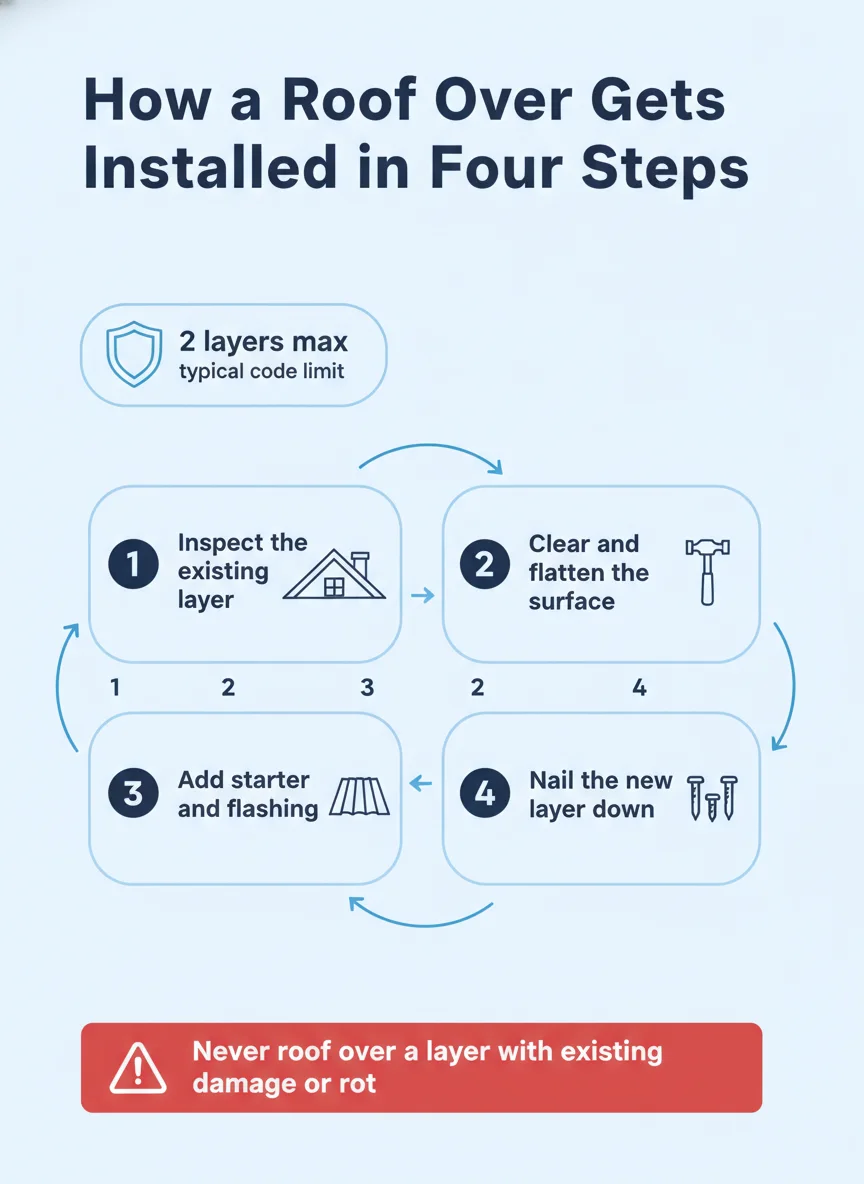
A roof-over, sometimes called a re-roof or overlay, means installing a new layer of shingles directly on top of an existing layer instead of removing it first. The old shingles act as an extra layer of cushioning under the new ones, and the new layer gets nailed through both layers into the decking below.
What Has to Be True First
Before a roof-over can even be considered, the existing layer has to be flat, free of curling or buckling, and free of soft or rotted decking underneath. If the old shingles are already cupping or the deck has soft spots, a new layer just telegraphs those same problems through to the surface within a season or two.
Most building codes also limit roofs to two total layers of shingles. A home that already has two layers down has to go to a full tear-off, since there's no legal or practical way to add a third. This is one of the first things a contractor checks before quoting a roof-over.
What Gets Skipped Compared to a Full Replacement
A roof-over skips the tear-off and disposal steps, which cuts down on labor time and debris hauling. It also means the decking never gets a direct visual inspection, since it stays covered by the old layer the entire time.
That trade-off is the whole story with a roof-over. It's faster and generates less waste, but it comes at the cost of never actually seeing or fixing whatever is happening under that first layer of shingles.
| Factor | Roof-Over | Full Tear-Off |
|---|---|---|
| Decking inspection | Not possible, stays covered | Decking fully exposed and checked |
| Added roof weight | Two layers of shingles on the structure | Single new layer only |
| Typical lifespan of new layer | Often shorter than a standard install | Full expected lifespan of the new system |
| Code eligibility | Only allowed with one existing layer | Always allowed regardless of layer count |
What's Actually Underneath a Roof-Over
A roof-over adds a second shingle layer, new underlayment strips where code requires it, and fresh flashing at the areas most prone to leaks, like valleys and wall intersections. The decking, rafters, and ventilation system stay exactly as they were before the work started.
That last point matters more than it sounds. If the decking has any hidden rot or the ventilation was already undersized, a roof-over doesn't touch either problem. It only adds a new weather-facing surface on top of whatever was already there, good or bad.
Step-by-Step: How a Roof-Over Installation Happens
When a roof-over is actually a good fit for a property, the installation follows a fairly consistent sequence from inspection to final cleanup.
- Inspect the existing layer: A contractor checks for curling, buckling, soft decking, and confirms the roof is only on its first layer of shingles.
- Check local code limits: Local building code is confirmed to allow a second layer before any material gets ordered.
- Clear loose debris: Loose granules, broken tabs, and any debris get cleared so the new layer has a flatter surface to sit on.
- Replace flashing where needed: Flashing around valleys, chimneys, and walls usually gets replaced even on a roof-over, since old flashing is a common leak source.
- Install starter and new shingles: New starter strip and shingles go down over the old layer, nailed through both layers into the decking.
- Final walk and cleanup: The crew does a final walk of the roof and clears the yard and gutters of any loose material from the install.
What You'll Find If the Old Layer Had Problems
Signs the Old Layer Wasn't a Good Candidate
If a roof-over goes down over a layer that had hidden issues, those issues tend to show up as uneven spots, premature granule loss, or shingles that start curling again within just a few years instead of lasting a full lifespan. Moisture trapped between the layers can also speed up deterioration from underneath.
Attic staining or a musty smell after a roof-over is a sign moisture got trapped somewhere in the system rather than venting out properly. That's worth a prompt look rather than waiting, since trapped moisture rarely resolves on its own.
Signs It Was a Reasonable Call
A roof-over installed over a genuinely flat, dry, first-layer roof can perform reasonably well for a number of years. The giveaway is a roof that lies flat with no visible ripples and no granule buildup collecting in the gutters beyond normal weathering.
Even in the best case, most roofers expect a roof-over to fall short of the full expected lifespan of a single-layer installation, simply because of the added weight and the loss of direct contact between the new shingles and the decking.
What a Homeowner Can Check, and What Needs a Licensed Roofer
A homeowner can reasonably check their attic for daylight through the decking, look for sagging areas from the ground, and note how many shingle layers they can see at a roof edge or gable overhang. These are useful first impressions that help a conversation with a contractor start on the right foot.
Confirming layer count with certainty, checking decking condition, and verifying what local code allows all require a licensed roofer on the actual roof, since these calls affect both safety and the long-term performance of the new layer. Getting any of these wrong means paying for labor and material twice.
A roof inspection is the fastest way to get a straight answer on whether a property is even a candidate for a roof-over, and it's the same inspection most contractors run before quoting a roof replacement instead.
Why Most Contractors Lean Toward Tear-Off Anyway
Even when a roof-over is technically allowed, most roofing contractors across Dallas, Fort Worth, Plano, and the rest of North Texas will recommend a full tear-off whenever the budget supports it. Removing the old layer is the only way to actually see the decking, catch problems early, and give the new shingles their full expected lifespan instead of a shortened one.
If you're trying to decide which route makes sense for your home, a straightforward roof installation conversation with a licensed contractor is a good place to start, and it's worth reading how tear-off compares to a roof-over in more detail before you commit either way. Renovacore Builders LLC walks DFW Metroplex homeowners through both options honestly before any work ever starts.
Frequently asked questions
Can you put new shingles directly over old ones?
In many cases yes, as long as the existing layer is flat, dry, and the home doesn't already have two layers on it. Most building codes cap roofs at two total layers of shingles, so a home already on its second layer usually has to go to a full tear-off.
Is roofing over existing shingles a good idea?
It can save time on the labor side since there's no tear-off, but it traps the old layer's problems under the new one and usually shortens how long the new shingles last. Most roofing contractors recommend a full tear-off whenever the budget and situation allow it.
How do you know if your roof already has two layers?
You can often tell from the attic by checking nail penetration through the decking, or from the roof edge where you can sometimes see the layered shingle edges stacked up. A contractor can confirm this quickly during an inspection.
Does a roof-over void the shingle warranty?
It depends on the manufacturer and the specific warranty terms, since some manufacturers limit or exclude coverage on roof-over installations. Check the warranty document for the shingle line in question or ask your contractor to go over it before work starts.
Does roofing over old shingles hide existing damage?
Yes, that's the main risk since rotted decking, moisture, or structural issues under the old layer stay hidden once a new layer goes on top. A full inspection before any roof-over work is how a contractor catches those problems before they get sealed in.