
Wind damage shows up a lot across the DFW Metroplex
North Texas gets its share of strong straight-line wind and fast-moving storm fronts throughout the year, and asphalt shingle roofs across Dallas, Fort Worth, and the surrounding towns take the brunt of it. After one of these events, it's common to walk outside and spot a shingle or two sitting in the yard, or notice a bare patch on a slope that wasn't there before.
The instinct is to assume the fix is simple: replace the missing shingles and move on. Sometimes that's exactly right. But wind doesn't damage a roof neatly, and the shingles you can see on the ground are often just the most obvious casualties of a much wider problem across the rest of the field.
What is actually happening to the shingles when wind hits them?
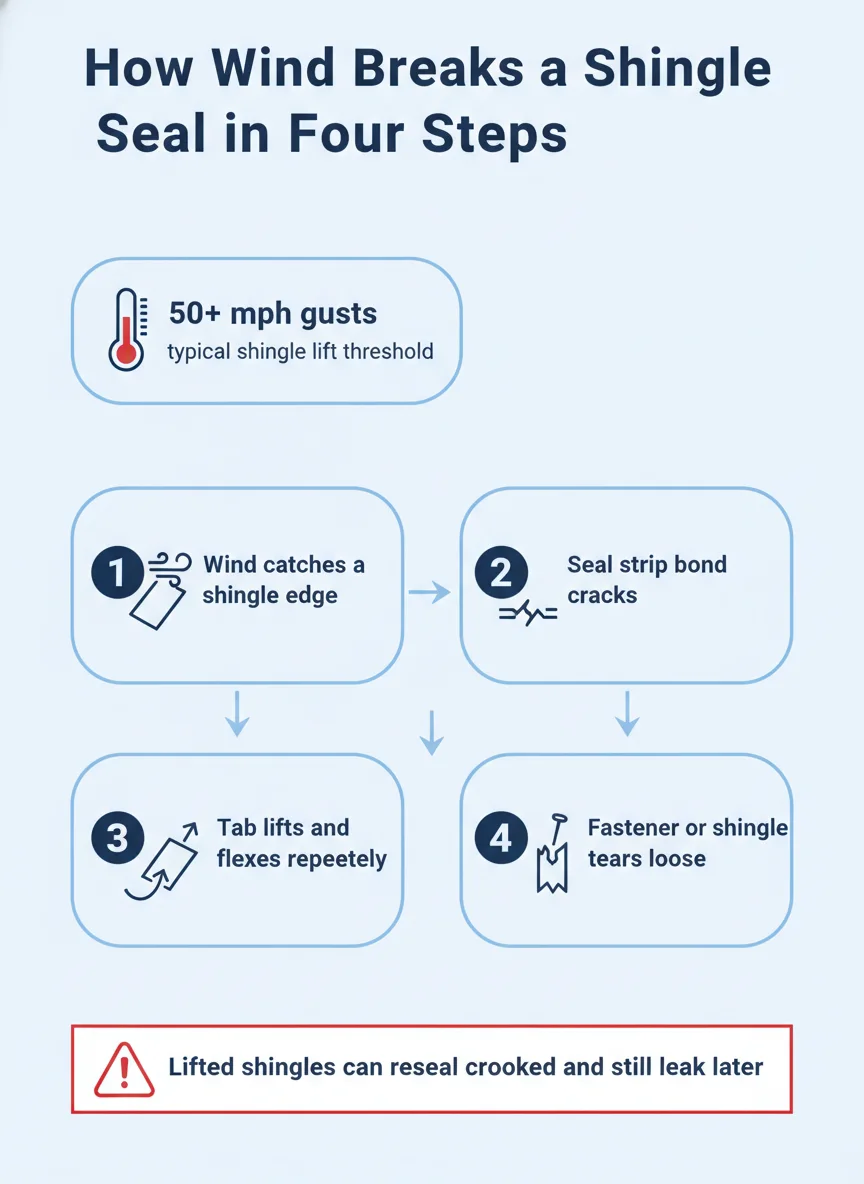
Every shingle is held down by two things: the nails or staples driven through it, and a factory-applied seal strip that bonds it to the shingle below once it's been exposed to a few weeks of sun. Wind doesn't need to rip a shingle off outright to cause damage. It just needs to get underneath the edge and start flexing it.
How the seal strip fails first
A gust that catches the bottom edge of a shingle creates uplift, and if that happens repeatedly, the seal strip bond cracks before the shingle itself tears loose. Industry estimates generally put the threshold for noticeable shingle lift somewhere around 50 mile-per-hour sustained gusts, though older or more weathered shingles can lift at lower speeds.
Once that bond cracks, the shingle doesn't reseal itself. It sits there looking mostly normal, maybe a little raised at the corner, until the next windstorm catches that same loose edge and finishes the job. This is why damage from one storm often becomes a bigger loss during the next one.
Why a few missing shingles usually means more broken seals nearby
Wind rarely isolates its force to one or two shingles. If you can see bare roof deck in one spot, the shingles bordering that spot were under the same wind load and very likely have cracked or weakened seals even though they're still technically attached.
That's the real reason a roofer walks the whole roof instead of just replacing what's obviously missing. A patch job on the visible gap while leaving ten more compromised shingles around it just means a callback after the next storm, and by then the deck underneath may have taken on moisture too.
| Situation | Usually points to repair | Usually points to replacement |
|---|---|---|
| Age of roof | Roof is well within its expected lifespan | Roof is near or past its expected service life |
| Spread of damage | Damage confined to one small section | Lifted or cracked seals found across multiple slopes |
| Shingle condition elsewhere | Remaining shingles are still flexible and granule-covered | Remaining shingles are brittle, curling, or losing granules |
| History | First windstorm the roof has seen damage from | Repeat damage from multiple past storms |
What's underneath the shingle matters as much as the shingle itself
A shingle is really just the outer layer of a system. Beneath it sits an underlayment that acts as the roof's backup water barrier, and below that is the wood deck itself. When a shingle goes missing, that underlayment is exposed directly to sun and rain until it's covered again, and underlayment wasn't designed to be a permanent top layer.
If a missing shingle has been sitting exposed for a while before anyone noticed, it's worth checking whether water has started working its way into the deck. Soft spots, discoloration on the underside of the roof deck from the attic, or a slightly spongy feel underfoot during an inspection are all signs the problem reached past the shingle layer.
Step-by-step: what a wind damage assessment should cover
A thorough look after a windstorm isn't just counting bare spots. It's checking the whole system for the kind of damage that doesn't announce itself from the ground.
- Ground-level walk around: Checking gutters, downspouts, and the yard for granules and shingle pieces gives a first read on how hard the roof was hit.
- Full roof walk: Every slope gets checked, not just the one with the visible gap, since wind load rarely stays confined to one section.
- Seal strip check: Shingles near the damaged area are checked by hand for lifted edges or cracked seals that aren't obvious from a distance.
- Underlayment and deck check: Any exposed area gets examined for water intrusion into the layer beneath the shingles.
- Attic check when needed: If exposure has lasted more than a day or two, checking the underside of the deck from inside the attic confirms whether moisture made it through.
- Photo documentation: Clear photos of both the obvious and the less obvious damage matter if an insurance claim is part of the picture.
- Written recommendation: A clear explanation of what's repairable, what needs replacing, and why, so the decision isn't a guess.
What the inspection usually turns up
When it's a clean repair
If the roof is relatively young, the damage is limited to a single section, and the surrounding shingles still have good flexibility and granule coverage, a repair is usually the right call. That means removing the damaged shingles, checking the underlayment underneath, and installing new shingles tied back into the existing field.
Matching shingle color and style is part of this conversation. A roof that's a few years old with common shingles often matches well. An older roof that's weathered and faded may show a visible difference around the repaired section, which is worth knowing before the work starts rather than after.
When the damage points toward replacement
If the inspection finds broken seals scattered across multiple slopes, shingles that are brittle or losing granules heavily, or a roof that was already getting close to the end of its service life before the storm hit, replacement usually makes more sense than chasing repairs one storm at a time.
This is also where storm damage and insurance claim support tends to matter most, since a wider pattern of wind damage across an aging roof is exactly the kind of loss a policy is often designed to cover. Getting it documented properly from the start makes that conversation with an adjuster a lot more straightforward.
What homeowners can check themselves vs. what needs a licensed roofer
A homeowner can safely do the ground-level part of this. Walking the yard and checking gutters for granules, looking at the roofline from the ground with binoculars for obvious bare patches, and checking the attic for fresh water stains or daylight coming through the deck are all reasonable things to check before calling anyone.
Getting on the roof itself is a different matter. Shingles that have lifted but not fully detached can be fragile, and walking on a roof that's already compromised risks turning a repairable section into a bigger problem. There's also no substitute for a trained eye checking seal strips by hand, something that's hard to judge accurately from a photo or a ladder glance.
If you've found anything beyond a single obvious bare patch, or if the roof is older and this isn't its first windstorm, it's worth having it looked at properly rather than guessing. A roof inspection after a wind event is a quick way to find out whether you're looking at a repair or something bigger before the next storm decides for you.
Getting a straight answer after the next windstorm
Missing shingles are easy to spot and easy to worry about, but the right fix depends on what the storm did to the roof as a whole, not just the handful of shingles sitting in the grass. An honest inspection should tell you plainly whether you're dealing with a contained repair or a roof that's telling you it's done. If you're dealing with wind damage in Dallas or anywhere else across the metroplex, it also helps to understand hail or wind damage after a storm more broadly before deciding on next steps.
Renovacore Builders LLC walks the whole roof, not just the visible gap, before recommending repair or replacement.
Frequently asked questions
Does losing a few shingles mean I need a whole new roof?
Not necessarily. A small, isolated section of missing shingles on an otherwise healthy roof is often a straightforward repair. The bigger question is how many surrounding shingles have broken seals you can't see yet, which is why an actual inspection matters more than counting the shingles on your lawn.
Why do more shingles blow off after the first windstorm?
Once a shingle's seal strip cracks, it doesn't reseal on its own, so it stays vulnerable to the next gust. That's why roofs that survive one windstorm with minor damage sometimes lose a lot more in the next one if the first round of lifted shingles never got addressed.
Can you match new shingles to an older roof?
In many cases yes, especially if the roof is a common style and age, but exact color matching gets harder the older and more weathered the existing shingles are. We'll be upfront about what kind of match is realistic before any repair work starts.
How do I know if my roof has wind damage I can't see?
The clearest signs are shingles that look slightly curled, creased, or raised at the edges, along with granules collecting in gutters or at downspouts. A ground-level look only tells part of the story, which is why a hands-on roof inspection is the reliable way to check.
Should I file an insurance claim for a few missing shingles?
That depends on the extent of the damage and your policy, so it's worth getting a clear assessment before deciding. If the damage is more widespread than it looks from the ground, documenting it properly matters for any claim you do file.