
Why This Decision Comes Up So Often Across the DFW Metroplex
Homes and businesses across Dallas, Fort Worth, and the surrounding towns go through a lot of sun, heat, and wind cycles over a roof's life, and by the time a system is worn out, owners are usually looking for the fastest, least disruptive fix. A roof-over, where new shingles go directly on top of the old layer, gets pitched as that fix because it skips the tear-off step entirely.
The trouble is that skipping the tear-off also skips the one chance to see what's actually happening underneath the surface. For a single-layer home with sound decking, a roof-over can be a reasonable short-term call. For most properties dealing with age, prior patch jobs, or any sign of moisture, a full roof replacement with a tear-off is the more dependable path.
What a Layover Covers Up That a Tear-Off Reveals
A tear-off strips the roofing system down to bare decking, which means a crew gets a direct look at the wood, the flashing around chimneys and vents, and the ventilation system before anything new goes on. A roof-over skips all of that and relies on the assumption that everything underneath is still sound, which isn't always a safe bet on an older system.
Decking and Structural Issues
Decking takes on moisture over time, especially around valleys, skylights, and any spot where flashing has started to fail. Soft, delaminated, or rotted decking won't show up as a visible problem from the ground, and it won't get fixed by a new layer of shingles laid on top of it.
A tear-off is the only way to find soft spots before they become structural, because the decking is fully exposed and can be walked, pressed, and repaired board by board. Left covered under a roof-over, a weak deck keeps weakening, and the eventual fix costs more than it would have the first time around.
Flashing and Ventilation
Flashing around chimneys, walls, and roof penetrations is one of the most common failure points on any roofing system, and it's also one of the easiest things to miss during a roof-over since the old flashing typically stays in place. If it's already compromised, a new layer of shingles won't correct that, it'll just sit on top of the same leak path.
Ventilation works the same way. Intake and exhaust vents that are undersized, blocked, or mismatched for the attic space drive up heat and moisture buildup, which shortens the life of whatever goes on next. A tear-off gives a crew the chance to correct ventilation issues instead of building a new roof on top of an old one that was never breathing properly.
| Factor | Roof-Over | Tear-Off |
|---|---|---|
| Decking visibility | Hidden, assumed sound | Fully exposed and inspected |
| Added weight | Two layers stacked | Single layer, lighter load |
| Flashing and vents | Reused as-is | Replaced or corrected as needed |
| Manufacturer warranty | Often limited or voided | Typically full coverage eligible |
How Multiple Layers Affect Weight and Heat on a Roof
Every layer of roofing material adds weight to the structure below it, and most homes are framed with a reasonable, but not unlimited, margin for that load. A single roof-over usually falls within what a structure can carry, but it's added weight that the original design didn't necessarily plan around, especially on older framing.
Stacked layers also trap more heat against the decking, since there's more material sitting between the sun and the attic space. Over a Texas summer, that added heat load accelerates wear on whatever shingles are facing the sun, which can shorten the lifespan of a roof-over compared to a single, properly ventilated system installed over bare decking.
Step-by-Step: How a Full Tear-Off Roof Replacement Works
A tear-off follows a fairly consistent sequence regardless of the roofing material going back on, and each step exists to catch problems before they get sealed in for another decade or more.
- Remove old layers: Crews strip every layer of existing roofing material down to the bare decking so nothing hidden gets carried forward into the new system.
- Inspect the decking: Every section of decking gets checked for soft spots, rot, or delamination, and any compromised boards are marked for replacement.
- Replace damaged wood: Sections of decking that failed inspection are cut out and replaced before any new material is installed over them.
- Correct flashing and vents: Flashing around penetrations and ventilation components are repaired, replaced, or upgraded as needed to match the new system.
- Install underlayment: A new underlayment layer goes down over the prepared decking to provide the first line of protection against moisture.
- Install new roofing material: The new shingles, membrane, or panels go on according to manufacturer specifications, which also protects warranty eligibility.
- Final walk-through: The completed roof gets inspected for proper installation, clean lines, and secured flashing before the job is considered finished.
What a Hidden Layover Problem Usually Looks Like Later
Problems that get sealed under a roof-over don't stay quiet forever. They tend to show up months or years later as interior stains, sagging rooflines, or shingles that wear unevenly in patches, usually right around the spot where the underlying issue was sitting the whole time.
Hidden Rot and Moisture Damage
Moisture trapped under a roof-over keeps working on the decking even after the new shingles go down, since the source of the moisture was never addressed, just covered. By the time it surfaces as a ceiling stain or a soft spot underfoot in the attic, the damage has usually spread further than it would have if it had been caught during a tear-off.
That's one reason a roof leak or ceiling stain on a home with a known roof-over is worth taking seriously right away rather than waiting to see if it gets worse, since the source could be sitting under two layers of material instead of one.
Code and Permit Issues
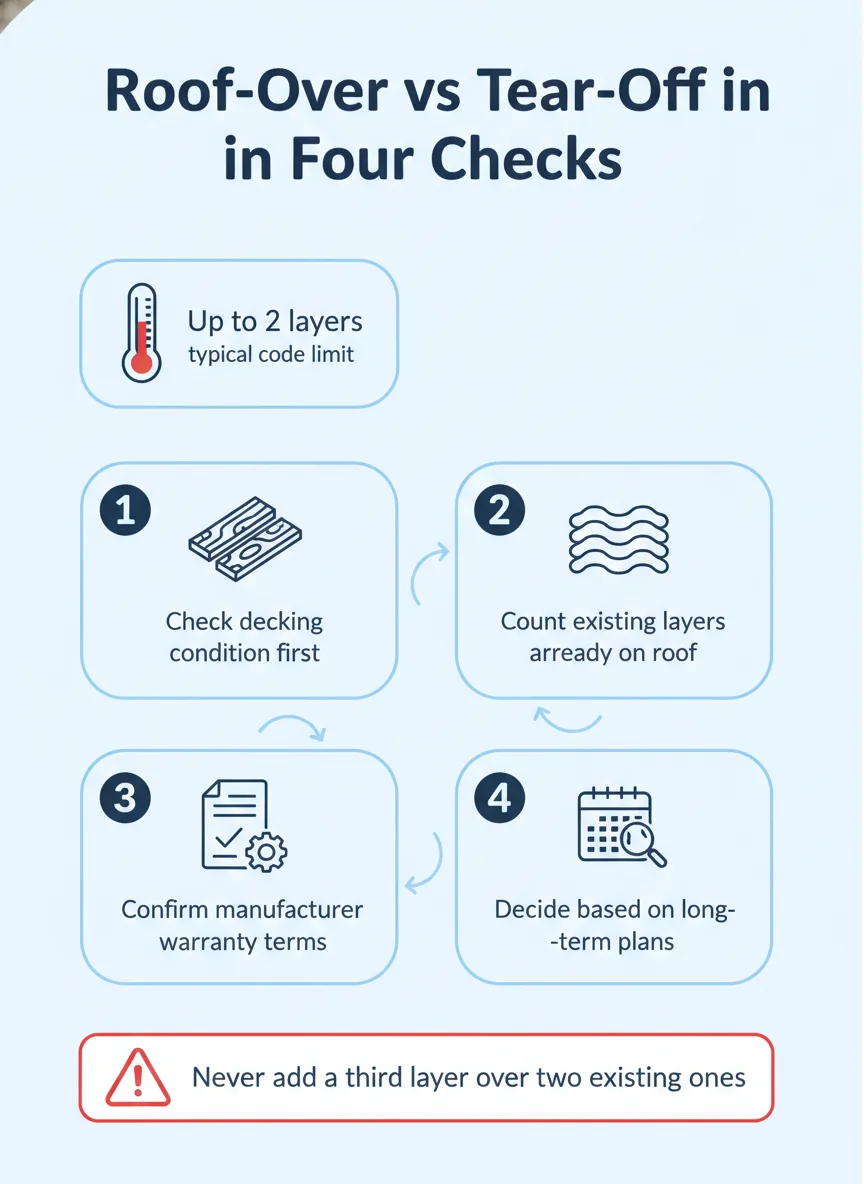
Most building departments limit how many layers of roofing material can legally sit on a structure at once, and many require a tear-off once a property already carries two layers. A roof-over on a system that's already been layered once can put a property out of code compliance, which becomes a real issue at resale or during an insurance claim.
Confirming the layer count on an older home before deciding between a roof-over and a tear-off isn't optional, it's the first check that determines whether a roof-over is even a legal option in the first place.
Can You Decide This Yourself or Does It Need a Roofer's Opinion?
A homeowner can do some of the early groundwork here. Walking the attic to check for daylight, water stains, or sagging rafters, and counting how many layers are visible at the roof edge, gives a reasonable first read on whether a roof-over is even on the table.
What a homeowner can't do safely or reliably is get up on the roof itself and evaluate decking condition, flashing integrity, or ventilation performance firsthand. That assessment requires someone trained to recognize early signs of rot and failure that aren't obvious from the ground or an attic hatch.
That's the point where a licensed roofer's inspection matters most, since the decision between a roof-over and a tear-off should be based on what's actually underneath, not a guess. A straightforward inspection answers the layer count, decking condition, and code question in one visit.
Making the Right Call for Your Roof
A roof-over isn't automatically the wrong move, it's just a narrower option than it looks, limited to single-layer roofs with sound decking, intact flashing, and no history of leaks. Outside of that narrow case, a full tear-off is almost always the safer, longer-lasting choice, and it's the standard most roofers across Dallas and the surrounding metro recommend by default.
If you're weighing the two options on your own property, start with an honest look at how many layers are already there and how the decking feels underfoot in the attic, then get a second opinion before committing either way. For homeowners further along in that decision, this breakdown of replacement options is a useful next read, and Renovacore Builders LLC can walk through what your specific roof needs before any work begins.
Frequently asked questions
Is it cheaper to roof over an old roof instead of tearing it off?
A roof-over usually costs less upfront because it skips the labor and disposal involved in removing the old material. That savings can disappear quickly if the layover hides rot, bad flashing, or ventilation problems that get worse while sealed underneath a new layer.
How many layers of roofing can be on a house legally?
Most building codes cap roofing at two layers total, and plenty of jurisdictions require a tear-off once a property already has two systems stacked. A roofer can confirm what applies to your specific property and address.
Does a roof-over void the manufacturer warranty?
It depends on the manufacturer and the specific warranty terms, but many manufacturers limit or void coverage when new shingles are installed over an existing layer. A full tear-off keeps you eligible for the strongest warranty options in most cases.
Can you tell if a roof has already been roofed over?
Sometimes you can see it from the edge of the roofline, where a double thickness of material is visible, or notice extra weight and sagging along the ridge. A roofer's inspection is the reliable way to confirm how many layers are already there.
What problems does a roof-over hide that a tear-off would catch?
A roof-over seals over the decking, flashing, and ventilation without anyone getting eyes on them, so rot, moisture damage, and failing flashing can keep progressing unnoticed. A tear-off exposes all of it before new material goes down.