
Why Roof Warranty Paperwork Confuses So Many DFW Homeowners
Anyone who has sat at a kitchen table after a new roof install in the DFW Metroplex knows the feeling of staring at three or four different documents, all using the word warranty, all covering something slightly different. One piece of paper comes from the shingle manufacturer, another comes from the contractor, and sometimes a third promises extended coverage for an added cost. None of them are wrong, but none of them cover the same thing either, and that gap is where homeowners get surprised later when something fails and the wrong warranty gets called.
This matters more in North Texas than in milder climates because the roof is working against real temperature swings, intense summer sun, and wind events throughout the year. A roof that's installed correctly and backed by the right combination of warranties gives you a real safety net. One installed cheaply with vague paperwork leaves you guessing exactly when something goes wrong, which is usually the worst possible time to start reading fine print.
What Actually Separates the Three Warranty Types
The easiest way to think about roof warranties is by asking who is making the promise and what they're promising to fix. A manufacturer stands behind their product. A contractor stands behind their labor. An extended plan, when offered, usually bundles pieces of both into a longer or broader package, often sold as an upgrade at the time of installation.
Material Warranties
A material warranty is issued by whoever manufactured the shingles, membrane, or metal panels and covers manufacturing defects such as premature cracking, granule loss beyond normal wear, or materials that fail to perform as the spec sheet describes. These terms are published by the manufacturer and commonly run anywhere from 20 to 50 years depending on the product tier, though coverage often steps down in scope or value over time rather than staying flat for the full term.
What a material warranty does not cover is just as important. It won't pay for damage caused by poor installation, won't cover wind or impact events, and won't cover normal weathering that every roofing product experiences under Texas sun. If a contractor installs the product incorrectly, the manufacturer can deny a material claim even though the shingles themselves were never defective.
Workmanship Warranties
A workmanship warranty is the contractor's own promise about their labor, covering issues like flashing installed incorrectly, fasteners that back out, or leaks that trace back to how the system went together rather than a flaw in the materials. Because this warranty is issued by the installer and not a manufacturer, its length and terms vary significantly from one roof installation company to the next, and it's worth asking for the specific terms in writing before work starts.
This is also the warranty most likely to matter in the first few years after a new roof goes on, since installation errors tend to show up early while manufacturing defects can take much longer to surface. A contractor who's been doing roof replacement work in the same area for years and stands behind their labor terms clearly is giving you something a one-time storm-chasing crew usually can't.
| Warranty Type | Who Issues It | What It Typically Covers |
|---|---|---|
| Material warranty | Product manufacturer | Manufacturing defects in shingles, membrane, or metal, not installation errors |
| Workmanship warranty | Roofing contractor | Labor and installation quality, such as flashing and fastening |
| Extended warranty | Manufacturer or contractor, sold as an upgrade | Bundled or lengthened coverage combining elements of both, scope varies by plan |
How Extended Coverage Fits Into the Picture
Extended warranties are usually offered as an add-on at the point of sale, and they can be genuinely useful or mostly redundant depending on what they add. Some extend the labor coverage period well beyond a contractor's standard workmanship term. Others bundle manufacturer and installer coverage into a single document so a homeowner doesn't have to track two separate claims processes if something goes wrong.
The value of an extended plan comes down to reading exactly what it adds versus what you already have. If the standard material and workmanship terms already cover the realistic lifespan concerns for your chosen system, an extended plan may just be paying again for coverage you already carry. If it genuinely adds years of labor protection or closes a gap between the two standard warranties, it can be worth the conversation.
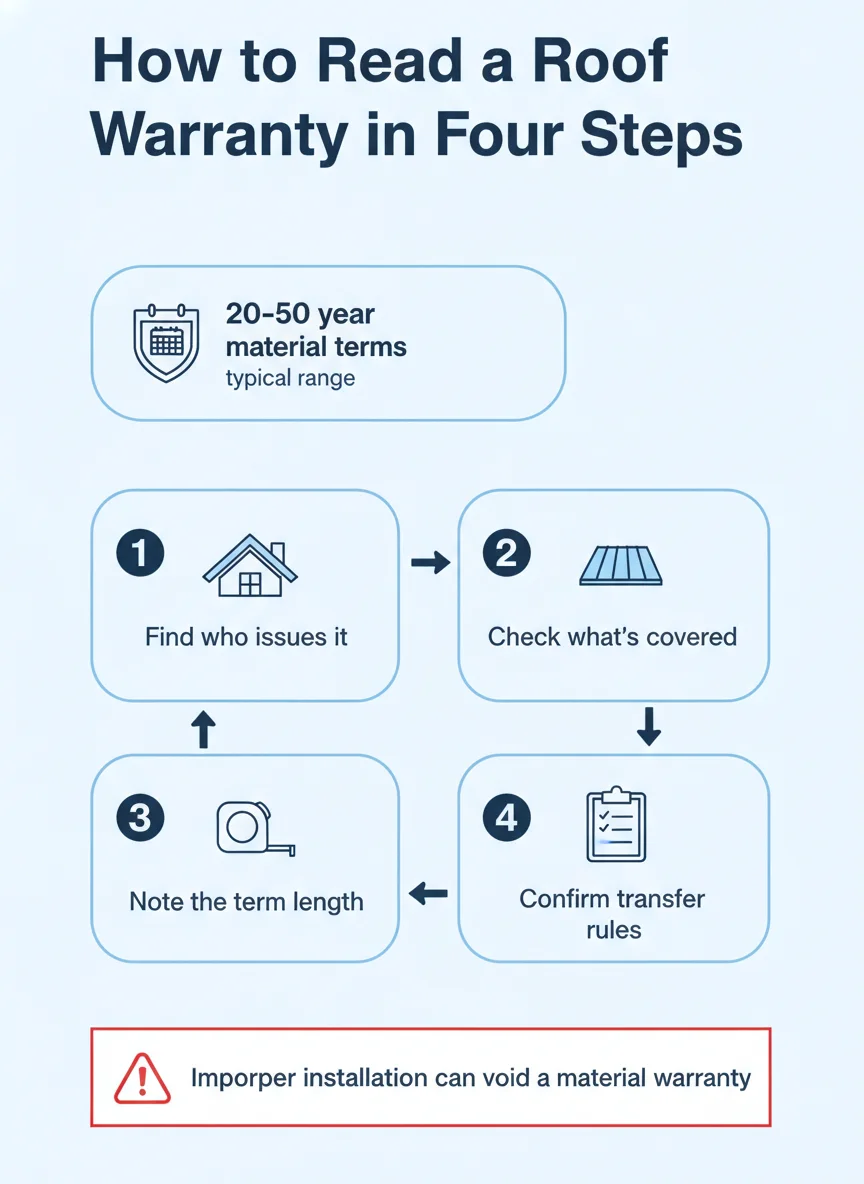
Step-by-Step: How to Review Your Roof Warranty Paperwork
Before signing off on any new roof project, whether it's a full roof replacement or a smaller roof repair, walk through the paperwork methodically rather than skimming the first page and assuming the rest matches.
- Identify the issuer: Confirm whether each document comes from the manufacturer or the contractor, since that determines who you call first if a problem comes up.
- Read the coverage scope: Check exactly what's included, materials only, labor only, or both, and whether coverage steps down after a certain number of years.
- Note the term length: Write down the exact start date and length of each warranty so you know when coverage ends well before it actually expires.
- Check transfer rules: If you might sell the home, find out whether the warranty transfers to a new owner and what the process and timeline for that transfer look like.
- List the exclusions: Look for anything that voids coverage, such as unapproved repairs, added rooftop equipment, or missed maintenance requirements.
- Keep everything together: Store copies of all warranty documents along with your invoice and any inspection reports in one place for easy reference later.
What You'll Actually Find When a Claim Comes Up
When It's a Material Issue
If shingles are cracking in a pattern that doesn't match normal wear, or a membrane is failing well before its expected service life, that's a sign to pull the material warranty and contact the manufacturer or have your contractor assist with that process. Documentation matters here, including photos and the original invoice showing the product and installation date.
Manufacturers will often want to inspect the product themselves or have a certified contractor confirm the installation met their requirements before approving a claim, which is another reason correct installation records matter from day one.
When It's a Workmanship Issue
Leaks around flashing, valleys, or penetrations in the first few years after installation usually point to a workmanship question rather than a material defect. This is where a contractor's own warranty terms come into play, and it's also why it's worth choosing a company that will still be around to honor that promise years down the road.
If you're unsure which type of issue you're dealing with, a roof inspection and maintenance visit can help identify the actual cause before you file a claim with the wrong party.
DIY Review vs. Calling In a Pro
Reading and organizing your own warranty paperwork is something every homeowner can and should do themselves. Keep digital and physical copies, write down key dates on a calendar, and don't be afraid to call the manufacturer directly with questions about what a specific clause means.
Where a professional becomes necessary is diagnosing which warranty actually applies to a given problem and gathering the documentation a manufacturer or contractor will require to process a claim. A trained eye can usually tell within minutes whether a leak traces back to a material flaw or an installation detail, which saves you from filing a claim with the wrong party and losing time.
Licensed roofing professionals are also the ones who know what a given manufacturer requires to keep a warranty valid in the first place, such as specific ventilation setups or fastening patterns, so having a pro involved from the original install forward protects the coverage you're paying for.
Keeping Your Roof Warranty Working for You
A roof warranty is only as good as your understanding of what it actually promises, and that understanding starts with knowing the difference between the manufacturer's material coverage, the contractor's workmanship coverage, and whatever extended plan sits on top of either one. Review the paperwork line by line, ask questions before you sign, and keep records organized so you're never scrambling to figure out who to call.
If you're weighing a new roof system or just want a second opinion on warranty paperwork you already have, Renovacore Builders LLC is available to walk through what each document actually covers before you make a decision.
Frequently asked questions
What is the difference between a material warranty and a workmanship warranty on a roof?
A material warranty covers defects in the shingles, membrane, or other products themselves, and it's issued by the manufacturer. A workmanship warranty covers the installation labor and is issued by the contractor, which matters because most roof failures trace back to how a product was installed, not the product itself.
Can a roof warranty be transferred if I sell my house?
Many manufacturer warranties allow a one-time transfer to a new homeowner, usually within a limited window after closing and sometimes for a reduced term. Workmanship warranties vary by contractor, so it's worth asking directly whether coverage follows the house or just the original owner.
Does a roof warranty cover storm damage?
Standard material and workmanship warranties generally do not cover wind or impact damage from weather events. That kind of damage typically falls under a homeowner's insurance policy rather than the roofing warranty, which is why documentation and a prompt inspection after a storm still matter.
What can void a roof warranty?
Common causes include installation by an unlicensed or unapproved contractor, skipped ventilation requirements, unauthorized repairs or additions on top of the existing system, and lack of basic maintenance. Reading the fine print before work begins is the only way to know exactly what your specific warranty requires.
Is an extended roof warranty worth it?
It depends on what the extended coverage actually adds beyond the standard manufacturer and workmanship terms, such as longer labor coverage or system-wide protection instead of just materials. Compare the extra cost against the added years and scope rather than assuming more paperwork automatically means more protection.