
Why Shingle Shopping Feels More Confusing Than It Should
Walk into any supply yard in the DFW Metroplex and you'll see shingle bundles stacked under a dozen different brand names, each with its own glossy packaging and warranty claims printed on the wrapper. For a homeowner comparing quotes, it's tempting to assume the brand name tells you everything you need to know about quality. It doesn't.
What actually separates one shingle package from another has less to do with the logo and more to do with the product line underneath it: how many layers it's laminated from, what wind speed it's tested to, how the warranty term is structured, and whether it carries an algae-resistant coating. Those are the specs worth asking about, whether you're planning a roof replacement in Dallas or a smaller repair in Frisco.
What Separates One Shingle Tier From Another
Asphalt shingles generally fall into three broad tiers across the industry: economy 3-tab, mid-range architectural, and premium designer lines. The differences between tiers come down to a handful of measurable factors rather than brand loyalty.
Construction and Thickness
A 3-tab shingle is a single flat layer with cutouts creating the tab look, and it's the lightest, least expensive option on the market. Architectural shingles laminate two layers of asphalt together, which adds thickness, a dimensional shadow line, and generally a sturdier profile against wind uplift.
Designer or premium lines go a step further, sometimes mimicking the look of slate or wood shake with irregular tab shapes and heavier mat weights. The extra material adds cost, and in most cases it adds visual interest rather than a dramatic jump in core durability, since the underlying asphalt and fiberglass mat technology is similar across tiers from most manufacturers.
Warranty Structure
Manufacturer warranties vary by product line, not by company overall. Entry-level shingles typically carry shorter limited warranties, while architectural and premium lines often extend further, sometimes with prorated coverage that decreases over time rather than full replacement value for the life of the warranty.
It's worth reading the actual warranty document rather than the marketing headline, since terms like 'lifetime' usually refer to the original homeowner and come with conditions tied to proper installation and ventilation. A workmanship warranty from your installer is separate from the manufacturer's material warranty, and both matter.
| Shingle Tier | Typical Construction | Common Warranty Range |
|---|---|---|
| 3-tab (economy) | Single flat layer, lighter mat | Shorter limited warranty |
| Architectural (mid-tier) | Laminated double layer, dimensional profile | Extended limited warranty |
| Designer/premium | Heavier laminated mat, irregular tab shapes | Longest limited warranty, often prorated |
How Wind and Impact Ratings Actually Work
Wind and impact ratings are tested and published at the product line level, which means two shingles from the same manufacturer can carry very different ratings depending on their construction. A wind rating reflects the speed at which a shingle passed testing for blow-off resistance, while an impact rating (often labeled Class 1 through Class 4) reflects resistance to denting or cracking from falling debris.
For North Texas properties, wind resistance is usually the bigger factor given the region's thunderstorm activity, and higher-tier architectural and designer shingles tend to carry stronger published wind ratings than basic 3-tab products. Impact-resistant lines exist across most manufacturer catalogs as a separate upgrade option rather than a tier in themselves.
Step-by-step: How to Compare Shingle Packages Before You Buy
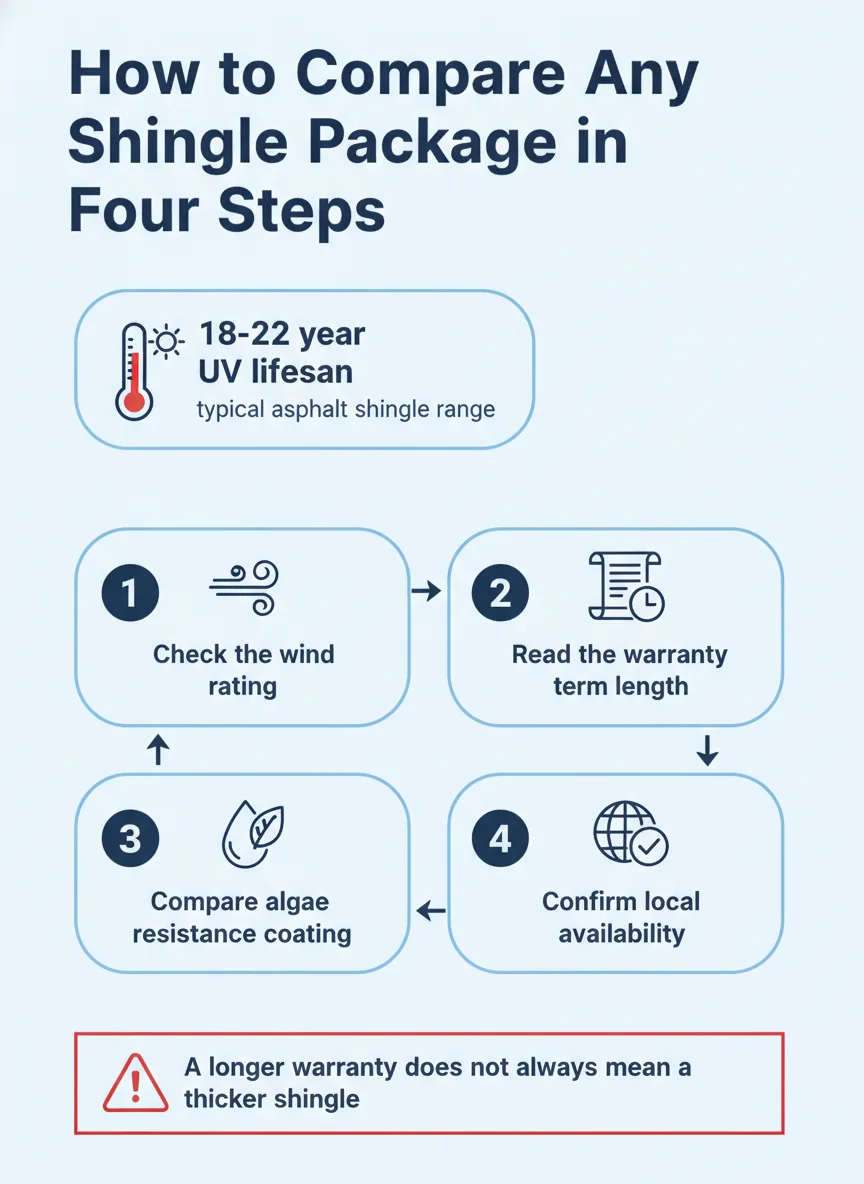
You don't need to memorize every manufacturer's catalog to shop smart. Working through these checks with whoever is quoting your project gives you an apples-to-apples comparison regardless of brand name.
- Ask for the spec sheet: Request the actual product data sheet for the exact line being quoted, not just the brand name on the invoice.
- Compare wind ratings: Check the published wind speed rating for that specific product, since it varies by line even within one manufacturer.
- Review warranty terms: Read how long full coverage lasts versus when it becomes prorated, and note what voids it.
- Check algae resistance: Confirm whether the shingle includes an algae-resistant coating if humidity and shade are a concern on your property.
- Confirm regional availability: Ask whether that exact color and line is in stock locally, since backorders can delay a project timeline.
- Ask about the workmanship warranty: Separate from the material warranty, find out what your installer covers on their own labor.
What You'll Actually Notice on the Roof
Once shingles are installed, most homeowners notice differences in appearance long before they notice differences in performance. Architectural and designer lines create more shadow and texture from the street, which is part of why they're popular on higher-end homes even when the underlying asphalt technology isn't dramatically different from a mid-tier product.
Color and Curb Appeal
Color availability tends to expand as you move up in tier, with premium lines offering blended, multi-tone shingles designed to look less uniform from the ground. If color matching to brick or siding matters for resale value, it's worth looking at sample boards in daylight rather than relying on a catalog photo.
Keep in mind that even within the same product line, dye lots can shift slightly between manufacturing runs, which matters if you're doing a partial roof repair and trying to match existing shingles rather than a full tear-off.
Performance Over Time
Over the following decade, the biggest performance differences usually come from installation quality and attic ventilation rather than the brand printed on the bundle. A premium shingle installed over a poorly ventilated attic can underperform a mid-tier shingle installed correctly with balanced intake and exhaust airflow.
That's one reason a roof inspections and maintenance visit every few years is worth scheduling regardless of which shingle tier you chose, since catching granule loss or flashing wear early extends the life of any product line.
What a Homeowner Can Decide vs. What a Roofer Should Weigh In On
Homeowners are well positioned to decide on color, overall look, and budget range, since those are personal preferences tied to the home's style and resale goals. Reading a spec sheet and comparing published numbers side by side is also something anyone can do with a little patience.
Where a licensed roofer adds real value is matching the right product line to your specific roof structure, pitch, and ventilation setup, since a shingle that performs well on one home can underperform on another with different airflow or sun exposure. A contractor can also flag whether a given line is appropriate given local wind exposure in your part of the Metroplex.
It's worth having that conversation before you commit to a brand based on a showroom sample alone. A quote should walk you through why a specific product line was chosen for your roof, not just hand you a price per square.
Choosing With Confidence, Not Just a Logo
The brand name on a shingle bundle tells you who manufactured it, but it doesn't tell you the wind rating, warranty length, or construction quality of the specific product line you're buying. Those details live in the spec sheet, and they're worth asking for before any commercial roofing or residential project moves forward.
If you're weighing shingle options for a property in Fort Worth or elsewhere across the Metroplex, it helps to pair this comparison with a deeper look at asphalt shingles versus metal roofing before deciding on a material altogether. Renovacore Builders LLC can walk you through spec sheets side by side so the choice is based on real numbers, not just packaging.
Frequently asked questions
Are more expensive shingle brands actually better?
A higher price tier usually buys thicker mat construction, a longer warranty term, and sometimes a dimensional look rather than a flat one. It does not automatically mean better wind performance, since wind rating depends on the specific product line and how it's installed, not just the brand name.
What's the difference between a 3-tab and an architectural shingle?
A 3-tab shingle is a single flat layer cut into even tabs, while an architectural (or dimensional) shingle laminates two layers for a thicker, shadowed look. Architectural shingles generally carry stronger wind ratings and longer manufacturer warranties across the industry.
Does shingle brand affect how long a roof lasts?
Brand matters less than product line, installation quality, and ventilation. Asphalt shingles across most manufacturers fall in a similar 18 to 22 year lifespan range under Texas UV exposure when installed correctly with proper attic airflow.
What is algae resistance and do I need it?
Algae-resistant shingles have a coating designed to slow the dark streaking that blue-green algae causes on a roof over time. It's a worthwhile upgrade in humid climates, though it's a coating feature and not a measure of the shingle's structural strength.
How do I know if a shingle meets Texas wind requirements?
Check the product's published wind rating, which is tested and listed by the manufacturer for each specific line, not the brand as a whole. Your roofing contractor can confirm which rated products are appropriate for your property before the order goes in.