
What Do Three-Tab, Architectural, and Designer Shingles Actually Mean?
These three terms describe the construction grade of an asphalt shingle, not the color or brand. Three-tab is the original flat-cut style, architectural is a thicker laminated version, and designer shingles push the laminated construction further to copy the look of slate or cedar shake. Each grade handles weather, wind, and daily sun exposure differently, which is why the term matters more than most homeowners realize when a quote references one over another.
Across the DFW Metroplex, homes see a mix of all three grades depending on when the roof went on and what the budget allowed at the time. A property in Frisco built in the last decade is more likely to carry architectural shingles as the default, while an older home in Waxahachie might still have the original three-tab system from its first install. Knowing which grade is currently on your roof, and which grade makes sense for a replacement, starts with understanding what actually separates them.
What Actually Separates One Shingle Grade From Another
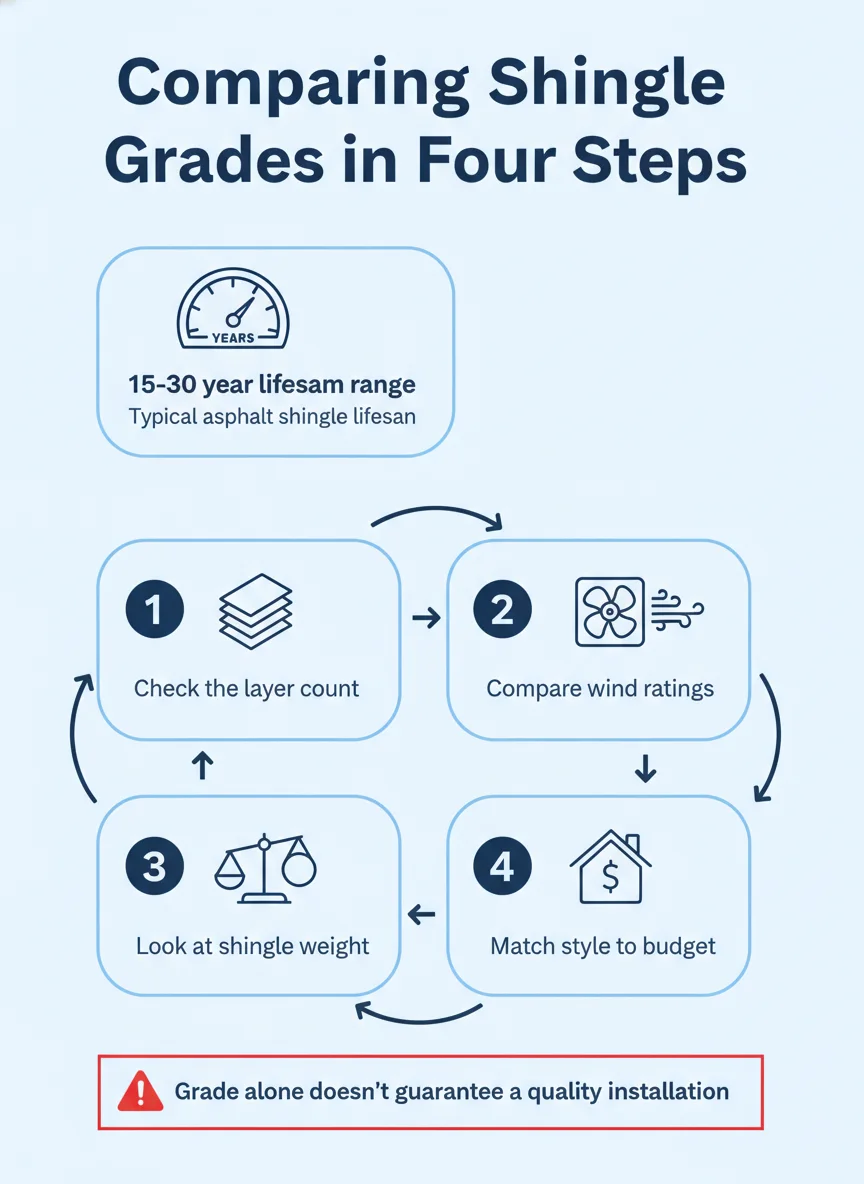
The differences come down to how many layers of asphalt are laminated together, how much the shingle weighs per square, and what wind speed the manufacturer rates it to withstand. Those three specs drive everything else: appearance, expected lifespan, and price.
Layers and Weight
Three-tab shingles are a single flat layer, which keeps them light and gives them a uniform, flat appearance across the roof. Architectural shingles laminate two or more layers together, adding thickness and a shadow-line effect that reads as more dimensional from the street. Designer shingles often add a third layer or a heavier base mat specifically to mimic the irregular profile of natural slate or wood shake.
Weight per square is a rough proxy for durability, since more material generally means more resistance to impact and wear over time. It's not the only factor, but it's one reason architectural shingles tend to outperform three-tab shingles in head-to-head wear tests cited across the industry, even when both are installed under the same conditions.
Wind Rating and Warranty Terms
Manufacturers rate each shingle grade for a maximum sustained wind speed, and that rating generally climbs as you move from three-tab to architectural to designer. This matters in North Texas, where spring wind events are a normal part of the climate rather than a rare occurrence.
Warranty terms also scale with grade in most manufacturer lineups, with higher grades typically carrying longer material warranties. Warranty length is a manufacturer promise on the material itself and is separate from any workmanship warranty a contractor offers on the labor, so it's worth asking which one a quote is actually referencing.
| Shingle Grade | Typical Weight & Layers | Best Fit For |
|---|---|---|
| Three-tab | Single flat layer, lighter weight per square | Budget-driven projects and outbuildings |
| Architectural | Laminated, two or more layers, dimensional profile | Most residential replacements today |
| Designer | Heavier laminated construction mimicking slate or shake | Homes prioritizing curb appeal and resale presentation |
The Parts of a Shingle System Beyond the Shingle Itself
The shingle grade gets most of the attention, but it's only one piece of the full roofing system. Underlayment sits between the shingle and the deck, acting as a secondary water barrier if wind-driven rain ever gets past the surface layer. Flashing seals the transitions around chimneys, vents, and valleys where water is most likely to find a way in, regardless of which shingle grade sits above it.
Ventilation is the piece most often overlooked, and it affects every shingle grade equally. A poorly ventilated attic traps heat underneath the deck, which accelerates shingle aging from the underside even on a premium designer product. Any grade of shingle performs closer to its upper lifespan range when the deck underneath it can breathe properly.
Step-by-Step: How to Evaluate Which Grade Fits Your Property
Walking through a few questions before you commit to a grade helps match the material to the property instead of just picking the first option on a quote sheet.
- Check your current grade: Look at your existing shingles up close or ask a contractor to identify them during a Roof Installation consultation, since the current grade often shapes expectations for the replacement.
- Consider your timeline: If you plan to sell within a few years, a mid-tier architectural shingle often balances cost and curb appeal better than a top-tier designer product.
- Factor in wind exposure: Properties on open lots or higher ground may benefit from the higher wind rating that comes standard with architectural and designer grades.
- Review the warranty terms: Compare the manufacturer's material warranty length across grades, and ask separately about the labor warranty offered on the installation itself.
- Match the look to the home: Designer shingles tend to suit homes with traditional or historic styling, while architectural shingles fit nearly any home style without looking out of place.
- Get it in writing: Make sure your estimate specifies the exact shingle grade and product line by name, not just a general description like 'standard' or 'upgraded.'
What Will You Notice Once a Shingle Grade Is Installed?
The visual difference between grades is obvious from the ground within the first few weeks, and the performance difference shows up gradually over years of sun and weather exposure.
Curb Appeal and Dimension
Three-tab shingles read as flat and uniform from the street, which some homeowners prefer for a clean, simple look. Architectural shingles create visible shadow lines and texture that most buyers associate with a more updated roof, even without knowing the technical term for the grade.
Designer shingles go further, often staggering the tab pattern or using irregular shapes to copy the look of natural slate or cedar shake from a distance. On the right home style, that upgrade can noticeably change how the whole property presents from the curb.
Wear Patterns Over Time
Three-tab shingles tend to show granule loss and curling edges earlier in their lifespan due to their lighter single-layer construction. Architectural and designer shingles generally resist that early wear better because of their added thickness, though Texas heat and UV exposure still take a toll on every grade eventually.
Any shingle, regardless of grade, will wear faster on south and west facing slopes that take the most direct sun through the day. That's one reason a full-roof inspection looks at wear patterns slope by slope rather than judging the whole roof from a single vantage point.
DIY vs. Calling a Pro
Identifying your current shingle grade from the ground or from photos is something most homeowners can do with a little research, and it's a reasonable first step before calling anyone out. Spotting obvious wear like curling edges, bald spots, or granules collecting in gutters is also within reach for a homeowner doing a visual check from a ladder or the ground.
Actually evaluating deck condition, ventilation adequacy, and flashing integrity requires getting on the roof safely and knowing what healthy versus failing materials look like up close. That's a job for a licensed roofer, since a misread on flashing or decking can turn into a much bigger repair if it goes unnoticed for another season.
Choosing between grades for a full replacement is also a conversation worth having with a contractor rather than deciding from a manufacturer brochure alone, since local wind exposure, roof pitch, and ventilation all factor into which grade actually makes sense. For a deeper look at what drives overall project pricing, What Drives the Cost of Roof Installation in Texas? breaks down the other variables beyond shingle grade.
Choosing the Right Grade for Your DFW Metroplex Home
There's no single correct shingle grade for every property. A rental or outbuilding might do just fine with three-tab, while a primary residence in a neighborhood with strong resale values often benefits from the dimensional look and added durability of an architectural or designer product.
What matters most is understanding the tradeoffs before the decision gets made for you by whatever grade happens to be on the quote. Homeowners across Dallas and the surrounding metro can get a clearer picture of which grade fits their property and budget with a free, no-obligation estimate from Renovacore Builders LLC.
Frequently asked questions
What is the difference between three-tab and architectural shingles?
Three-tab shingles are a single flat layer cut into even tabs, while architectural shingles are laminated from two or more layers for a thicker, dimensional look. Architectural shingles generally carry a higher wind rating and a longer expected service life than three-tab products.
Are designer shingles worth the extra cost?
Designer shingles cost more because they mimic the look of slate or wood shake while using modern asphalt construction, so the value depends on whether that appearance matters to you. For homes where curb appeal and resale presentation are a priority, many owners find the look worthwhile.
Do three-tab shingles still get installed on homes today?
Three-tab shingles are less common on new installs today because architectural shingles have become the industry standard in most markets. Three-tab is still manufactured and sometimes used on budget-driven projects or outbuildings.
How long do architectural shingles typically last?
Architectural shingles typically fall in a wide lifespan range depending on climate, ventilation, and installation quality, with industry sources generally citing figures in the 20 to 30 year range. Texas heat and UV exposure tend to push actual performance toward the lower end of that range.
Does a higher shingle grade mean a better roof overall?
A higher shingle grade is one factor in roof performance, but underlayment, flashing, ventilation, and installation quality matter just as much. A premium shingle installed poorly will underperform a mid-grade shingle installed correctly.