
Why Roof Lifespan Is a Moving Target in North Texas
Every roofing material comes with a published lifespan range, but that number assumes average conditions, and the DFW Metroplex doesn't really have average conditions. Summers push attic temperatures well past what shingles were designed to shrug off indefinitely, and the swing between a hundred degree July afternoon and a hard freeze in January puts real stress on every layer of a roofing system. That's before hail or straight-line wind ever enters the picture.
So when someone asks how long a roof should last, the honest answer is a range, not a date. A well installed, well ventilated roof on a shaded lot in Plano might outperform the same material on an exposed rooftop in Arlington by several years. Knowing what actually drives that difference helps you plan instead of guess, and it's the first thing we look at when we walk a property for an inspection.
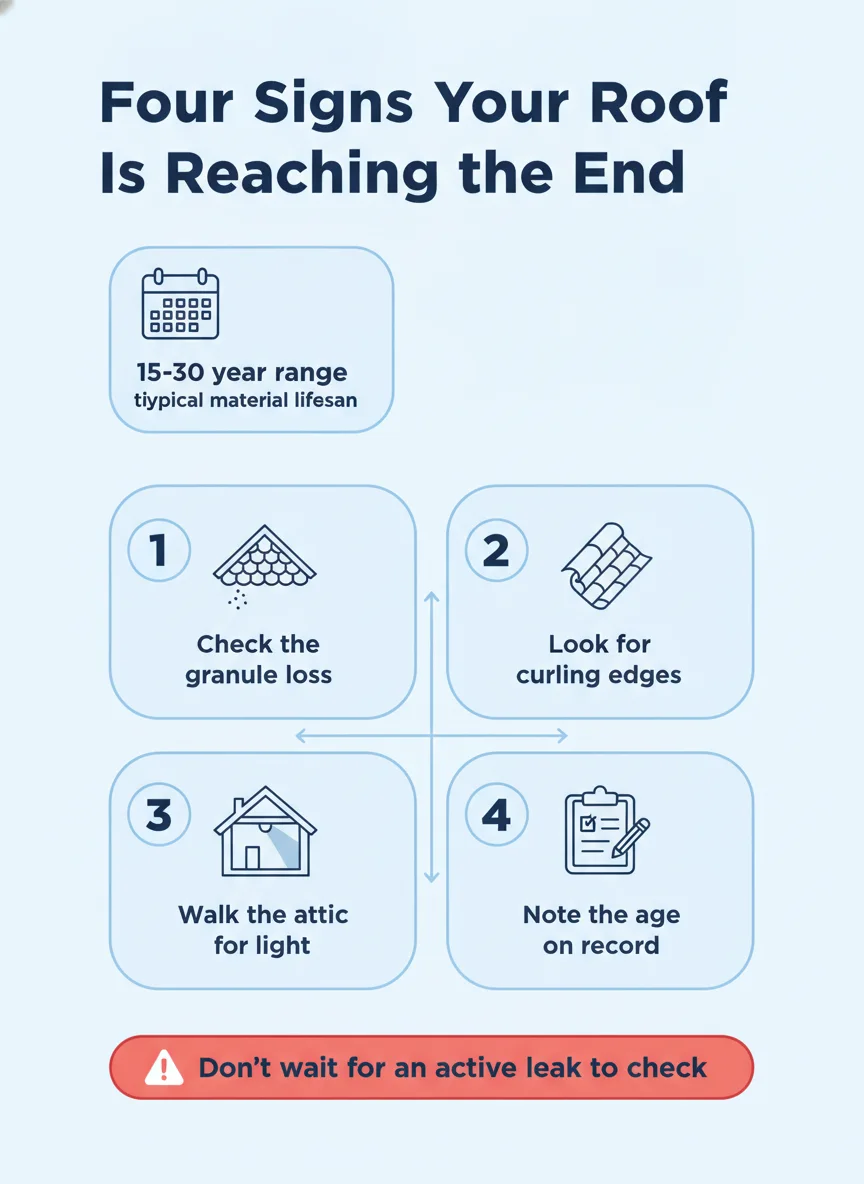
What Actually Determines How Long a Roof Lasts
Lifespan comes down to three things working together: the material itself, how it was installed, and what it's been exposed to since. Skip any one of those in the conversation and you're guessing.
Material and Build Quality
Asphalt shingles, the most common roofing material on Texas homes, typically carry a manufacturer lifespan rating, but the real-world number depends on the specific product grade and how it was laid. Thicker architectural shingles generally outlast basic three-tab versions, and metal roofing systems can run considerably longer than either when installed correctly.
Installation quality matters just as much as the product. Proper nailing patterns, correct flashing at every penetration, and adequate attic ventilation all affect whether a roof reaches its expected lifespan or falls short of it by years. A roof installed in a hurry with shortcuts rarely performs like one installed with the manufacturer's specifications followed to the letter.
Climate and Exposure
Texas UV exposure breaks down the asphalt and oils in shingles faster than milder climates do, which is why the same product can perform differently a few states over. Add in hail impacts, which can bruise or crack shingles without causing an obvious leak right away, and a roof's true condition can diverge from its calendar age.
Tree coverage, roof pitch, and which direction the slopes face all play a role too. A steep, shaded, north-facing section of roof will often look noticeably better than a flat, sun-blasted section of the exact same age on the same house.
| Material | Typical Lifespan | Main Wear Factor |
|---|---|---|
| Asphalt shingles | 15-25 years | UV exposure and hail impact |
| Architectural shingles | 20-30 years | UV exposure, slower granule loss |
| Metal roofing | 40-plus years | Fastener and seam maintenance |
| Flat/low-slope (TPO) | 15-20 years | Membrane seams and ponding water |
The Roofing System Behind the Shingles
What you see from the street is only part of the system. Underneath the surface layer sits underlayment, flashing around every chimney and vent, and a ventilation setup that's supposed to move hot, moist air out of the attic. Any one of those components failing early can shorten the life of the whole roof even if the shingles themselves still look fine.
Ventilation in particular gets overlooked. An attic that runs hot and doesn't exchange air properly bakes the underside of the roof deck and the shingles above it from below, which accelerates aging from the inside out. It's one of the reasons two roofs of the same age and material can show very different wear.
Step-by-Step: Estimating Where Your Roof Stands
You don't need to climb up there yourself to get a rough sense of your roof's condition. Here's a simple way to work through it before calling anyone out.
- Find the install date: Check your closing paperwork, permit records, or past invoices for when the current roof went on.
- Check the gutters: Granules collecting in the gutters or at downspout outlets is one of the earliest visible signs of shingle wear.
- Look at the slopes: Walk the perimeter and look for curling, cupping, or shingles that look different in color from the rest.
- Scan the attic: On a sunny day, check for pinpoints of daylight coming through the roof deck, which signals gaps or damage.
- Note any recent storms: A hailstorm or high wind event in the past couple years can shorten remaining life regardless of the roof's age.
- Schedule an inspection: A trained eye can confirm what you're seeing and give you a realistic read on remaining lifespan.
What You'll Typically Find When You Look Closer
Signs of Normal Aging
Some wear is just the material doing what it's rated to do over time. Slight granule loss, minor color fading, and small amounts of curling at the edges of shingles are expected as a roof approaches the back half of its lifespan. None of that is an emergency on its own.
The key is whether the wear is even across the roof or concentrated in specific spots. Even, gradual aging usually means you're on a normal timeline. Patchy or uneven wear often points to a localized issue, like a ventilation problem or storm damage in one section, that's worth a closer look.
Signs That Point to Replacement
Widespread cracking, bald patches where granules have worn away completely, soft spots on the roof deck, and recurring leaks in different locations all suggest the roof has moved past the point where repairs make sense. At that stage, patching individual spots becomes a cycle rather than a fix.
If your roof is also past its material's typical lifespan range and showing two or more of these signs together, it's usually time to start budgeting for a roof replacement rather than another round of spot repairs.
DIY Checks vs. Calling a Professional
Homeowners can handle the ground-level and attic checks described above without much risk. Looking at your gutters, scanning the attic for light, and noting the roof's age are all reasonable things to do on your own, and they'll tell you whether it's worth scheduling a closer look.
Getting on the roof itself is a different story. Slope, loose granules, and heat all make for a dangerous combination, and it's easy to miss subtle damage like hairline cracking or compromised flashing if you don't know what you're looking for. That's work best left to a professional with the right equipment and experience reading wear patterns.
A licensed roofer can also tell you whether what you're seeing is cosmetic or structural, which matters a lot if you're trying to decide between a roof repair and a full system replacement. Getting that call wrong in either direction costs you money, either in premature replacement or in repeated patch jobs on a roof that's already done.
Planning Ahead Instead of Reacting
Knowing roughly where your roof sits in its lifespan lets you plan on your own timeline instead of making a rushed decision after a leak shows up during a storm. It also helps when you're budgeting for a home, since a roof nearing the end of its range is a cost worth factoring in either way.
If you're not sure how your roof is holding up, a routine inspection is the fastest way to get a straight answer, and our team at properties across Dallas and the surrounding metro runs these regularly for homeowners who'd rather know now than find out the hard way. For more on how different systems compare over time, see our lifespan chart by roof type. Renovacore Builders LLC is available to walk your roof and give you a clear read on where it stands.
Frequently asked questions
How long does a roof actually last in Texas?
It depends heavily on material and sun exposure, but asphalt shingle roofs in Texas commonly run somewhere in the range of 15 to 25 years, with metal and other systems lasting longer. Heat, UV, and hail cycles all push that number lower than what the same material might see in a milder climate.
Does the direction my roof faces affect how long it lasts?
Yes, south and west facing slopes take more direct UV exposure through the afternoon and tend to show wear first. It's common to see uneven aging across the same roof for exactly that reason.
Can I extend my roof's lifespan without replacing it?
Routine maintenance like clearing debris, checking flashing, and fixing small issues early can meaningfully extend how long a roof performs well. It won't make an old system new again, but it closes the gap between 'functional' and 'failing.'
What shortens a roof's lifespan the most in Texas?
Sustained heat and UV exposure do the slow damage, while hail and high wind events do the sudden damage. A roof that's taken a hard hit can fail well before its expected age even if it looks fine from the ground.
How do I know if my roof is near the end of its life?
Granule loss in the gutters, curling or cupping shingles, and daylight visible in the attic are the clearest signs. An inspection can confirm whether you're looking at a repair window or a replacement window.