
Why Roof Lifespan Looks Different Across Texas
A roof in the Texas Panhandle ages differently than one in the Dallas-Fort Worth Metroplex, even if both are built with identical materials. Sun exposure, humidity swings, and the occasional hailstorm all chip away at a roofing system over time, and the pace of that wear depends heavily on which material is up there and how it was installed. Knowing the expected range for your specific roof type is the starting point for deciding whether a repair makes sense or whether you're looking at a bigger project.
This matters right now because a lot of roofs across North Texas were installed in waves tied to past weather events, which means plenty of homes are approaching the back half of their expected service life at roughly the same time. Understanding where your roof sits on that timeline helps you plan instead of react, especially before severe weather season puts stress on an already aging system.
What Actually Wears a Roof Out
Every roofing material eventually breaks down from the same basic forces: ultraviolet light, heat cycling, moisture, and wind. The difference between materials is how much of that punishment they can absorb before the protective layer fails and water starts finding its way underneath. Asphalt shingles rely on a granule coating that slowly erodes, while metal and tile rely on coatings and seals that degrade more slowly but still have a finite life.
UV and Heat Cycling
Texas summers put roofing materials through repeated expansion and contraction as surface temperatures swing from scorching afternoons to cooler nights. Over years, that constant movement works at seams, fasteners, and the bond between layers, which is part of why flat and low-slope membrane roofs need periodic inspection even when nothing looks obviously wrong from the ground.
Asphalt shingles are especially sensitive to this cycle because the asphalt itself can become brittle with age and heat exposure. Once shingles lose flexibility, they're more prone to cracking and granule loss, which accelerates the aging process rather than slowing it down.
Wind and Impact Events
Beyond steady wear, periodic high wind and hail events across North Texas can knock years off a roof's remaining life even if the damage isn't visible from the driveway. A single storm can bruise shingle mat or dent metal panels in ways that don't leak immediately but do shorten how long the material holds up afterward.
This is one reason why a roof's calendar age and its functional condition can diverge. Two roofs installed the same year can be in very different shape depending on what weather they've been through since, which is part of why a visual inspection tells you more than the installation date alone.
| Roof Type | Typical Lifespan Range | What Shortens It Fastest in TX |
|---|---|---|
| Three-tab asphalt shingles | 15-20 years | Direct sun exposure, poor attic ventilation |
| Architectural asphalt shingles | 18-22 years | UV cycling, wind-driven granule loss |
| Standing seam metal | 40-60 years | Fastener and sealant wear over decades |
| Clay or concrete tile | 50+ years | Cracked tiles from impact, underlayment failure beneath them |
| Flat/low-slope membrane (TPO, etc.) | 15-25 years | Seam separation, ponding water, UV breakdown |
| Slate | 75-100+ years | Flashing and fastener failure rather than the slate itself |
Understanding What's Actually on Your Roof
Before you can estimate remaining life, you need to know what system is actually installed, since a previous owner or a past repair may have changed the original material. A quick look from the attic or a photo of the shingle pattern can usually confirm whether you have three-tab, architectural, or a different system entirely, and that detail changes the whole conversation about what comes next.
It's also worth checking whether a roof has layers stacked on top of each other from a past roof-over rather than a full tear-off. Multiple layers trap heat differently and tend to show wear earlier than a single, properly ventilated layer, which is another reason the material alone doesn't tell the whole story.
Step-by-Step: Estimating Your Roof's Remaining Life
You don't need to climb up there yourself to get a reasonable read on where your roof stands. These steps use information most homeowners already have access to, plus a visual check from the ground and attic.
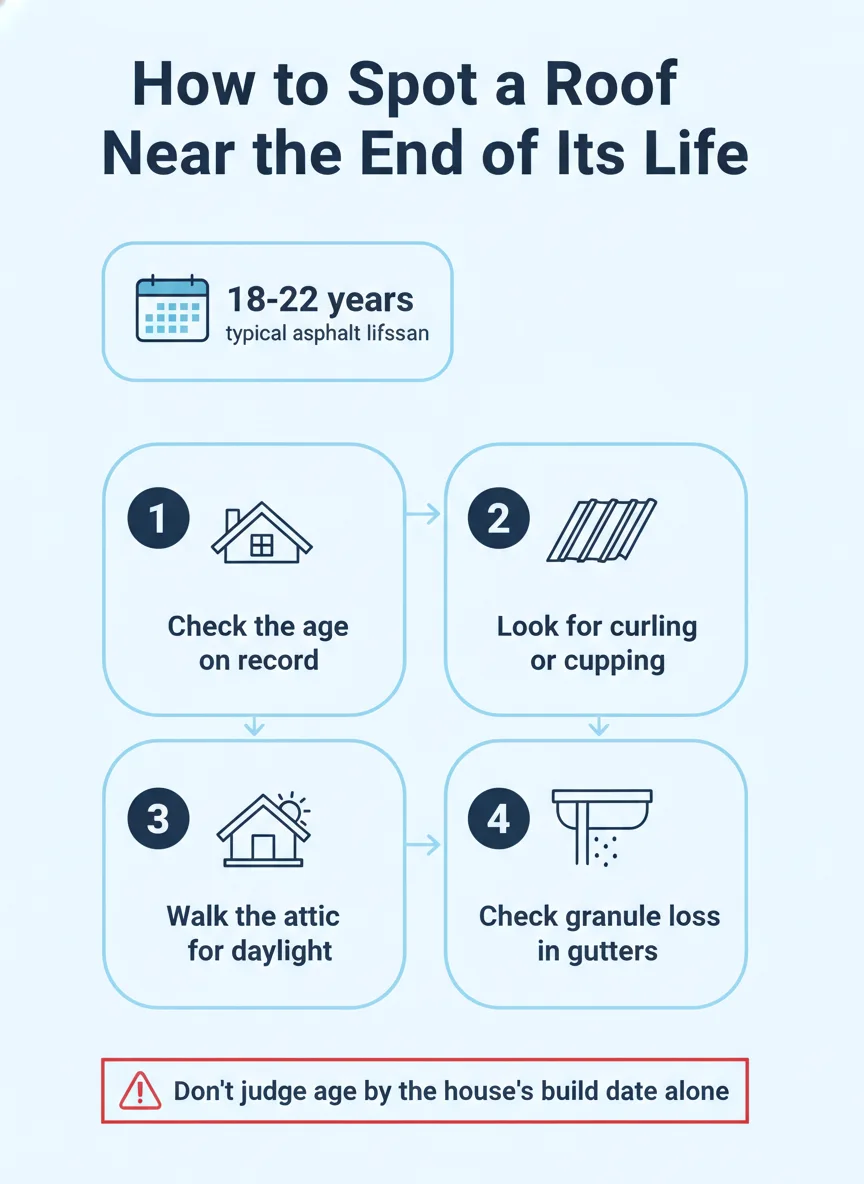
- Find the install date: Check closing documents, a permit record, or ask a past roof installation provider if you used one, since this is more reliable than guessing from the home's build year.
- Identify the material: Look at the shingle pattern, panel seams, or tile shape from the ground or a photo to confirm whether you have asphalt, metal, tile, or a flat membrane system.
- Check the attic for daylight: Daylight showing through the roof deck, water stains on rafters, or damp insulation are signs the covering above has already failed somewhere.
- Look at granule buildup: Heavy granule accumulation in gutters or at downspouts usually means asphalt shingles are shedding their protective coating faster than normal.
- Scan for curling or cupping: Shingles that curl at the edges or cup in the middle have lost flexibility and are approaching the end of their useful life.
- Note any storm history: A known hail or high wind event in recent years can shorten the practical lifespan even on a roof that still looks fine from a distance.
- Schedule an inspection: A roof inspection gives you a clear, documented read on remaining life instead of relying on guesswork.
What You'll Typically Find at Each Stage
Early to Mid Life
A roof in the early-to-mid portion of its lifespan usually shows minor, isolated wear: a few granules in the gutter, maybe a shingle tab lifted by wind, but nothing widespread. This is the stage where routine maintenance and small repairs keep things on track, and it's rarely worth considering replacement unless a specific event causes damage.
At this stage, attic ventilation and proper flashing around penetrations matter more than the shingles themselves, since those details determine whether the roof ages on schedule or faster than expected. Catching a ventilation problem early can add meaningful years back to the material's life.
Approaching End of Life
As a roof nears the end of its expected range, wear becomes widespread rather than isolated. You'll typically see curling across multiple slopes, granule loss heavy enough to show bare patches in photos, and more frequent small leaks that seem to pop up in new locations each season.
At this point, repairs tend to become a pattern rather than a one-time fix, and that pattern is usually the clearest signal that roof replacement is the more practical path forward rather than continuing to chase individual leaks.
What a Homeowner Can Check vs. What Needs a Professional
Homeowners can handle a lot of the early assessment themselves. Looking at gutters for granules, checking the attic for daylight or stains, and photographing visible shingle condition from the ground are all things you can do safely without a ladder. These checks give you a rough sense of whether a closer look is warranted.
What a homeowner generally shouldn't do is climb onto the roof to inspect it directly, since even a careful walk across an aging roof can cause damage or create a safety risk. Identifying hidden issues like compromised flashing, soft decking, or improperly nailed shingles also takes training to spot reliably from up close.
That's the point where a licensed roofer earns their keep. Renovacore Builders LLC can walk the roof safely, document actual condition against the expected lifespan for the material, and give you a clear picture of whether you're looking at a repair, a few more years of normal maintenance, or a full system replacement.
Putting the Timeline to Use
Knowing the general lifespan range for your roofing material turns a vague worry into a plannable timeline. Instead of wondering whether every small leak means disaster, you can weigh it against where your roof actually sits in its expected life and make a more informed call about repair versus replacement.
If your roof is approaching the upper end of its material's typical range, or if you've been through a notable storm in Dallas, Fort Worth, or anywhere else in the DFW Metroplex, it's worth getting a professional opinion before the next weather season arrives. Renovacore Builders LLC can take a look and lay out exactly where your roof stands.
Frequently asked questions
How long does an asphalt shingle roof last in Texas?
Asphalt shingle roofs in Texas typically last somewhere in the 18 to 22 year range across the industry, though direct sun exposure and storm history can shorten that. A roof on the south or west side of a house, with less shade, often wears faster than the same roof on a shaded lot.
Does a metal roof really last longer than shingles?
Yes, metal roofing systems generally outlast asphalt by a wide margin and are commonly rated for several decades of service life. The tradeoff is usually a higher upfront cost, which is why it's worth comparing against [asphalt shingles vs metal roofing](/blog/asphalt-shingles-vs-metal-roofing-for-a-tx-home) for your specific home.
Is the age of my roof the same as the age of my house?
No, these are frequently two different numbers and treating them as the same thing is a common mistake. A roof could have been replaced partway through a home's life, or the original builder's roof could be well past its service window even though the house itself is newer.
What shortens a roof's lifespan in Texas specifically?
Intense UV exposure, large daily temperature swings, and periodic high wind or hail events all put additional stress on roofing materials in this region. Poor attic ventilation also shortens lifespan from the inside out, which is covered in more depth in our [attic ventilation guide](/blog/attic-ventilation-explained-why-a-roof-can-fail-from-the-inside).
How do I know if my roof needs replacing instead of repairing?
Widespread wear across the whole roof, such as curling shingles in multiple areas or persistent leaks in different spots, usually points to replacement rather than a patch. A single isolated issue on an otherwise sound roof is more often a repair, and an inspection is the only reliable way to tell which situation you're in.