
How Long Does a Roof Warranty Actually Last?
A roof warranty's length depends entirely on which warranty you're asking about, because a single roof usually carries two separate ones running on two separate clocks. The material warranty, issued by the manufacturer, tends to run the longest, often framed as covering the expected lifespan of the product itself. The workmanship warranty, issued by whoever installed the roof, covers the labor and is almost always shorter.
In the DFW Metroplex, homeowners in Dallas and across North Texas deal with sun exposure, hail, and temperature swings that all put real stress on a roofing system over time. Knowing how long each layer of your warranty actually lasts, and what triggers an early end to that coverage, matters more here than in milder climates because the odds of needing to file a claim are higher.
Why Warranty Length Varies So Much
Warranty length is set by two different parties with two different interests. The manufacturer wants their product to perform as advertised and will typically back the material itself for a long stretch, sometimes framed in decades. The installing contractor is backing their own labor, which is a shorter and more direct promise, since workmanship issues tend to show up early if they're going to show up at all.
Material Warranties
A material warranty covers defects in the shingles, membrane, or panels themselves, things like premature cracking or granule loss that happen through no fault of the install. These warranties are written by the manufacturer, not the contractor, and the length is tied to how the specific product is rated to perform under normal conditions.
Material warranties are commonly structured with a full-coverage period up front, followed by a longer prorated stretch where coverage shrinks the older the roof gets. A full roof installation or roof replacement is the point where this clock starts, so the install date, not the manufacture date, is what matters.
Workmanship Warranties
A workmanship warranty covers problems caused by how the roof was put on, things like improper flashing or fastening that lead to leaks. This is the contractor's promise, separate from anything the manufacturer backs, and it's usually the shorter of the two timelines.
Because workmanship issues tend to surface within the first few years if they're going to happen at all, most contractors set this warranty length well short of the material warranty. If you want a deeper breakdown of how these categories differ, our roof warranty comparison guide covers it in more detail.
| Warranty Type | Typical Length | What It Covers |
|---|---|---|
| Material (manufacturer) | Often decades, with a prorated tail | Defects in the shingle, membrane, or panel itself |
| Workmanship (contractor) | Shorter, set by the installer | Installation errors like flashing or fastening mistakes |
| Extended or enhanced | Can run longer than standard material coverage | Upgraded terms available through certified installation programs |
What's Actually Being Warrantied
A roof is a system, not a single product, and warranties generally follow that logic. The field material (shingles, membrane, or metal panels) is one piece. Flashing, underlayment, ventilation components, and fasteners are others, and each can carry its own coverage terms depending on who manufactured it and who installed it.
This is part of why two warranties on the same roof can run different lengths and cover different failure points. A leak at a chimney flashing might fall under workmanship coverage if it's an install error, while curling shingles in the field might fall under the material warranty instead. Knowing which bucket a problem falls into is the first step in any claim.
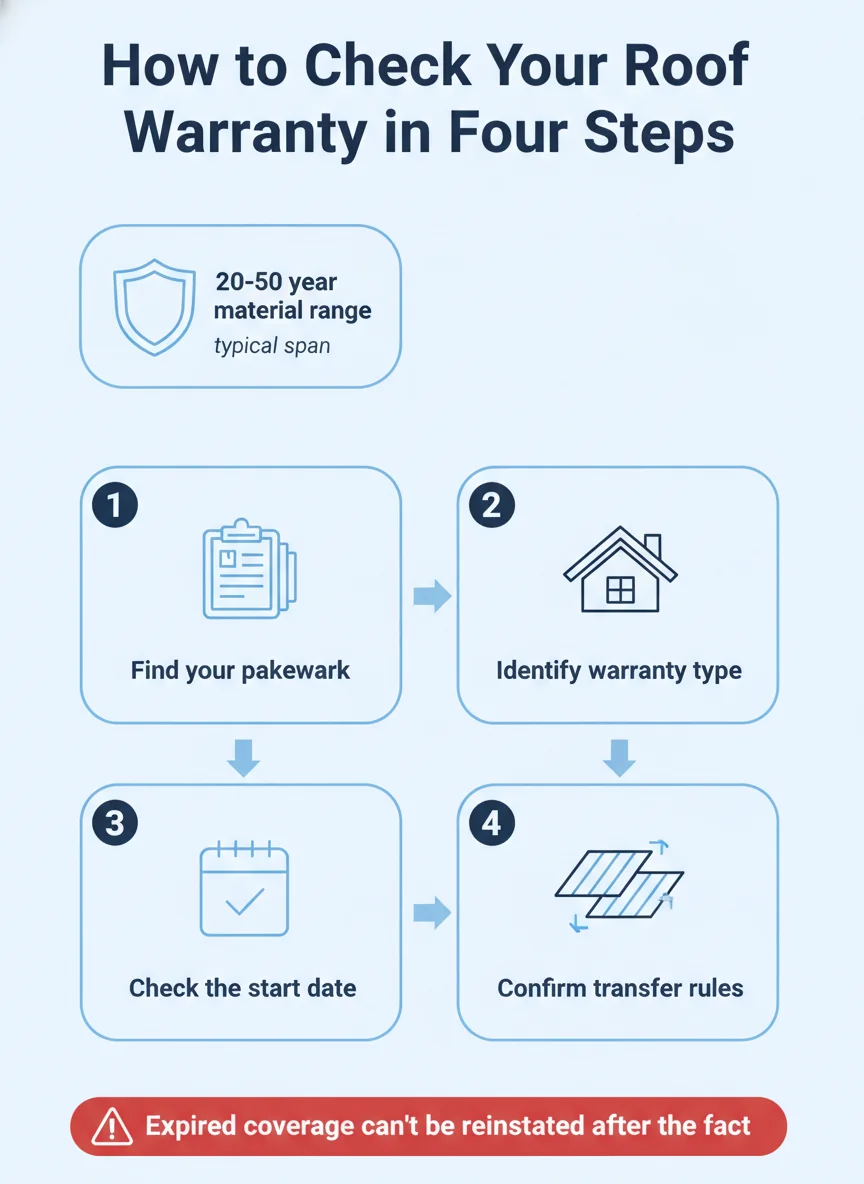
Step-by-step: How to Check Your Roof's Warranty Status
If you're not sure what's still covered on your roof, a few minutes of digging through paperwork (or a phone call) will usually answer it.
- Find your paperwork: Locate the original invoice, warranty certificate, or manufacturer registration from your roof installation or replacement.
- Identify warranty type: Separate the material warranty from the workmanship warranty, since they're issued by different parties and run different lengths.
- Check the start date: Confirm the warranty clock started at the installation date, not the date the materials were manufactured or purchased.
- Confirm transfer rules: If you bought the home after the roof was installed, check whether the warranty transferred and whether any paperwork was filed.
- Call the right party: Material defects typically go to the manufacturer, while installation issues go back to the contractor who did the work.
- Document any damage: Take photos and notes before filing a claim so the cause of the issue is clear from the start.
What Can Shorten or Void a Warranty
Installation Issues
A roof installed outside manufacturer specifications can void the material warranty even if the shingle itself is defect-free, because the manufacturer's coverage assumes their installation instructions were followed. This is one reason the choice of installer matters as much as the choice of material.
Unapproved repairs by a second contractor can also create gaps in coverage, since manufacturers and original installers alike may decline to honor a warranty on work they didn't perform or inspect. Getting any repair done by a roofer familiar with the original installation keeps the paper trail clean.
Maintenance Gaps
Most warranties include a baseline expectation of reasonable upkeep, things like clearing debris and addressing minor damage before it spreads. Letting small problems sit unaddressed for years can give a manufacturer or contractor grounds to deny a claim later.
Routine roof inspections and maintenance create a record that the roof has been cared for, which matters if a warranty claim ever comes down to proving the damage wasn't caused by neglect.
DIY vs Calling a Pro
Checking your own paperwork, confirming dates, and reading the fine print on a warranty certificate is something any homeowner can do without help. It's worth doing this before you assume coverage has lapsed or before you assume it's still active.
Actually diagnosing whether a problem falls under a warranty claim is a different matter. A licensed roofer can tell the difference between a material defect, an installation flaw, and ordinary wear, which determines who you need to call and what documentation you'll need.
Filing the claim itself, whether with a manufacturer or a contractor, usually goes smoother with a professional inspection report attached. It gives the party reviewing the claim a clear, dated account of what's wrong instead of a homeowner's best guess.
Keeping Track of Your Roof's Coverage
A roof warranty is only useful if you know what it covers and when it runs out, which means the real work is in the paperwork, not just the roof. Homeowners across Fort Worth and the rest of North Texas who keep their records organized and their maintenance current tend to have a much smoother experience if they ever need to file a claim.
If you're not sure what's covered on your current roof or you're weighing options for a new one, Renovacore Builders LLC can walk through what a warranty actually means in plain terms before you sign anything.
Frequently asked questions
How long does a typical roof warranty last?
It depends on what's being warrantied. Material warranties from the manufacturer often run for decades, while workmanship warranties covering the installation itself are usually shorter and set by the contractor who did the work.
Does a roof warranty transfer if I sell my house?
Many manufacturer warranties allow a one-time transfer to a new homeowner, but it usually has to happen within a set window after the sale and may require paperwork filed with the manufacturer. Workmanship warranties are less consistently transferable, so it's worth checking the specific terms.
What voids a roof warranty early?
Skipped maintenance, unapproved repairs by another contractor, and improper original installation are the most common reasons a warranty gets denied. Storm damage is usually treated separately from a warranty claim and often falls under your homeowner's insurance instead.
Is a lifetime roof warranty really for life?
Not in the way it sounds. 'Lifetime' almost always refers to the expected service life of the shingle or system as defined by the manufacturer, and coverage typically steps down or prorates after an initial full-coverage period.
Can I extend my roof warranty after installation?
Some manufacturers offer enhanced or extended coverage if the installation meets specific certification requirements at the time of the job, but this generally has to be arranged during installation, not added years later.