
Why the Timeline Question Matters So Much in the DFW Metroplex
When a property owner in the DFW Metroplex finally decides to move forward with a replacement, the very next question is almost always about how long their property will be under construction. That's a fair thing to want to know. A roof replacement means crews on site, materials staged in the yard or driveway, and a period where the property is more exposed than usual before the new system goes down.
The honest answer is that timelines vary by property, but the range isn't a mystery. A straightforward residential job in Dallas, Fort Worth, or Plano typically moves faster than a large commercial roof in a city like Waxahachie or Tyler, simply because of scale. Knowing the variables ahead of time helps you plan around the work instead of being surprised by it.
What Actually Drives the Length of a Roof Replacement
Three things do most of the work in determining a timeline: the size and pitch of the structure, the material system going down, and the weather on the days scheduled for the job. Everything else, like crew size or how the property is accessed, tends to be a smaller factor layered on top of those three.
Size, Pitch, and Layout
A single-story home with a simple gable layout is the fastest job on the board. Add a second story, multiple roof planes, dormers, or a steep pitch that slows crew movement, and the same square footage takes noticeably longer. Commercial and multi-family properties add another layer because flat or low-slope sections often involve different prep work than a sloped residential system.
Access matters too. A property with clear driveway space for material staging and dumpster placement moves faster than a tight urban lot or a property with limited equipment access. None of this is unique to any one city in North Texas, it's just physics and logistics playing out the same way everywhere.
Material System
Not every roofing system installs at the same pace. Standard asphalt shingle systems are generally the quickest because the installation sequence is well established and crews move through it efficiently. Metal panel systems, tile, and slate typically take more time per square foot because of how each piece is measured, cut, and fastened. Commercial membrane systems like TPO have their own install rhythm tied to seaming and flashing detail work.
If you're comparing options before you commit, it helps to read up on asphalt shingles vs metal roofing so you understand the tradeoffs beyond just install speed. Durability, maintenance, and appearance all factor into that decision too.
| System Type | Typical Install Pace | Common Factor That Slows It |
|---|---|---|
| Asphalt shingle | Fastest of common systems | Multiple roof planes or steep pitch |
| Metal panel | Moderate | Custom cuts around vents and valleys |
| Tile or slate | Slower, piece by piece | Weight and fragility during handling |
| Commercial membrane (TPO, etc.) | Varies by square footage | Seaming, flashing, and drainage detail |
The Roof Deck: Why What's Underneath Can Change Everything
The deck is the structural layer underneath whatever material you see from the street, and it's the single biggest wildcard in any replacement timeline. Crews can estimate how long tear-off and installation should take based on what's visible, but deck condition only becomes fully clear once the old material comes off.
Soft spots, rot, or old damage found during tear-off mean sections of decking need to be replaced before the new system can go down. This is routine and not a sign anything went wrong with the estimate, it's simply something that can't always be seen from above until the surface is exposed. A good contractor will walk you through what was found and why it adds time before moving forward with repairs.
Step-by-Step: What Happens on a Replacement Day
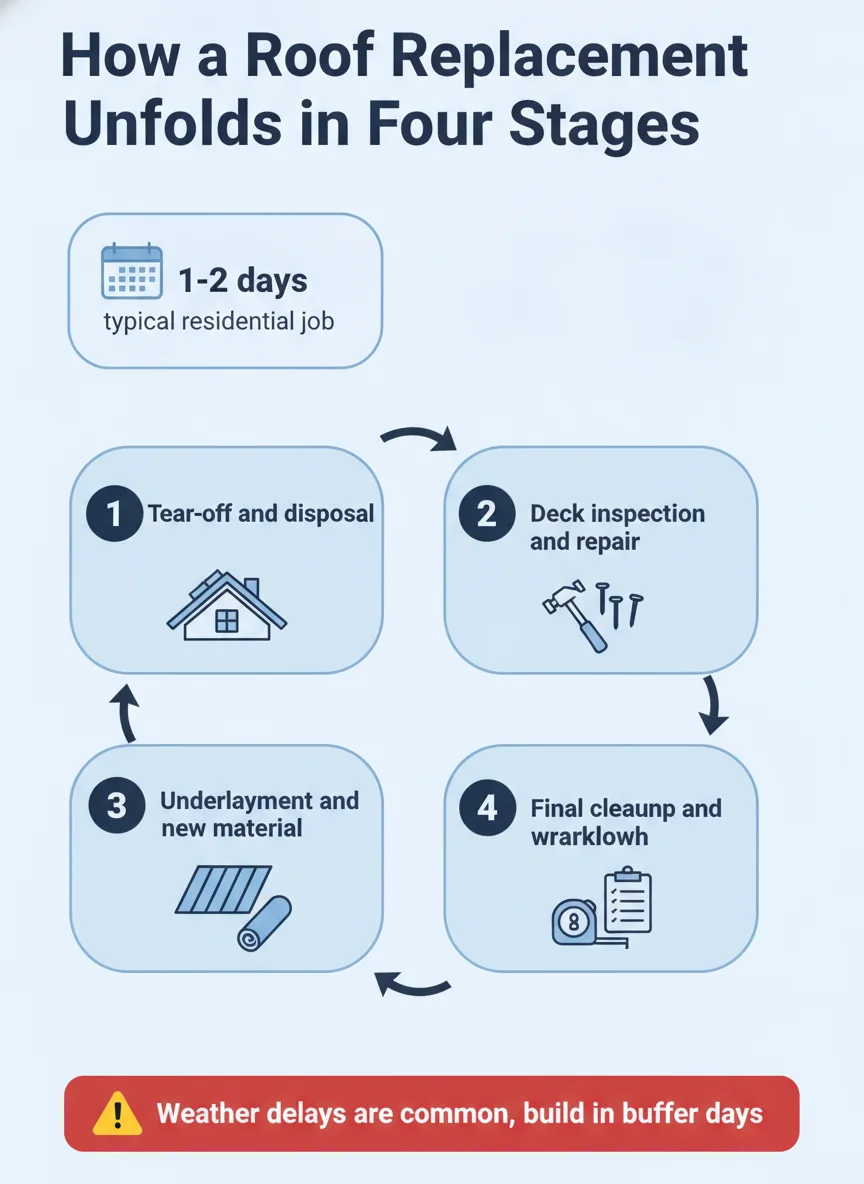
Here's the general sequence most residential and light commercial replacements follow from start to finish.
- Site setup: Crews arrive, protect landscaping and walkways, and stage materials and equipment for the day.
- Tear-off: Old material is stripped down to the deck and hauled away so the surface underneath can be inspected.
- Deck inspection: Any soft, rotted, or damaged decking is identified and replaced before anything new goes down.
- Underlayment: A protective layer goes down first to guard against moisture before the finish material is installed.
- Material install: Shingles, panels, tile, or membrane go down according to the manufacturer's installation specs.
- Flashing and detail work: Valleys, vents, and edges get sealed and flashed to keep water moving where it should.
- Cleanup and walkthrough: Debris is cleared, a magnetic sweep picks up stray fasteners, and the finished work is reviewed with you.
What You'll Notice During Each Phase of the Project
The loudest part of the job is tear-off, when old material comes off in sections and gets loaded for disposal. This phase generates the most noise and visible debris, and it's usually the shortest part of the overall timeline on a residential job.
The Quiet Middle Stretch
Once tear-off wraps and the deck is inspected, the project settles into a steadier rhythm. Underlayment and new material installation are methodical and don't generate the same noise level as tear-off. This is usually the longest stretch of the project by hours worked, even though it often feels less disruptive to the people living or working inside.
The Final Details
Flashing, ridge work, and detail sealing happen near the end and are where a lot of long-term performance gets locked in. Rushing this stage is where shortcuts tend to show up years later as leaks around valleys or vent pipes. A thorough crew takes the time here even if it adds an hour or two to the schedule.
What You Can Do Yourself vs. What Needs a Licensed Crew
There's very little about a full roof replacement that's a safe DIY project, and that's true across almost every material type. Working at height on a sloped or steep surface carries real fall risk, and most residential ladders and harness setups available to homeowners aren't built for the kind of repeated movement a full tear-off requires.
Where homeowners can genuinely help is in the planning stage. Clearing vehicles from the driveway, moving patio furniture away from the work area, and letting the crew know about sprinkler lines or landscaping to protect all speed up setup and reduce the chance of avoidable delays on day one.
The actual tear-off, deck repair, and material installation should go to a licensed and insured crew with the right fall protection equipment and experience reading what a deck inspection turns up. If you're still weighing whether your current roof needs full replacement or can be addressed with targeted repair, an inspection is the fastest way to get a real answer instead of guessing.
Planning Your Own Project Around a Realistic Timeline
If you're weighing a replacement for a property in Dallas or anywhere else across the DFW Metroplex, the best way to get a real timeline is a direct inspection rather than a guess based on square footage alone. Deck condition, material choice, and the scope of the job all factor in, and none of that is visible from the street or from photos alone.
For more on how roofing systems hold up over time once they're installed, see our breakdown of how long each roof type lasts in Texas. Renovacore Builders LLC walks property owners through the full scope and realistic schedule before any work begins, so there are no surprises once the crew shows up.
Frequently asked questions
How many days does a typical roof replacement take?
Most residential replacements wrap up in one to two days once materials are on site, though size, pitch, and material type can stretch that timeline. A simple single-story home moves faster than a steep, multi-layer property.
What causes a roof replacement to take longer than expected?
Weather is the most common delay, since wind, rain, or extreme heat can stop work mid-day for safety reasons. Hidden deck damage found during tear-off, material backorders, and larger or more complex layouts also add time.
Does the type of roofing material affect how long replacement takes?
Yes, different systems install at different speeds. Standard shingle systems tend to move quickest, while metal panels, tile, or multi-layer commercial membranes generally take more time per square foot of coverage.
Can I stay home during a roof replacement?
Most homeowners stay home during the project without issue, since the work happens entirely outside. It's noisy and there's foot traffic around the property, so people with young children, pets, or home offices sometimes plan around the loudest hours.
How soon can work start after I get an estimate?
Scheduling depends on crew availability and how quickly materials can be ordered for your specific system. Getting an inspection and estimate early gives you the clearest picture of a realistic start date.