
Why Shingle Pricing Looks So Different From House to House
Two homes on the same street in the DFW Metroplex can get wildly different shingle quotes, and it rarely has anything to do with one roofer trying to overcharge. Roof size, pitch, material grade, and the condition of the deck underneath all move the number independently, and a quote that looks like a bargain is sometimes just missing a line item the other one included.
Understanding what's actually driving the price helps you compare quotes apples to apples instead of just picking the lowest number on the page. It also helps you spot a quote that's too good to be true before you've signed anything, which matters more once a crew is already standing on your roof.
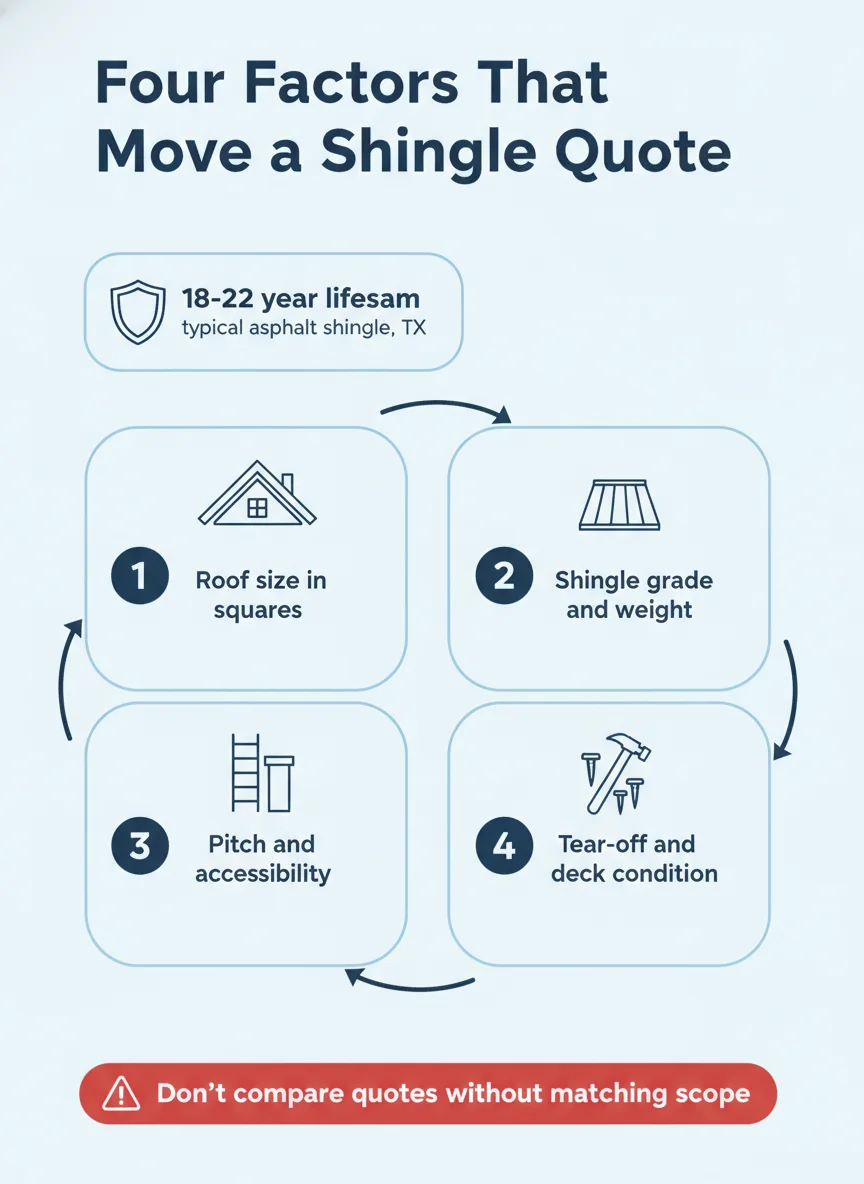
What Actually Goes Into a Shingle Price
At a basic level, shingle cost comes down to three things: how much material it takes to cover the roof, how long it takes a crew to install it, and what condition the roof is in before work starts. Each of those breaks down further, and the breakdown is where most of the confusion happens.
Material Grade and Weight
Shingles are sold in different grades, generally ranging from basic three-tab up through heavier architectural (dimensional) shingles and premium designer lines. Heavier shingles cost more per bundle but typically carry better wind and impact ratings, which matters in a region that sees its share of severe weather.
The grade you choose affects both the material cost and, in some cases, the labor, since heavier shingles can take a bit more time to install correctly. It's worth asking your roofer to walk through the grade options rather than assuming cheaper is always the better deal.
Roof Size, Pitch, and Access
Roofers measure in squares, with one square equal to 100 square feet of roof surface, and total square footage is the single biggest driver of material and labor cost. A bigger roof simply needs more shingles, more underlayment, and more hours on site.
Pitch and access matter almost as much. A steep roof, a roof with multiple stories, or one with limited ground access for equipment all add time and safety setup that a simple single-story ranch roof doesn't need. Two roofs of identical size can land at very different price points because of pitch alone.
| Factor | Lower Cost Scenario | Higher Cost Scenario |
|---|---|---|
| Shingle grade | Standard three-tab | Architectural or designer grade |
| Roof pitch | Low slope, walkable | Steep pitch or multiple levels |
| Deck condition | Solid deck, no repairs needed | Soft or rotted decking requiring replacement |
| Scope | Roof-over existing layer | Full tear-off with new underlayment |
The Part of the Roof You Don't See: the Deck
Shingles get all the attention, but the plywood or OSB decking underneath is what they're actually nailed to, and its condition has a real effect on the final cost. If the deck has soft spots, delamination, or old water damage, that wood has to come out and get replaced before new shingles go down.
A roofer usually can't see the full extent of deck damage until the old shingles are off, which is why some quotes include an allowance for a certain amount of deck repair and others don't mention it at all. Asking how deck repair is handled, and whether it's priced per sheet or as a flat allowance, is one of the more useful questions you can ask before work starts.
Step-by-Step: How a Shingle Job Gets Priced
Most reputable roofers follow a similar process when putting together a quote, even if the final numbers differ. Here's generally what that process looks like from first call to signed estimate.
- Initial measurement: The roofer measures or uses satellite imagery to calculate total square footage and roof pitch, which sets the baseline for material quantity.
- Visual inspection: A walk of the roof and attic checks for visible damage, sagging, or signs of moisture that might point to deck issues.
- Material selection: You choose a shingle grade and color, which the roofer uses to calculate material cost per square.
- Scope definition: The quote specifies whether it includes full tear-off, underlayment type, flashing replacement, and ventilation work.
- Written estimate: You receive an itemized breakdown so you can see what's covered and compare it against other quotes line by line.
- Scheduling: Once approved, the job gets scheduled around material delivery and weather windows.
What a Low Quote Is Often Missing
When one quote comes in noticeably lower than the others, it's worth looking at what's not listed rather than just what is. The gap usually comes from scope, not from one contractor simply working cheaper than everyone else.
Missing Tear-Off or Disposal
Some low quotes assume a roof-over instead of a full tear-off, which saves labor but skips removing and hauling away the old material. That can look like savings on paper while leaving old, possibly damaged shingles underneath the new layer.
Disposal fees for the old material are sometimes itemized separately and sometimes bundled in, so a quote missing that line can look artificially low until it's added back in later.
Missing Underlayment or Flashing Upgrades
Underlayment and flashing around chimneys, vents, and valleys protect the roof from water intrusion, and upgrading these during a reroof is standard practice. A quote that skips this step may be pricing a bare-minimum job that doesn't hold up as well over time.
If a quote doesn't mention underlayment type or flashing replacement at all, that's worth asking about directly rather than assuming it's included.
DIY vs. Calling a Licensed Roofer
Shingle work isn't a typical weekend DIY project, and most homeowners are better served leaving it to a licensed crew. Working at height on a sloped roof carries real fall risk, and improper installation, especially around flashing and valleys, is one of the most common causes of leaks down the road.
There are smaller tasks a homeowner can reasonably handle, like clearing debris from the roof surface after a storm or keeping an eye out for lifted or missing shingles from the ground with binoculars. Anything beyond visual monitoring, though, starts to involve ladder work and material handling that's safer left to a professional.
A roof inspection is a good middle step if you're not sure whether you're looking at a small repair or a full reshingle. It gives you an honest read on deck condition and remaining shingle life before you commit to a full project.
Getting a Fair Shingle Quote in North Texas
The best way to protect yourself on a shingle job isn't finding the lowest number, it's finding the clearest one. A detailed, itemized quote that spells out tear-off, deck repair terms, underlayment, and flashing work lets you compare apples to apples and avoid surprises once the crew is on the roof. If you're weighing a full roof replacement against a targeted roof repair, it also helps to read up on how to find out how old your roof is before you call anyone out.
Homeowners across Dallas, Fort Worth, and the surrounding DFW Metroplex deal with the same mix of pitch, heat exposure, and occasional severe weather that shapes shingle decisions here. Renovacore Builders LLC walks through material grade, scope, and pricing clearly before any work begins, so there's nothing hidden in the fine print.
Frequently asked questions
Why do shingle quotes vary so much between roofers?
Quotes vary because contractors are often pricing different scopes, not just different labor rates. One quote might include full tear-off, deck repair, and upgraded underlayment while another assumes the deck is in good shape and reuses the existing flashing. Always ask what's included before comparing numbers side by side.
Are architectural shingles worth the extra cost over three-tab?
For most North Texas homes, yes, because architectural shingles are heavier, carry stronger wind ratings, and generally outlast three-tab shingles by several years. The upfront difference is smaller than most homeowners expect once you factor in labor, which stays roughly the same either way.
Does roof pitch really change the price that much?
It can, because steep roofs take longer to work on safely and often require extra fall-protection setup. A roof with a steep pitch or multiple levels will generally cost more per square than a simple, walkable roof of the same size.
What drives up cost during a tear-off that wasn't in the original quote?
Hidden deck damage is the most common surprise. If the decking underneath the old shingles is soft, rotted, or delaminated, it has to be replaced before new shingles go down, and that's work a roofer can't fully see until the old layer comes off.
Is it cheaper to install shingles over the old roof instead of tearing off?
A roof-over can lower labor cost in the short term, but most roofing professionals recommend against it because it traps heat, hides existing damage, and can shorten the lifespan of the new shingles. Many manufacturer warranties also require a full tear-off to stay valid.