
What to Expect When Your Roof Replacement Day Arrives in DFW
Once you've scheduled a roof replacement, the actual work day follows a fairly predictable sequence no matter where you are in the DFW Metroplex. A truck and dumpster show up early, a crew gets to work removing the old material, and by the end of the day (or the second day on larger homes) you've got a new system protecting your home. Knowing the order of operations ahead of time takes a lot of the stress out of it.
Homeowners in Dallas, Fort Worth, and the surrounding towns deal with a wide swing in weather, from summer heat that softens materials to winter cold snaps that make them brittle. That's part of why a replacement crew checks conditions before starting and why the order of steps, tear-off, deck check, underlayment, new material, cleanup, matters as much as the materials themselves. Skipping a step or rushing the sequence is how problems get sealed in instead of fixed.
Why Replacement Day Follows a Specific Order
Every step in a replacement exists to protect the one underneath it. You can't install new material over a deck you haven't inspected, and you can't trust underlayment installed over boards that are still wet or soft. The sequence isn't just habit, it's what keeps a new roofing system from failing early.
Removing the Old Layer
Tear-off starts the day, and it's noisier and messier than most homeowners expect. Crews strip the old material down to bare decking, which is the only way to see what's actually happening underneath. This is also when old flashing, drip edge, and any rotted trim get pulled so they can be replaced along with everything else.
Tarps go down over landscaping and anywhere debris might land, since nails and old material fall fast during this stage. If your home has layers of old roofing stacked on top of each other, tear-off takes longer and generates more debris, which is one reason most roofing contractors recommend removing the old layer instead of covering it up.
Protecting the Deck Before Anything New Goes On
Once the deck is exposed, the crew checks every section for soft spots, water staining, or boards that have warped. Any section that fails that check gets replaced before the job moves forward, because new material installed over a compromised deck won't hold up, no matter how good the top layer is.
This is also the point where a homeowner finds out if there's hidden damage that wasn't visible from the ground. A straightforward job can turn into a slightly bigger one here, which is why a trustworthy crew shows you the damage directly instead of just adding a line item to the invoice.
| Aspect | Repair Visit | Replacement Day |
|---|---|---|
| Scope of work | Targets one leak or damaged section | Entire system removed and reinstalled |
| Typical duration | A few hours | One to two days for most homes |
| Deck access | Limited to the repair area | Full deck exposed and inspected |
| Materials involved | Patch materials matched to existing roof | Full underlayment, flashing, and new surface material |
The Layers That Go Down Before the New Surface
Once the deck passes inspection, the crew builds the system back up in layers. Underlayment goes down first as a water-resistant barrier, followed by an ice and water barrier in vulnerable spots like valleys and edges. Drip edge gets installed along the perimeter to direct water away from the fascia, and flashing goes in around any penetrations like vents, chimneys, or skylights.
Each of these pieces does a specific job, and skipping one or installing it wrong is one of the most common reasons a newer roof develops a leak. A properly layered system is what actually keeps water out, not just the top material you see from the street.
Step-by-step: What Happens From Morning to Cleanup
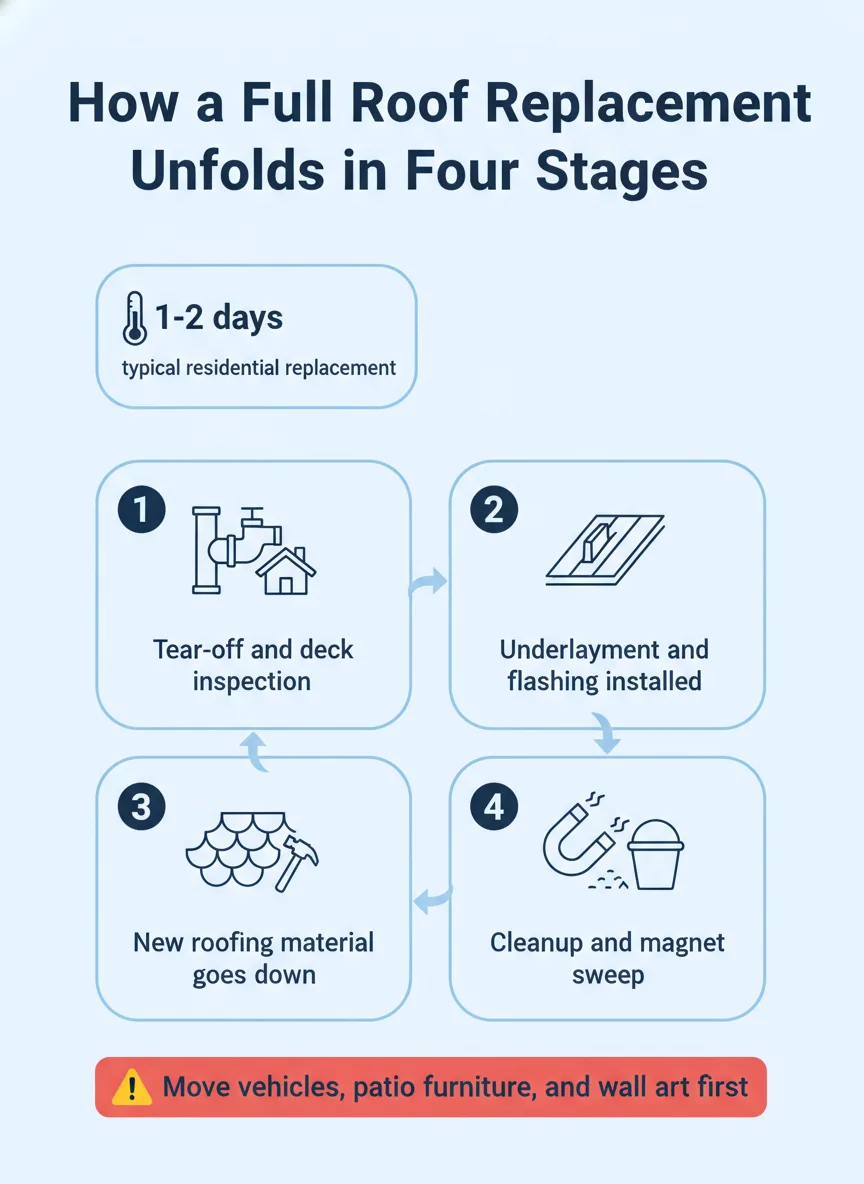
Here's the general order a residential replacement follows once the crew arrives on site. Larger or more complex properties may add steps, but this covers what most homeowners can expect to see happen over the course of the job.
- Setup and protection: Tarps go over landscaping, vehicles are asked to move, and the dumpster is positioned for easy loading of old material.
- Tear-off begins: Old material comes off in sections, working from one end of the roof to the other, exposing the deck as they go.
- Deck inspection and repair: Every section of exposed decking gets checked, and any damaged boards are replaced before moving forward.
- Underlayment and flashing: Water-resistant underlayment, ice and water barrier, drip edge, and flashing are installed in that order around the entire roof.
- New material installed: The new roofing system goes down according to manufacturer spacing and fastening guidelines for the material chosen.
- Ridge and final details: Ridge caps, vents, and any remaining trim pieces are installed to complete the system.
- Cleanup and sweep: Debris is loaded out, tarps come up, and a magnet sweep checks the yard and driveway for stray nails.
What the Crew Checks Before Calling It Done
A replacement isn't finished when the last piece of material goes down. A final check walks the entire roof looking for gaps, loose fasteners, or flashing that didn't seal properly, since those small details are what separate a clean installation from one that causes a callback a year later.
Signs the Deck Needed Repair
Discoloration, a spongy feel underfoot, or visible gaps between boards are the usual signs a section of decking needed attention. These problems are almost never visible from the ground, which is part of why a tear-off and inspection matter even when the surface material looked fine.
If you've had water stains on an interior ceiling in the past, ask the crew specifically whether they found related deck damage during tear-off. It's a useful way to confirm the underlying cause actually got addressed instead of just covered over with new material.
What a Final Walkthrough Covers
A good final walkthrough includes a look at the completed roof from the ground, a check of attic ventilation if accessible, and a review of what was replaced versus repaired. This is also the time to ask about warranty paperwork and any manufacturer registration that needs to happen.
Take this opportunity to ask questions while the crew is still on site. It's much easier to point out a concern before everyone packs up than to schedule a separate visit afterward.
DIY vs. Calling a Pro for Replacement Day
There's very little about replacement day itself that a homeowner should handle personally. Walking on a torn-off deck, working at height, and handling roofing fasteners all carry real injury risk, and most manufacturer warranties require professional installation anyway, which rules out doing the work yourself if you want that coverage intact.
What a homeowner can do is prep the property in advance. Moving vehicles, taking down wall art, and clearing anything fragile near the exterior walls are all tasks that make the day go smoother and reduce the odds of accidental damage from vibration or falling debris.
The licensed side of the work, tear-off, deck repair, flashing, and installation, needs a trained crew with the right equipment and insurance coverage. If something goes wrong with a DIY attempt, you're often looking at a bigger repair bill than if a professional had handled it from the start.
Knowing What to Expect Makes the Day Easier
A roof replacement is a big project, but it doesn't have to be a confusing one. Once you know the order of operations, tear-off, deck check, underlayment, new material, cleanup, the day stops feeling like a mystery and starts feeling like a checklist. Homeowners in Plano and across the region tend to have a much smoother experience when they know what questions to ask before the crew ever shows up.
If you're weighing whether it's time for a full replacement or if a repair will hold you over, it helps to understand the options homeowners actually choose between before committing to a date. Renovacore Builders LLC walks DFW homeowners through every step of that decision and the work day itself, so nothing on the schedule comes as a surprise.
Frequently asked questions
How long does it take to replace a roof in one day?
Most standard residential replacements wrap up in one to two days once materials are on site and weather cooperates. Larger homes, steep pitches, or multiple layers of old material can stretch the timeline, and a contractor should walk you through the expected schedule before work starts.
Do I need to be home during roof replacement?
You don't have to be home for the actual work, but it helps to be reachable in case the crew finds something unexpected under the old material. Many homeowners prefer to be present for the start of the job and the final walkthrough.
What should I move before roof replacement day?
Move vehicles out of the driveway, take down wall art or mirrors inside the house, and clear patio furniture and grills away from the exterior walls. The vibration from tear-off and nailing can shake loose items that aren't secured.
Will my yard be a mess after roof replacement?
There will be some debris and dust during the job, but a thorough crew tarps the landscaping, runs a magnet sweep for stray nails, and hauls away old material before leaving. Ask what cleanup steps are included before the project starts.
What happens if the crew finds rotten decking?
Rotten or damaged decking boards get replaced before any new underlayment or roofing material goes down, since installing over a weak deck defeats the purpose of a replacement. A reputable contractor should show you the damage and explain the added cost before proceeding, not after.