
Why Roof Lifespan Matters for DFW Homeowners
North Texas puts roofing systems through real extremes. Summer heat bakes shingles and seals, spring storms test every seam and flashing point, and the occasional ice event stresses materials that spend most of the year in triple-digit heat. All of that adds up over a roof's life, which is why the question of what lasts the longest comes up constantly across Dallas, Fort Worth, and the surrounding communities.
A roof is one of the largest investments a homeowner makes in a property, and the answer to how long it lasts isn't a single number. It's a combination of the material chosen, how well it was installed, and whether it gets looked at regularly. Understanding those pieces helps you make a smarter decision the next time you're comparing options.
What Actually Determines How Long a Roof Lasts
Material is the first variable people think of, and it does matter. But lifespan is really the product of three things working together: the material's known durability, the quality of the install underneath it, and the maintenance it receives afterward. Skip any one of those and even a premium material can underperform its reputation.
Material and System Type
Across the roofing industry, asphalt shingle systems typically run in the range of 20 to 25 years with reasonable upkeep. Standing seam and other metal panel systems often reach 40 to 70 years depending on the gauge and coating. Tile and slate systems can last even longer, though they come with their own weight and structural considerations.
No single material is the right call for every home. A steep-slope residential property and a low-slope commercial building face different stresses, which is why the right system for a Commercial Roofing project often looks nothing like the right system for a house down the street.
Installation Quality and Maintenance
A roof installed with the wrong fastening pattern, inadequate flashing, or poor ventilation will wear out faster than its material rating suggests, sometimes dramatically so. This is the part of the lifespan equation that's hardest for a homeowner to evaluate just by looking at the finished product, since the workmanship that matters most is underneath what you can see.
Maintenance closes the gap. A roof that gets a yearly look, with small issues fixed as they're found, routinely outperforms an identical roof that's left alone until something fails. That's the whole logic behind Roof Inspections & Maintenance as a standalone service rather than an afterthought.
| Roof Type | Typical Lifespan Range | Maintenance Needs |
|---|---|---|
| Asphalt shingle | 20-25 years industry-wide | Annual inspection, prompt shingle repair |
| Standing seam metal | 40-70 years industry-wide | Periodic fastener and seam checks |
| Tile or slate | 50+ years industry-wide | Crack checks, underlayment monitoring |
| Low-slope / TPO | 15-30 years industry-wide | Seam inspections, ponding water checks |
The Roofing System Itself: Layers That Affect Longevity
What you see from the street is only the top layer. Underneath it sits decking, underlayment, flashing around every penetration, and a ventilation path that's supposed to move hot, moist air out of the attic. Each layer has to do its job for the visible material to reach its expected lifespan.
Flashing failures and ventilation problems are two of the most common reasons a roof ages faster than it should. Neither is visible from the ground, which is part of why a proper inspection involves getting up on the roof and into the attic rather than a quick look from the driveway.
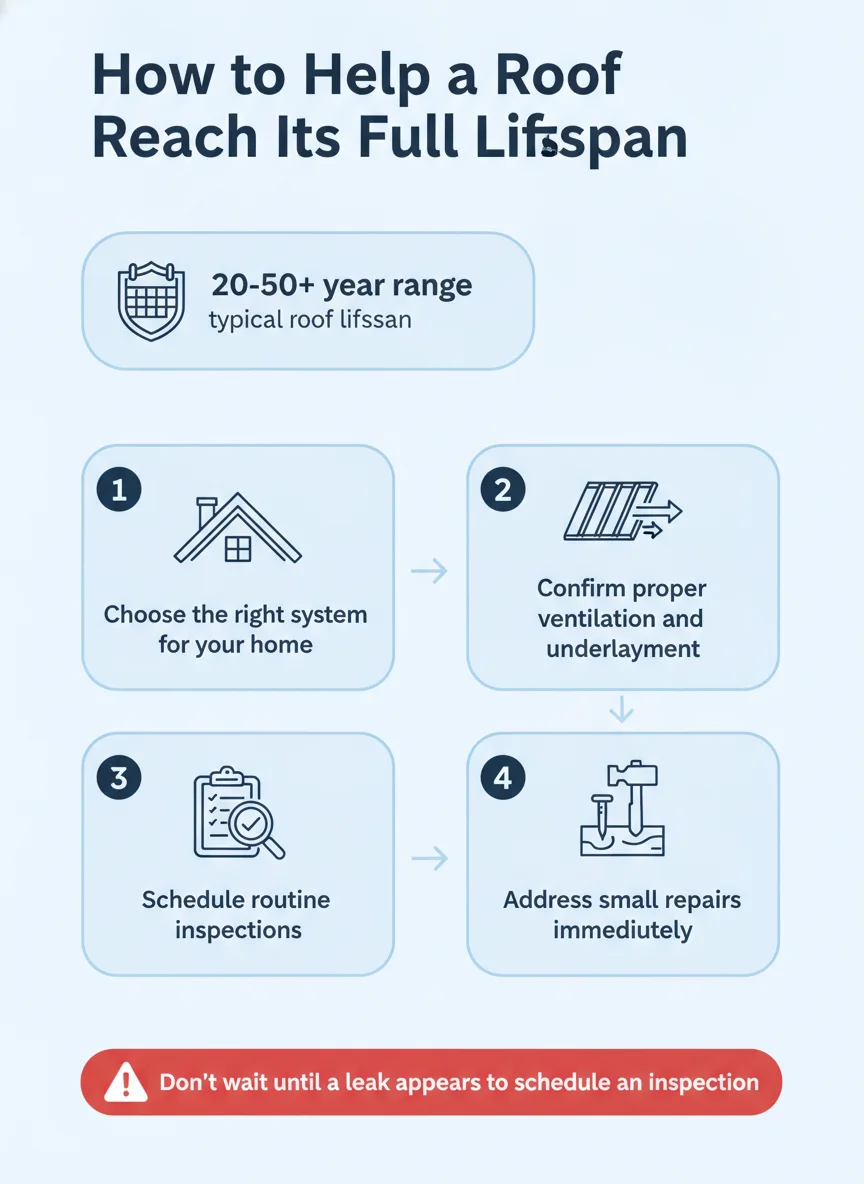
Step-by-step: How to Help Your Roof Reach Its Full Lifespan
Longevity isn't passive. These are the practical steps that give any roofing system its best shot at hitting the upper end of its expected range.
- Match material to home: Choose a roofing system suited to your roof's slope, structure, and the climate it will face, rather than defaulting to whatever's cheapest.
- Verify installation details: Confirm proper decking condition, underlayment, and flashing at every penetration before the new roof goes on.
- Check attic ventilation: Make sure intake and exhaust venting are balanced so heat and moisture don't build up against the roof deck.
- Schedule annual inspections: Have the roof looked at at least once a year, and again after any notable wind event.
- Fix small issues fast: Address a lifted shingle, a cracked tile, or a loose fastener as soon as it's found rather than waiting.
- Keep records: Track past repairs, warranty paperwork, and inspection dates so you know exactly where the roof stands.
Diagnosing Whether Your Roof Is Aging on Schedule
Signs Your Roof Is Performing Well
A roof that's aging as expected shows even wear across its surface, intact flashing, and no interior signs of moisture. Granule loss on shingles should be gradual, not concentrated in one area, and vents should be clear and functioning.
If your attic stays reasonably dry and temperature-stable through the seasons, that's a good indicator the ventilation and underlayment are doing their job. These are the kinds of details a routine inspection is built to confirm.
Signs It's Falling Short of Its Expected Lifespan
Curling or cupping shingles well ahead of their expected timeline, dark streaking concentrated in one section, or recurring leaks in the same spot all point to a roof that isn't hitting its potential lifespan. So does visible sagging, which can signal a structural issue beneath the surface.
When a roof shows these signs early, it's often tied back to an installation shortcut or a ventilation problem rather than the material itself being defective. Identifying which one it is determines whether a repair fixes it or a full Roof Replacement is the more durable answer.
DIY vs Calling a Pro for Roof Longevity Care
There's a short list of things a homeowner can reasonably handle: clearing debris from valleys, checking that gutters drain freely, and doing a visual walk-around after a storm to look for obvious damage from the ground. These basics genuinely help extend a roof's life and cost nothing but time.
Anything involving getting on the roof itself, working near flashing, or evaluating attic ventilation is better left to a licensed contractor. It's not just about safety, though that's real. It's that diagnosing a ventilation imbalance or a subtle flashing failure takes an eye trained to spot problems before they show up as a stain on the ceiling.
A professional inspection also gives you something a DIY check can't: a documented record of the roof's condition over time. That record matters if you ever need to make the case to an insurer, or if you're trying to decide whether a repair or a full replacement is the smarter move for a property in Fort Worth or anywhere else across the metro.
The Bottom Line on Roof Longevity
No single roof type wins the longevity question outright. Metal and tile systems have an edge in raw material durability, but a well-installed, well-maintained asphalt shingle roof will often outlast a premium material that was installed poorly or ignored for a decade. For more on how long specific materials typically hold up in this climate, see How Long Does a Roof Last in Texas?
If you're trying to figure out which system makes sense for your property, or whether your current roof is aging the way it should, Renovacore Builders LLC can walk through the options with you and give you a straight answer either way.
Frequently asked questions
What roof lasts the longest?
Metal and tile systems generally outlast asphalt shingles, with some metal roofs performing well for 40 years or more under normal conditions. But even a long-lasting material underperforms if it's installed poorly or never maintained, so the system and the installation matter as much as the material itself.
Does roof color or style affect how long it lasts?
Color and style have a smaller effect than material and installation quality, though lighter colors can reduce heat absorption and may ease strain on underlayment over time. The bigger factors remain ventilation, flashing quality, and how quickly small issues get addressed.
How often should a roof be inspected to maximize its lifespan?
Most roofs benefit from at least one inspection a year, with an additional check after any significant wind or weather event. Catching a lifted shingle or cracked flashing early is usually what separates a roof that hits its full lifespan from one that falls short.
Can a poorly ventilated attic shorten a roof's life?
Yes, inadequate attic ventilation traps heat and moisture against the underside of the roofing system, which can accelerate wear on decking, underlayment, and the roofing material itself. Proper ventilation is one of the most overlooked factors in long-term roof performance.
Is it worth paying more upfront for a longer-lasting roof?
It depends on how long you plan to stay in the property and what the material and labor warranties cover. A roofing contractor can walk through the tradeoffs between upfront cost and expected lifespan so you can weigh it against your own timeline.